Integrated WebRTC video
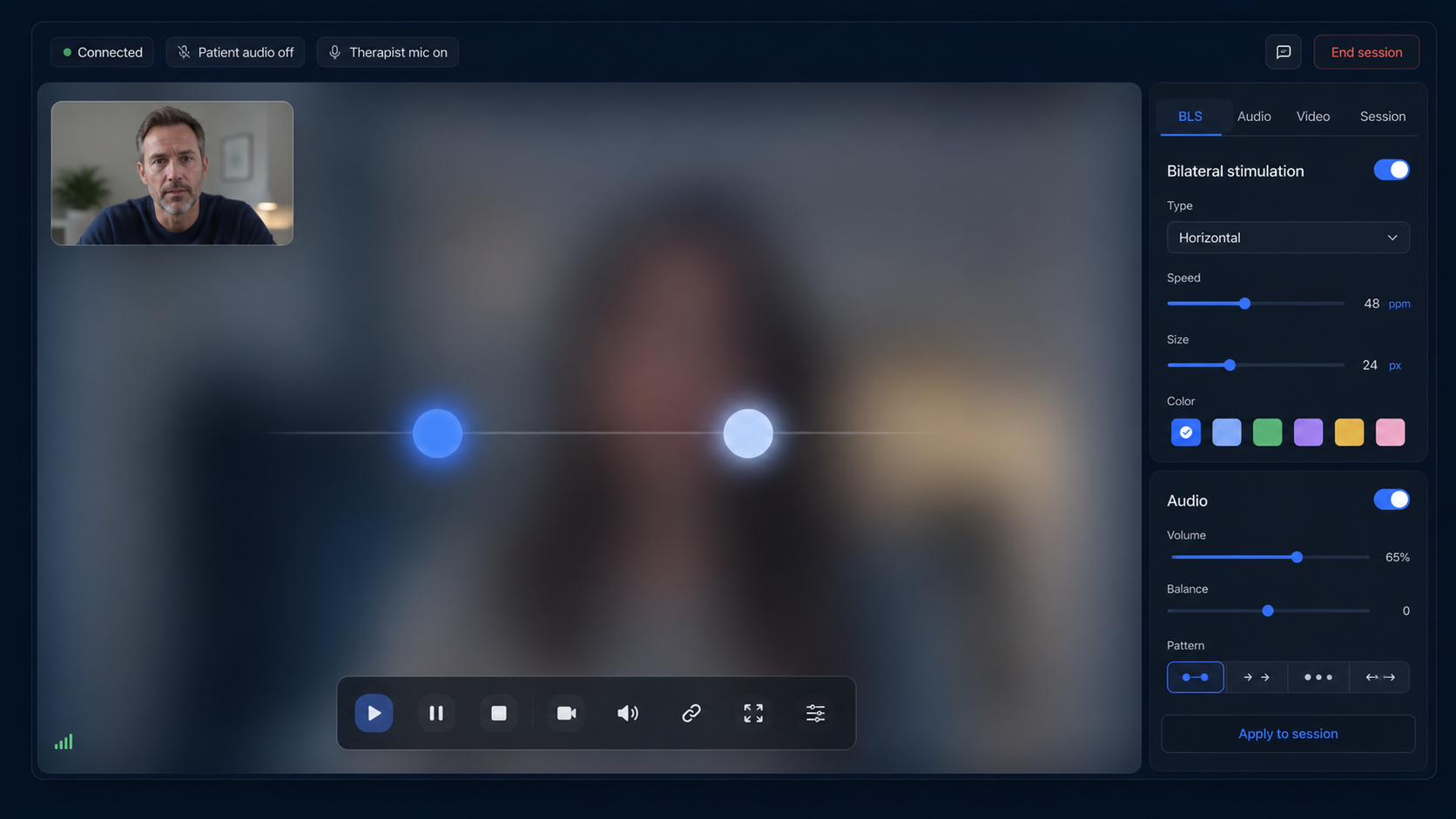
Therapist and patient can share camera and microphone inside the EMDR session. Each person can manage their own media controls, and the therapist can reduce visual distraction when needed.
EMDR video tool
Keep therapist video, patient video, visual BLS, bilateral sound, session controls, and pause signals together instead of switching between separate tools.
Product proof
Why EMDRSuite
Therapist and patient can share camera and microphone inside the EMDR session. Each person can manage their own media controls, and the therapist can reduce visual distraction when needed.
The patient does not need to watch a screen share or move between tabs. The stimulus runs in the patient interface while the therapist keeps the live session controls nearby.
Start, pause, stop, set duration, repetitions, direction, speed, shape, size, color, and bilateral audio from the therapist room. A patient pause signal remains available during the session.
Patients join without creating a separate account. The link opens the correct session and keeps therapist-only records and controls outside the patient view.
FAQ
Yes. EMDRSuite includes browser-based camera and microphone sharing between therapist and patient inside the session room.
The built-in video can support the session without a separate call. Therapists should still choose the workflow that fits their local requirements and contingency plan.
Yes. The interface includes controls to reduce or hide video when the therapist wants the visual stimulus to remain the main focus.
No automatic video recording is presented as part of the standard EMDRSuite session workflow.
Related EMDR resources
EMDRSuite
Start with a focused workspace for BLS, patient links, video-ready sessions, notes, and multilingual patient access.