Presenting problems and evidence
EMDR for anxiety, panic, and phobias: evidence, guidelines, and limits
A clinician-focused review separating anxiety diagnoses, EMDR trial findings, active versus passive comparisons, NICE guidance, and responsible treatment planning.
By the EMDRSuite Editorial Team
Product claims checked against the current EMDRSuite code and interface.
No independent clinical reviewer is named for this guide.
Anxiety is not one diagnosis or one EMDR indication
Generalized anxiety disorder, panic disorder, agoraphobia, specific phobias, social anxiety, obsessive-compulsive presentations, and anxiety within PTSD are clinically distinct. A high anxiety score does not identify which condition is present, whether a traumatic memory is central, or which treatment should lead the plan.
Assessment should separate panic sensations, anticipatory anxiety, avoidance, safety behaviours, worry, trauma reminders, medical contributors, substance effects, and functional impact. EMDR evidence for one population cannot be transferred automatically to every condition that includes fear or arousal.
The research signal is promising but not uniform
A meta-analysis included 17 randomized trials and 647 participants, reporting reductions in anxiety, panic, phobia, and behavioural or somatic symptoms. Effects were larger against passive controls, and the authors called for more evidence on long-term efficacy. Pooling different disorders also limits diagnosis-specific conclusions.
In a 43-person panic-disorder trial, some post-treatment advantages over waitlist and a no-eye-movement condition had dissipated by three months. A later comparison with CBT found EMDR non-inferior on several outcomes, while conclusions about avoidance remained uncertain. Comparator, outcome, and follow-up therefore matter.
Guideline status must be reported separately from trial results
NICE CG113 names stepped care, CBT, applied relaxation, self-help, and medication options for generalized anxiety and panic disorder. It does not list EMDR as a routine intervention for those diagnoses. That absence is not proof that EMDR never helps, but it is a clear limit on claims of guideline endorsement.
PTSD guidance is different and should not be used as a shortcut. When anxiety is linked to a qualifying trauma presentation, the applicable trauma-focused recommendation may matter; when panic, phobia, or generalized worry is primary, the evidence and guideline pathway for that condition still need attention.
Plan around formulation, outcomes, and review points
Document the diagnosis or working hypotheses, relevant memories, maintaining processes, treatment options discussed, patient preference, therapist competence, and why EMDR would be primary, adjunctive, or not selected. Track panic frequency, avoidance, functioning, anxiety, adverse responses, and durability rather than only distress during a target.
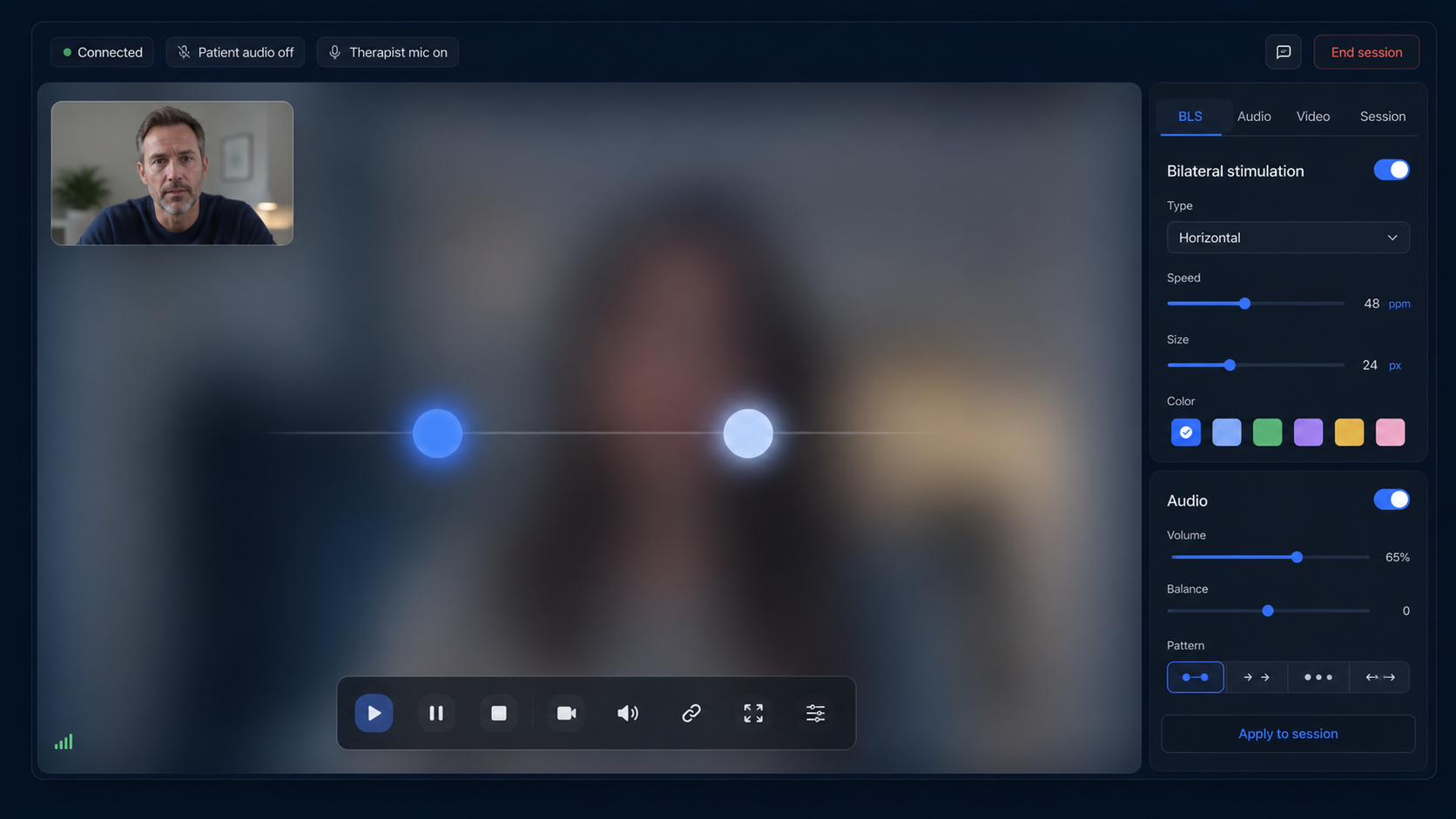
Remote delivery adds privacy, location, connection, emergency, and reconnection planning. EMDRSuite can support video, therapist-controlled bilateral stimulation, notes, and continuity; it cannot diagnose an anxiety disorder, rule out medical causes, or decide that EMDR should replace a condition-specific treatment.
FAQ
EMDR for anxiety
Is EMDR a guideline-recommended first-line treatment for panic disorder?
Not in NICE CG113, which names CBT and medication pathways. EMDR research is promising but should not be described as routine first-line guidance.
Does evidence for panic disorder apply to every phobia or anxiety disorder?
No. Diagnoses, samples, comparators, outcomes, and follow-up differ, so results should not be generalized automatically.
Can EMDR be considered when anxiety is linked to trauma?
Potentially, after assessment and within competence, but the diagnosis, target, alternatives, consent, risk, and relevant guideline scope still need to be clear.
Can EMDRSuite identify the correct anxiety treatment?
No. It supports session delivery and records; diagnosis and treatment selection remain clinical responsibilities.
References
EMDR for anxiety, panic, and phobias: evidence, guidelines, and limits
EMDRSuite
Put the guide into practice with EMDRSuite
Run remote EMDR with visual BLS, bilateral sounds, secure patient links, video-ready sessions, saved settings, and notes.
Continue with related EMDR guides