Safety and evidence limits
EMDR safety and adverse effects: assessment, readiness, and monitoring
A therapist-focused framework for discussing activation, adverse effects, deterioration, readiness, scope of competence, and remote safeguards without inventing a universal contraindication list.
By the EMDRSuite Editorial Team
Product claims checked against the current EMDRSuite code and interface.
No independent clinical reviewer is named for this guide.
Replace the universal contraindication list with competent assessment
A diagnosis or life circumstance rarely functions as a context-free yes-or-no rule for an entire psychotherapy. The relevant question is whether the therapist has assessed the person, current risk, stability, dissociation, supports, medical and substance-related factors, treatment context, preferences, and the limits of available competence and care.
That assessment may support proceeding, adapting, preparing further, coordinating care, consulting, referring, or postponing a particular intervention. An online checklist should preserve those possibilities rather than declare suitability.
Distinguish expected activation from harm
Temporary distress, fatigue, vivid dreams, new memories, symptom fluctuation, functional deterioration, crisis, dropout, and other unwanted outcomes should not be grouped automatically as either normal processing or treatment harm. Define what is being monitored, its timing, severity, duration, functional impact, and plausible relationship to treatment.
Recent commentary on EMDR trials highlights sparse and inconsistent reporting of adverse effects. Absence of reporting is not evidence that adverse effects did not occur, and consent should not promise a risk-free process.
Readiness is ongoing and specific to the planned work
Readiness includes informed consent, shared understanding, therapeutic alliance, communication of stop or pause, capacity relevant to dual attention and regulation, a suitable setting, and a plan for response. It is not proven by one resource exercise, a low score, or successful device access.
Changes in risk, medication, sleep, substance use, physical health, dissociation, support, location, privacy, or therapeutic contact can alter the decision. Reassessment belongs throughout treatment rather than only at intake.
Remote delivery adds technical safety obligations
Before remote reprocessing, confirm current location, privacy, two-way communication, an authorized backup channel, immediate stimulus stop, local resources, and the practice's contingency and emergency procedures. A reconnected video stream does not automatically mean that clinical work should resume.
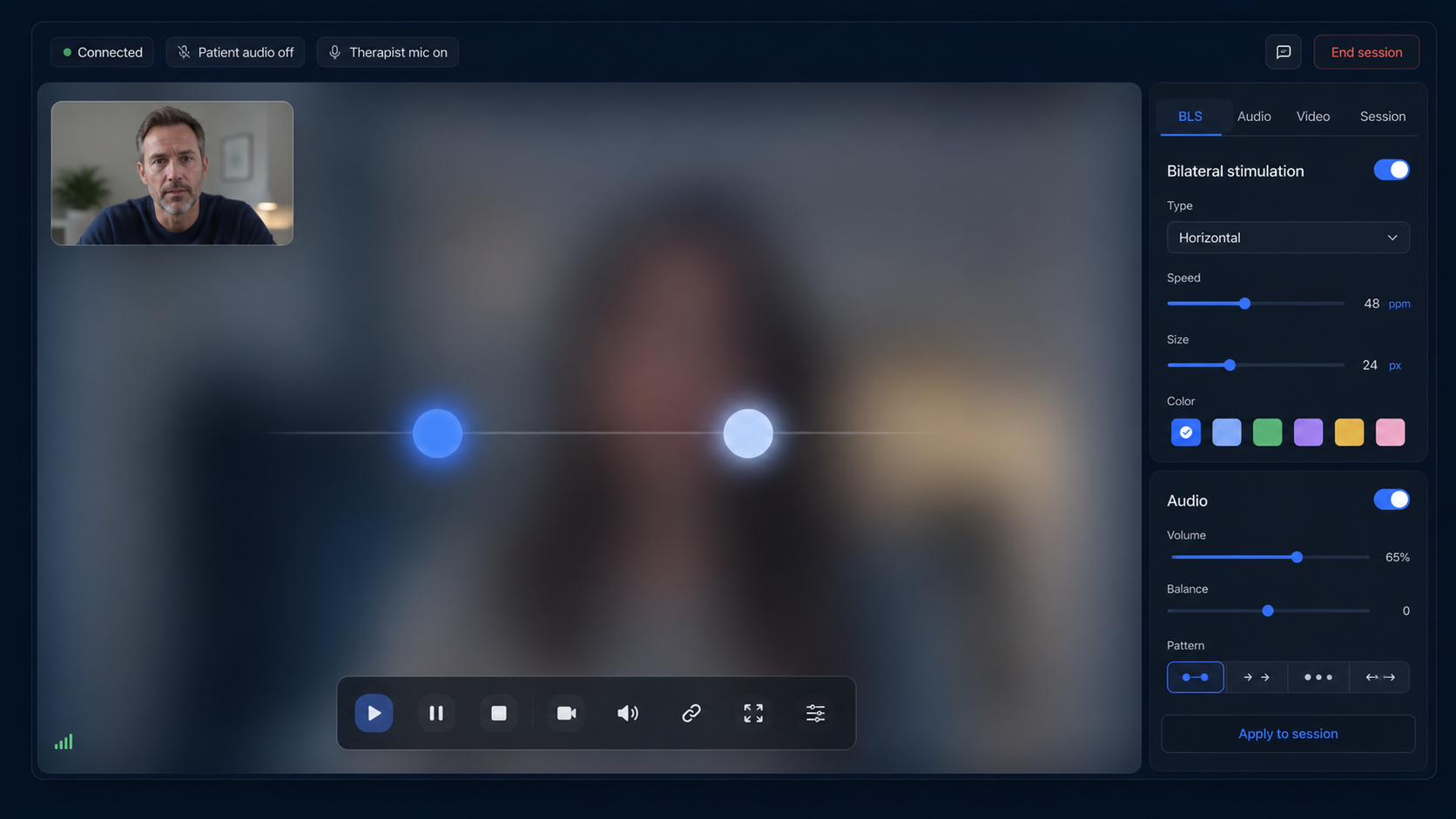
EMDRSuite provides patient pause, therapist stop, private room access, and reconnection state. These controls support but do not replace assessment, observation, emergency planning, documentation, professional competence, or local legal requirements.
FAQ
EMDR safety and adverse effects
Does EMDR have a universal list of contraindications?
No single online list can decide suitability across people and settings. Competent assessment, scope, context, consultation, and applicable guidance are required.
Is increased distress always a normal part of EMDR?
No. Distress and other unwanted changes should be assessed by severity, duration, function, risk, timing, and context rather than dismissed automatically.
Does completing a readiness checklist prove that reprocessing is appropriate?
No. A checklist can organize information, while the clinical decision remains individualized and revisable.
What safety controls should remote EMDR software provide?
At minimum, clear patient pause and therapist stop controls, private access, reliable two-way contact, and reconnection support, embedded in a broader professional contingency plan.
References
EMDR safety and adverse effects: assessment, readiness, and monitoring
EMDRSuite
Put the guide into practice with EMDRSuite
Run remote EMDR with visual BLS, bilateral sounds, secure patient links, video-ready sessions, saved settings, and notes.
Continue with related EMDR guides