Professional billing and records
EMDR billing and CPT codes: insurance, telehealth, and documentation
A U.S.-focused therapist guide to EMDR billing, CPT verification, insurance coverage, telehealth rules, documentation, and software limits.
By the EMDRSuite Editorial Team
Product claims checked against the current EMDRSuite code and interface.
No independent clinical reviewer is named for this guide.
EMDR therapy and CMS eMDR are different terms
In behavioral health, EMDR means eye movement desensitization and reprocessing. CMS also uses eMDR for electronic medical documentation request, an administrative exchange used in medical review. CMS eMDR document codes are unrelated to the therapy method and should not be mistaken for EMDR treatment or billing codes.
This guide discusses U.S. CPT and Medicare sources because that is where the query is most specific. CPT is a U.S. coding system. Other countries, public systems, private insurers and professional jurisdictions use different classifications, contracts and documentation rules.
Code the service delivered, not the therapy brand
The official AMA behavioral health coding guide organizes psychotherapy and related behavioral-health services by the service actually provided. It does not present an EMDR-named psychotherapy service. That does not select a code for a particular encounter or establish that every payer treats EMDR identically.
Before a claim, verify the current code set, actual service and duration, clinician credentials and scope, payer contract, patient benefit, setting, place of service, modifiers and any authorization requirement. A colleague's claim, old superbill or software default is not a current payer decision.
Coverage is a chain of separate decisions
Asking whether insurance covers EMDR combines several questions: whether the plan includes psychotherapy, whether the clinician and setting qualify, whether the service is medically necessary under that payer's rules, whether authorization or referral is required, and how the submitted claim is adjudicated.
Verify benefits and exclusions for the specific member and date, while explaining that benefit information is not a payment guarantee. Network status, diagnosis, credentialing, frequency limits, telehealth terms, deductibles, coordination of benefits and claim edits can each change the result.
Documentation should support the encounter without copying process notes
CMS documentation guidance expects the record to support medical necessity and the billed service, including applicable date, type and time, symptoms and functional impact, diagnosis, treatment plan, progress and provider identity or credentials. Requirements vary by payer and jurisdiction.
HHS distinguishes psychotherapy notes kept separately from the medical record from ordinary progress-note information. Record what actually occurred and the minimum necessary clinical rationale; do not invent targets, SUD or VOC scores, trauma detail, interventions, time or improvement solely to support billing.
Telehealth rules must be checked for the date and payer
CMS maintains a current Medicare telehealth services list and publishes time-limited policy updates. That list answers a U.S. Medicare question; it does not establish commercial-insurer, Medicaid, employer-plan or non-U.S. coverage.
For each remote encounter, verify the rule in effect on the service date, patient and clinician location, eligible provider and originating-site requirements where applicable, place of service, modifier, consent, technology and documentation. Recheck after policy or contract changes.
What EMDRSuite does and does not do
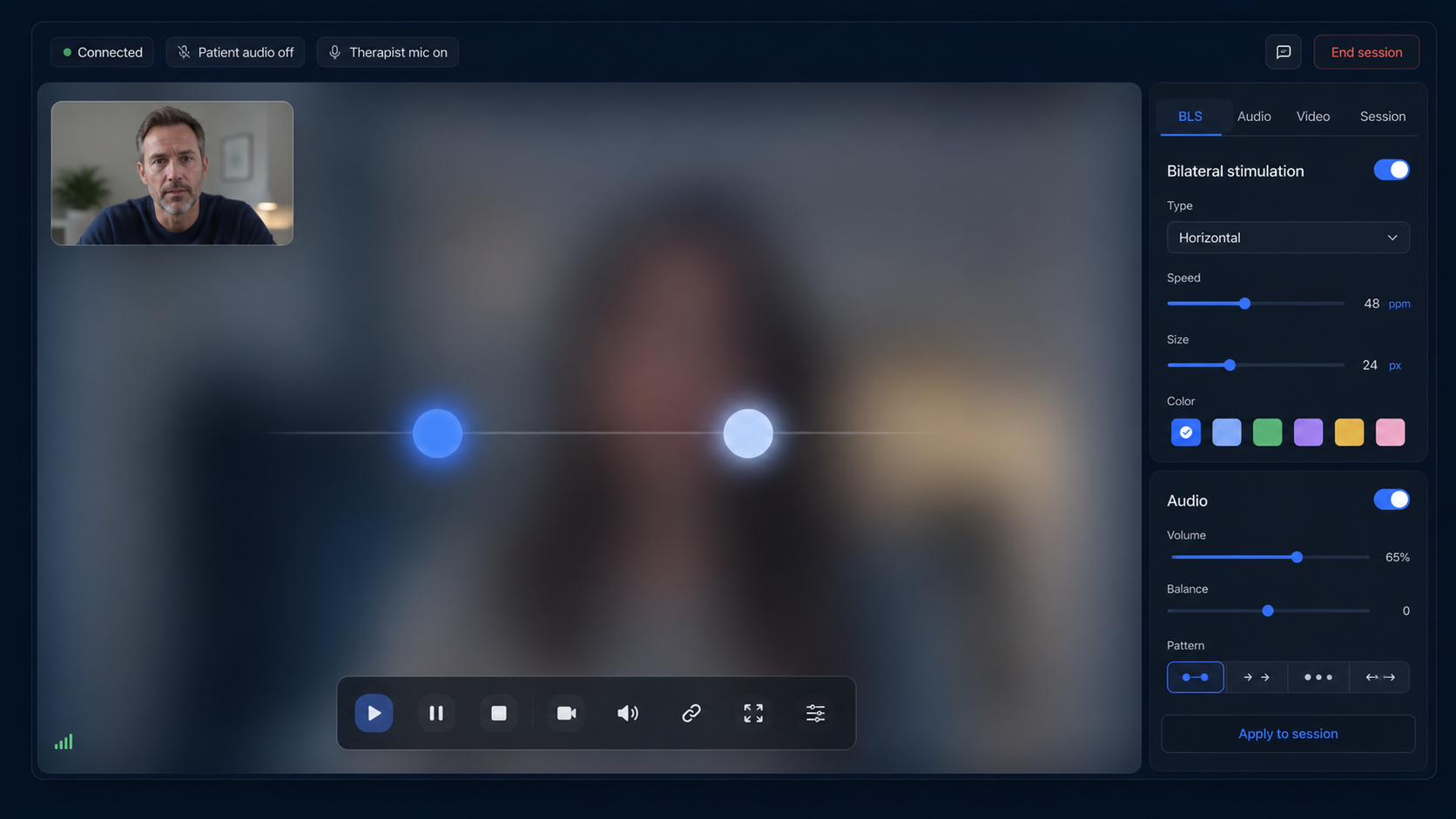
EMDRSuite can support a dated session workflow and clinician-authored notes. It does not choose a CPT code, verify benefits, determine medical necessity, submit claims, adjudicate coverage, guarantee reimbursement or replace an EHR, billing professional, payer instructions, legal advice or clinical judgment.
Keep coding and claim data in the systems authorized by the practice. Use the EMDR progress-note guide for SOAP, DAP and minimum-necessary documentation structure, then reconcile every claim with the actual encounter and the current payer rule.
FAQ
EMDR billing CPT code
Is there a CPT code specifically named for EMDR therapy?
The AMA behavioral-health guide lists service-based psychotherapy code families rather than an EMDR-named psychotherapy service. Verify the current code set and payer rules for the actual encounter.
Which CPT code should I use for an EMDR session?
No webpage can select it from the therapy name alone. The actual service, time, setting, credentials, contract, benefit and current coding rules all matter.
Does insurance cover EMDR?
Some plans may cover a qualifying psychotherapy service in which EMDR is used, but benefits, network rules, necessity, authorization and adjudication vary. Coverage is not guaranteed.
Is remote EMDR billed differently?
It can be. Verify the payer's current telehealth list, locations, provider eligibility, place of service, modifiers, consent and documentation for the date of service.
What should an EMDR progress note contain for billing?
Document the actual service and clinically necessary record elements required by the payer and jurisdiction. Do not add trauma detail, measures or interventions that did not occur.
Does EMDRSuite submit insurance claims?
No. It supports session workflow and notes but does not select codes, verify coverage, submit claims or guarantee payment.
References
EMDR billing and CPT codes: insurance, telehealth, and documentation
EMDRSuite
Put the guide into practice with EMDRSuite
Run remote EMDR with visual BLS, bilateral sounds, secure patient links, video-ready sessions, saved settings, and notes.
Continue with related EMDR guides