EMDR training and credential pathway
EMDR training and certification requirements: a therapist pathway
Compare EMDR basic training, trained status, certification, accreditation, consultation, renewal, and scope before paying or claiming a credential.
By the EMDRSuite Editorial Team
Product claims checked against the current EMDRSuite code and interface.
No independent clinical reviewer is named for this guide.
Training, membership, certification, and accreditation are not synonyms
An approved basic training teaches the model, eight-phase method, supervised practice, and integrated consultation defined by the relevant organization. EMDRIA states that completion makes someone EMDR trained; membership and its voluntary Certified Therapist credential are separate processes. EMDR Europe uses national associations and an accreditation pathway with its own competency requirements.
A course certificate therefore does not automatically prove an advanced credential, independent licensure, current competence, or recognition in another country. The exact protected titles, eligibility rules, practice rights, renewal duties, and approved providers depend on the professional regulator and EMDR association that apply where the therapist and patient are located.
Start with professional eligibility and an approved pathway
Before paying for training, verify the provider and course in the official directory, the applicant eligibility criteria, the complete curriculum, supervised practice, consultation or supervision, attendance rules, assessment, completion evidence, and what the course actually qualifies the participant to do. Marketing phrases such as certified course or internationally recognized need a named awarding body and a verifiable standard.
EMDRIA and EMDR Europe publish different but explicit pathways. A therapist should use the current requirements of the relevant national association rather than combine hours or labels from separate systems. When a claim is unclear, ask the awarding organization directly and retain dated evidence of the answer.
A credential is a milestone, not permanent proof of case competence
Credentials can indicate structured education, consultation, experience, and continuing development. They do not establish suitability for every population, presentation, protocol adaptation, or remote setting. Scope of practice, trauma competence, dissociation knowledge, cultural and accessibility needs, current insurance, supervision, and local law still require separate attention.
Keep a professional record of training provider, completion status, consultation, observed practice, credential issuer, issue and expiry dates, continuing education, restrictions, and verification link. Do not describe in-progress training as a completed credential or use an association's protected marks outside its published rules.
Software cannot confer or validate professional status
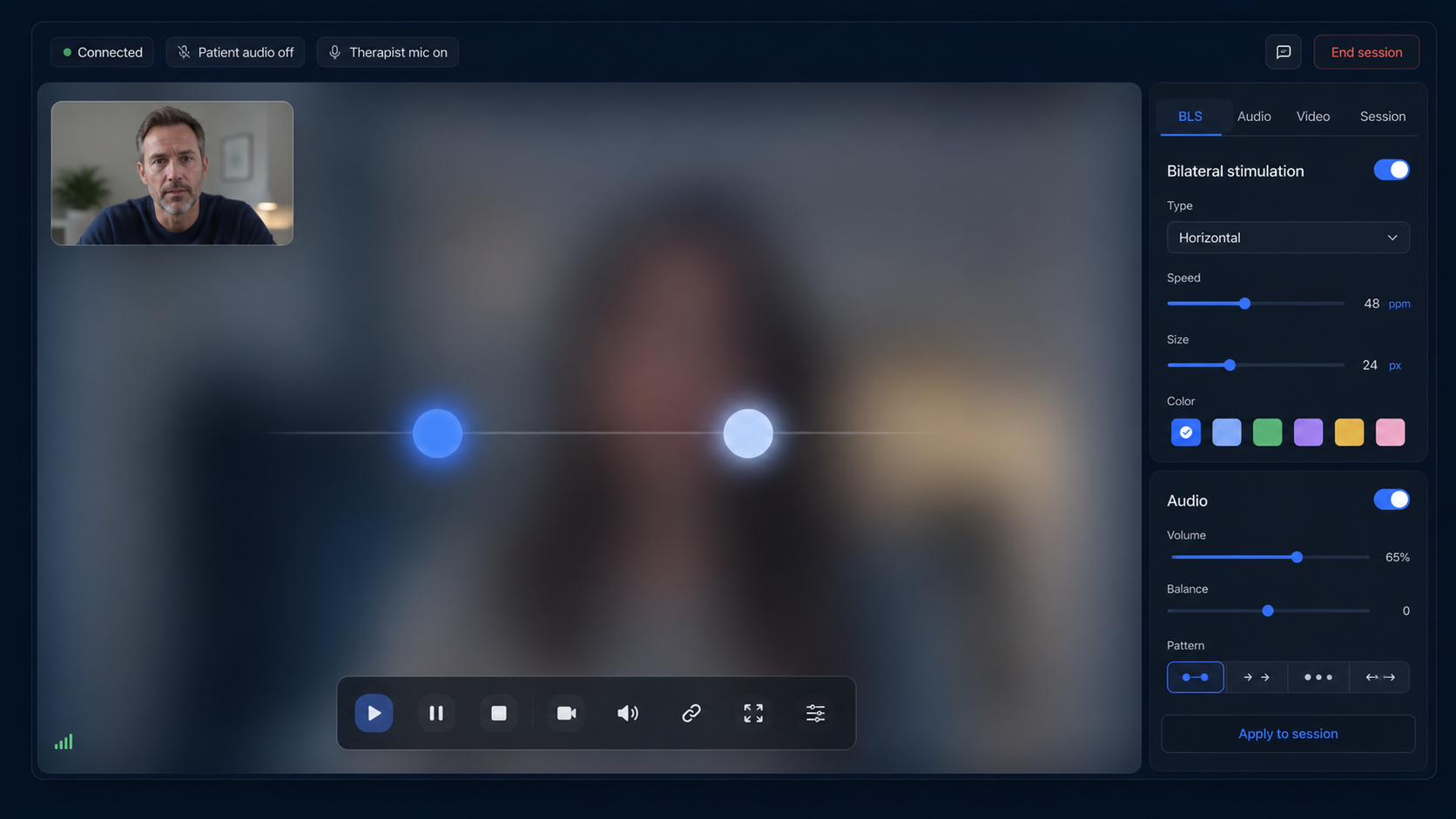
A platform may support structured session workflow, but access to fields, BLS controls, templates, or an eight-phase screen is not clinical training. Product onboarding is not supervised practice, competency assessment, certification, accreditation, licensure, or permission to deliver EMDR in a jurisdiction.
EMDRSuite is designed for qualified professionals and does not award, verify, rank, or display EMDR credentials. Therapists remain responsible for checking their pathway with the relevant regulator and association and for practising within current competence, consultation, consent, insurance, and legal requirements.
Verify every checkpoint before paying or claiming a credential
Basic training, trained status, membership, certification, and accreditation describe different checkpoints. Use the pathway that applies to your profession and region; never combine labels or hours from separate systems.
Professional eligibility
What it can establish
Whether your current regulated profession, licence, registration, or supervised status can meet entry rules.
Verify before paying or claiming
Ask the current regulator and relevant EMDR association for the rule that applies where you practise.
What it does not prove
Admission to a course is not independent authority to practise psychotherapy or EMDR.
Evidence to retain
Current registration, eligibility decision, jurisdiction, issuer, and date checked.
Approved basic training
What it can establish
A named curriculum with teaching, supervised practice, consultation or supervision, and completion rules.
Verify before paying or claiming
Confirm provider and course approval, trainer status, online or in-person format, all fees, attendance, assessment, and refund terms.
What it does not prove
A course marketed as certified or international is not automatically recognized by an association.
Evidence to retain
Official directory result, syllabus, provider terms, receipts, dates, and completion requirements.
Training completion and trained status
What it can establish
That the participant completed the requirements stated by the approved training pathway.
Verify before paying or claiming
Check what must be finished after teaching, including consultation, supervised practice, logs, or evaluation.
What it does not prove
Trained status is not automatically membership, certification, accreditation, licensure, or permanent competence.
Evidence to retain
Certificate, completion letter, consultation evidence, assessed work, and unresolved conditions.
Association membership
What it can establish
A current relationship with a named professional association and access to its member services.
Verify before paying or claiming
Check eligibility, renewal, ethics duties, directory status, and the exact post-nominals or marks allowed.
What it does not prove
Membership alone does not establish training completion, an advanced credential, or case competence.
Evidence to retain
Membership status, renewal date, applicable code, and public verification link.
Certification or practitioner accreditation
What it can establish
A credential awarded under one organization's current competency, experience, consultation, and documentation rules.
Verify before paying or claiming
Use the awarding body's current checklist and your national association; confirm issuer, scope, expiry, and renewal.
What it does not prove
One regional credential is not automatically equivalent, transferable, or legally sufficient elsewhere.
Evidence to retain
Application, sign-offs, award notice, credential number, issue and expiry dates, and directory record.
Consultation or supervision record
What it can establish
That a defined relationship, purpose, provider, format, and period may satisfy a named pathway.
Verify before paying or claiming
Confirm the provider is approved for that pathway and whether each format, date, and record will count before relying on it.
What it does not prove
Helpful case discussion does not automatically count toward training, certification, or professional supervision.
Evidence to retain
Agreement, provider status, dates, format, duration, competency area, feedback, and signed verification.
Renewal and current standing
What it can establish
That continuing-development, ethics, membership, or other maintenance duties remain current.
Verify before paying or claiming
Recheck the association at each renewal; criteria, forms, deadlines, and titles can change.
What it does not prove
An undated certificate or old directory screenshot does not prove present standing.
Evidence to retain
Renewal confirmations, continuing-development evidence, current directory result, restrictions, and check date.
Advanced scope, consultant, or trainer claims
What it can establish
A separate advanced role only when the named body has awarded it under its own standards.
Verify before paying or claiming
Check population, protocol, remote-practice, consultant, facilitator, or trainer claims independently and in the correct directory.
What it does not prove
Experience, software use, basic training, or practitioner certification alone does not confer every advanced role.
Evidence to retain
Awarding body, exact title, scope, supporting training, authorization, limitations, renewal, and verification link.
Regional rule
EMDRIA and EMDR Europe use different terminology and pathways, and national associations or regulators may add requirements. This map is a verification framework, not an official application form, equivalency decision, training provider endorsement, or permission to practise.
Continue with the correct owner
FAQ
EMDR certification requirements
Does basic training make me EMDR certified?
Not automatically. EMDRIA explicitly separates trained status, membership, and certification; other regions use their own terminology and pathways.
Is certification required to practise EMDR?
That depends on licensure, professional rules, employer requirements, jurisdiction, and the relevant EMDR association. Verify current local requirements.
Are EMDRIA and EMDR Europe credentials interchangeable?
Do not assume so. Each system and national association sets its own eligibility, competency, documentation, and renewal rules.
Can EMDRSuite certify a therapist?
No. Software access or product onboarding is not training, supervision, accreditation, certification, or licensure.
References
EMDR training and certification requirements: a therapist pathway
EMDRSuite
Put the guide into practice with EMDRSuite
Run remote EMDR with visual BLS, bilateral sounds, secure patient links, video-ready sessions, saved settings, and notes.
Continue with related EMDR guides