EMDR professional practice
Printable EMDR client handout and informed-consent guide
Print or save a plain-language EMDR client handout, then distinguish education from individualized consent, required records, and remote contingency planning.
By the EMDRSuite Editorial Team
Product claims checked against the current EMDRSuite code and interface.
No independent clinical reviewer is named for this guide.
Consent is a conversation, not a downloaded form
Informed consent should use understandable language to cover the proposed treatment, why it is being considered, therapist qualifications and role, expected process, material uncertainties, potential benefits and burdens, reasonable alternatives, confidentiality and records, fees where relevant, and the patient's right to ask, pause, refuse, or withdraw without coercion.
For EMDR, explain the broader eight-phase psychotherapy rather than describing bilateral stimulation as the whole treatment. Clarify that history taking and preparation precede reprocessing, experiences vary, distress or material may arise during or between sessions, outcomes and duration cannot be guaranteed, and the plan can change with new information.
Explain choices that are real for this patient
Discuss why EMDR may or may not fit the current formulation, alternatives including no immediate reprocessing, pacing, target discussion, BLS modality, accessibility needs, stop signals, breaks, between-session contact, adverse effects, progress review, and what would lead to postponement, modification, referral, or a different treatment.
Check understanding with dialogue rather than a signature alone. Language, culture, age, cognition, disability, dissociation, power differences, and prior coercion can affect how information is understood and whether agreement is freely given. Consent is revisited when the target, method, risk, setting, technology, or circumstances change.
Remote delivery requires additional consent
Teletherapy adds platform and device behavior, privacy at both locations, identity and current location checks, unauthorized people, recording, data handling, connection failure, backup contact, emergency response, cross-border practice, accessibility, and the limits of technical confidentiality. Applicable law and professional rules vary, so a generic template cannot establish compliance.
Before activation, the patient should know how to stop the stimulus and what happens if sound, video, or contact fails. Confirm who can hear or see the session and that nobody records without permission. A secure product reduces some operational risks but cannot make the setting, practitioner, or treatment automatically appropriate.
Use a client handout to support dialogue, not replace it
A useful handout explains EMDR as an eight-phase psychotherapy, preserves choice and stopping, describes uncertainty and possible distress, separates preparation from readiness, and raises remote privacy and contingency questions. It should invite questions rather than operate as marketing or a procedural script.
The printable handout below is editable only in its optional question box, stays in the browser, and is not submitted or saved. It is general education, not a legal consent form, individualized risk disclosure, crisis plan, treatment instruction, or evidence that the patient understood or agreed.
Record the process without collecting excess data
Document the information discussed, questions, patient preferences, decisions, materials provided, capacity or representative issues where relevant, date, changes, and ongoing confirmation. Keep the signed form if required, but do not use analytics, support tickets, URLs, or patient links for consent narratives or sensitive clinical content.
EMDRSuite can support a therapist-controlled remote room and authorized clinical notes. It does not provide legal consent forms, decide capacity, explain EMDR on the therapist's behalf, obtain consent, recommend treatment, or prove regulatory compliance. The treating professional remains responsible for a current, jurisdiction-specific process.
EMDR client handout and informed consent
Four resources that should not be collapsed into one PDF
Use the printable handout for plain-language education, then complete the individualized conversation and records required for the person, setting, and jurisdiction.
Plain-language client handout
Purpose
Helps a client understand EMDR and prepare questions before or during discussion.
Useful content
Eight-phase context, choice, stopping, uncertainty, possible distress, privacy, and remote practical questions.
Keep separate
It is not individualized disclosure, a signature form, proof of understanding, or permission to start processing.
Individual consent conversation
Purpose
Connects treatment information to this person's formulation, choices, risks, alternatives, and preferences.
Useful content
Questions, comprehension, capacity where relevant, voluntariness, BLS preferences, pacing, and ongoing review when circumstances change.
Keep separate
A generic script or completed handout cannot replace professional dialogue and judgment.
Required consent record
Purpose
Documents the process and any form, signature, representative, or disclosure required locally.
Useful content
Dated information discussed, decisions, materials provided, questions, preferences, and later revisions.
Keep separate
There is no universal EMDR consent form; legal and professional requirements vary by jurisdiction and service.
Remote contingency agreement
Purpose
Sets expectations for privacy, location, technology failure, backup contact, and emergencies before remote work.
Useful content
Who may be present, recording, current location, stopping the stimulus, reconnection, alternate contact, and emergency arrangements.
Keep separate
Remote logistics do not establish clinical readiness, treatment suitability, or cross-jurisdiction authority.
The client handout stays in the browser and can be printed or saved as a PDF. Adapt the wording with the client, but complete identifiable consent records only in an authorized system. This is not legal advice or a universal form.
Plain-language client resource
Printable EMDR client handout: what to know and ask
A short discussion aid the therapist can review and adapt with the client. It is not a consent form, treatment instruction, or promise of outcome.
No server storage · the optional question box stays only in this page and is never submitted or saved
EMDR is a complete psychotherapy
It uses eight phases that include history, preparation, assessment, processing, installation, body scan, closure, and reevaluation. Bilateral stimulation is one component, not the whole therapy.
You keep choice and control
You can ask questions, discuss preferences, request a pause, stop bilateral stimulation, decline a target, or revisit consent. A signature does not remove those choices.
Experience and timing vary
EMDR can bring attention to difficult memories, emotions, beliefs, or body sensations during or between sessions. No handout can predict the number of sessions or guarantee a result.
Preparation and safety come first
Your therapist should discuss fit, alternatives, readiness, support, what happens if distress increases, and how the session will close. A calming exercise alone does not prove readiness.
Remote sessions add practical questions
Discuss privacy, current location, who may enter, headphones, recording, data, connection failure, backup contact, emergency arrangements, and how to stop the stimulus.
What EMDRSuite does
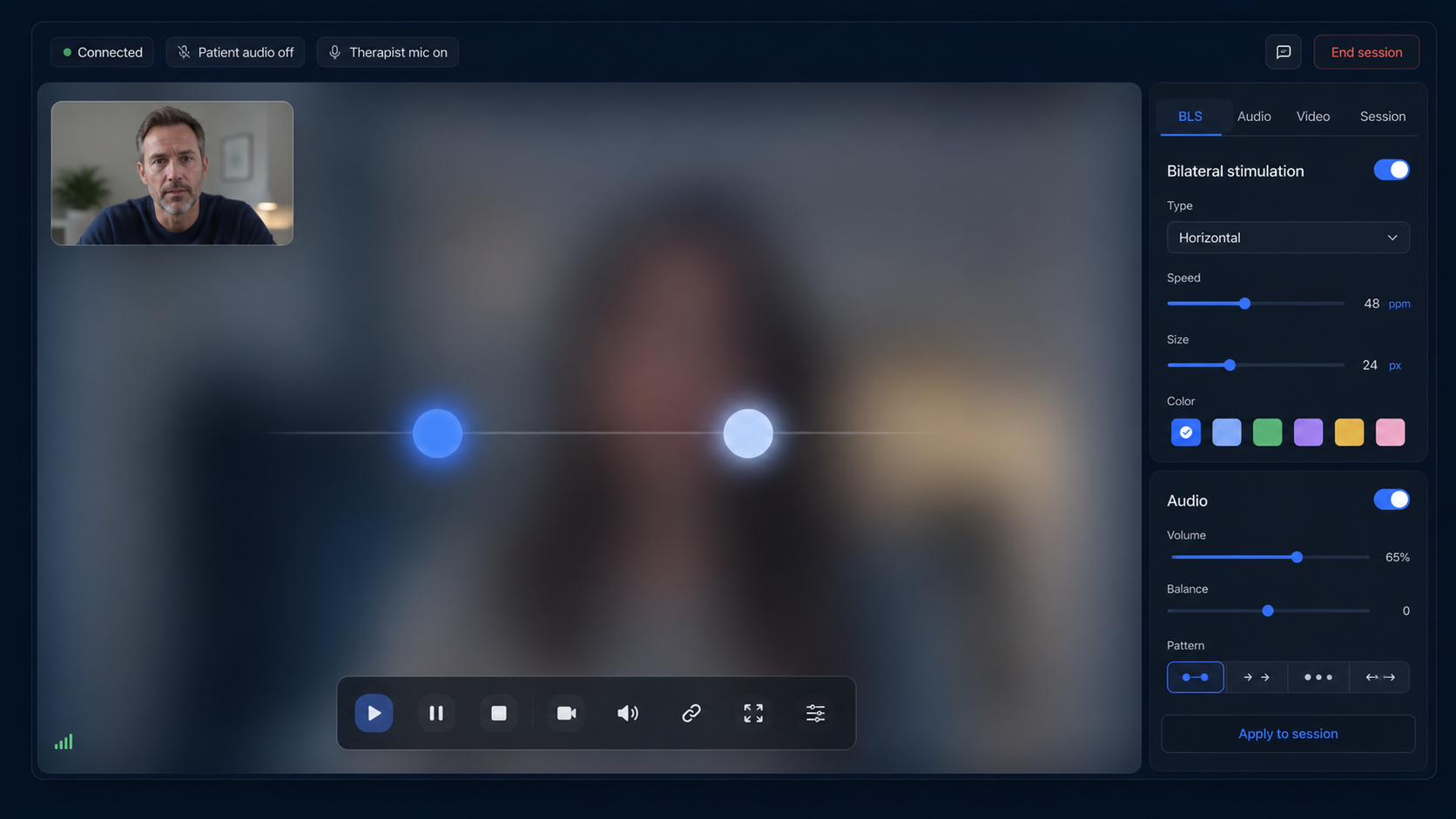
EMDRSuite provides a therapist-controlled video room, patient link, bilateral stimulation, and therapist notes. It does not diagnose, choose treatment, monitor risk, obtain consent, or replace a trained professional.
General educational handout. The therapist must adapt information, consent, records, emergency planning, and legal requirements to the person and jurisdiction.
FAQ
EMDR client handout
Is a signed EMDR consent form enough?
Usually not by itself. Informed consent is an understandable, voluntary, documented conversation that continues as treatment changes.
Can the printable client handout replace informed consent?
No. It supports discussion but is not individualized disclosure, a consent form, proof of understanding, or a jurisdiction-specific record.
What should be explained about BLS?
Explain available modalities, therapist control, patient preferences, stop options, accessibility, uncertainty, and that BLS is one component of EMDR therapy.
Does online EMDR need extra consent?
Remote delivery adds technology, privacy, location, connection failure, emergency, data, accessibility, and jurisdiction-specific considerations.
Does EMDRSuite obtain patient consent?
No. It supports the session workflow; the therapist must conduct and document the applicable informed-consent process.
References
Printable EMDR client handout and informed-consent guide
EMDRSuite
Put the guide into practice with EMDRSuite
Run remote EMDR with visual BLS, bilateral sounds, secure patient links, video-ready sessions, saved settings, and notes.
Continue with related EMDR guides