Mood episodes, trauma, and coordinated care
EMDR and bipolar disorder: trauma evidence, mood stability, and safety
A therapist guide to EMDR with bipolar disorder, PTSD comorbidity, mania and depression, adjunctive evidence, mood monitoring, medication coordination, and pause decisions.
By the EMDRSuite Editorial Team
Product claims checked against the current EMDRSuite code and interface.
No independent clinical reviewer is named for this guide.
Bipolar disorder, trauma exposure, and PTSD are separate assessments
A trauma history is common across many diagnoses, but it does not explain every mood episode or turn bipolar disorder into PTSD. Clarify lifetime mania or hypomania, bipolar depression, psychosis, sleep and circadian change, substances, medication, current mood state, trauma symptoms, functioning, risk, and the person's own priorities.
NICE requires specialist assessment when mania, severe depression, or danger is suspected and recommends care designed for bipolar disorder. EMDR should not be used to diagnose bipolarity, replace mood-stabilizing treatment, or reinterpret activation, reduced sleep, impulsivity, or grandiosity as trauma processing.
The best direct trial studied adjunctive care, not EMDR instead of bipolar treatment
A multicentre trial randomized 77 trauma-exposed people with bipolar disorder to 20 sessions of a trauma-focused EMDR protocol or supportive therapy as additions to usual care. EMDR did not significantly reduce the primary outcome of affective relapse, with or without hospitalization.
At 12 months it showed advantages on depressive and manic symptoms and functioning, while both groups improved in trauma symptoms. This is encouraging adjunctive evidence in a selected research sample, not proof that EMDR prevents relapse, treats acute mania, or can substitute for medication and specialist follow-up.
Current state and early warning signs matter more than a diagnosis alone
Review recent sleep need, energy, speech, activity, irritability, spending, sexual or other disinhibition, racing thoughts, psychosis, depression, self-harm or suicide risk, medication changes, and the person's relapse signature. Agree who monitors mood, what collateral information is consented, and when the prescriber or specialist team is contacted.
A bipolar diagnosis is not an automatic lifetime exclusion from trauma-focused therapy. Active mania, severe deterioration, impaired consent, acute danger, or rapidly changing symptoms can require pause and urgent care; a stable person with an indicated trauma-related condition requires an individualized decision rather than a blanket rule.
Measure both trauma outcomes and the bipolar course
Track the intended trauma outcome alongside mood, sleep, functioning, adverse changes, medication adherence, service use, and relapse indicators. A lower SUD or PTSD score does not establish mood stability, and a mood improvement does not prove that a trauma target caused the bipolar disorder.
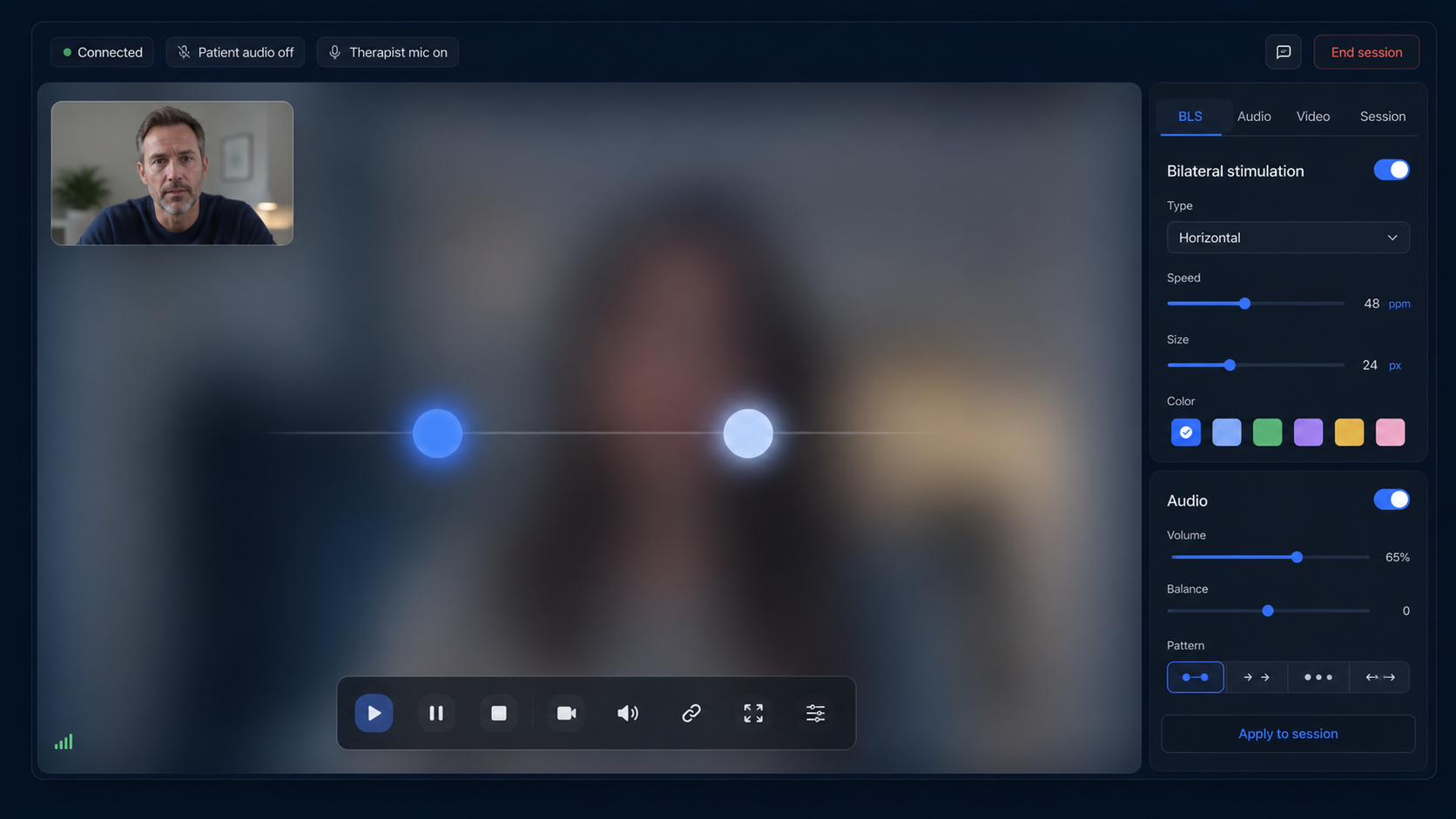
EMDRSuite can support therapist-controlled sessions and clinician-entered notes. It does not detect mania, monitor sleep or medication, predict relapse, contact a psychiatric team, assess capacity or suicide risk, or decide whether EMDR should start, continue, or pause.
FAQ
EMDR bipolar disorder
Can EMDR cure bipolar disorder?
No. Direct research examines EMDR as adjunctive trauma-focused care, not as a cure or replacement for bipolar treatment.
Does bipolar disorder automatically rule out EMDR?
No, but current mood state, risk, consent, sleep, treatment coordination, and the actual indication require assessment.
What did the main bipolar EMDR trial find?
It did not reduce the primary relapse outcome versus supportive therapy, although some mood and functioning outcomes favored EMDR later.
Can EMDRSuite detect mania or relapse?
No. It is not a mood monitor, diagnostic system, or psychiatric safety service.
References
EMDR and bipolar disorder: trauma evidence, mood stability, and safety
EMDRSuite
Put the guide into practice with EMDRSuite
Run remote EMDR with visual BLS, bilateral sounds, secure patient links, video-ready sessions, saved settings, and notes.
Continue with related EMDR guides