Personality functioning, trauma, and structured care
EMDR and borderline personality disorder: evidence, DBT, risk, and treatment planning
A therapist guide to EMDR with borderline personality disorder, PTSD, DBT and established care, emerging trials, self-harm risk, targets, outcomes, and clinical boundaries.
By the EMDRSuite Editorial Team
Product claims checked against the current EMDRSuite code and interface.
No independent clinical reviewer is named for this guide.
Borderline personality disorder is not a synonym for complex trauma
Borderline personality disorder, PTSD, complex PTSD, bipolar disorder, ADHD, dissociative disorders, substance use, and autism can share features while requiring different assessment. Adverse experiences can be clinically relevant without proving one diagnosis or making every BPD symptom a trauma memory.
Assess personality functioning, emotion and behavior regulation, relationships, identity, dissociation, trauma symptoms, self-harm and suicide risk, substances, current supports, treatment history, goals, and crisis patterns. Use non-stigmatizing language and do not infer manipulation, unreliability, or inevitable instability from the label.
Established BPD care remains the comparison, not a waiting list
NICE recommends a structured psychological treatment with an explicit approach, trained supervision, and monitoring of functioning, self-harm, depression, substance use, and BPD symptoms. A recent systematic review supports several established BPD psychotherapies with differing certainty; EMDR was not yet part of that older evidence base.
A 2025 multicentre trial of 159 people with personality disorders found ten EMDR sessions outperformed a waiting list on personality symptoms and functioning, with low dropout and no reported adverse events. Waiting-list superiority does not establish equivalence or superiority to DBT, schema therapy, mentalization-based treatment, or another active specialist treatment.
New EMDR trials are promising but do not settle sequencing
The broader personality-disorder trial included different diagnoses and only short follow-up. A separate BPD trial enrolled 76 people but only 18 completed randomized teletherapy, leaving eight EMDR and ten CBT completers; its positive results therefore carry substantial attrition and precision limits.
Decide whether the treatment aim is PTSD, a defined adverse memory linked to current functioning, or BPD symptoms themselves. Document the evidence level, ongoing BPD treatment, crisis and contact plan, consultation, consent, measures, and criteria for adding, changing, or stopping an intervention.
Risk and therapeutic boundaries are monitored throughout
Self-harm, suicidal behavior, dissociation, substance use, rapid crises, dependency fears, and treatment rupture are not one uniform contraindication. Their acuity, function, trajectory, supports, and the clinician or service's response capacity determine whether urgent care, another treatment focus, coordination, adaptation, or trauma work is appropriate.
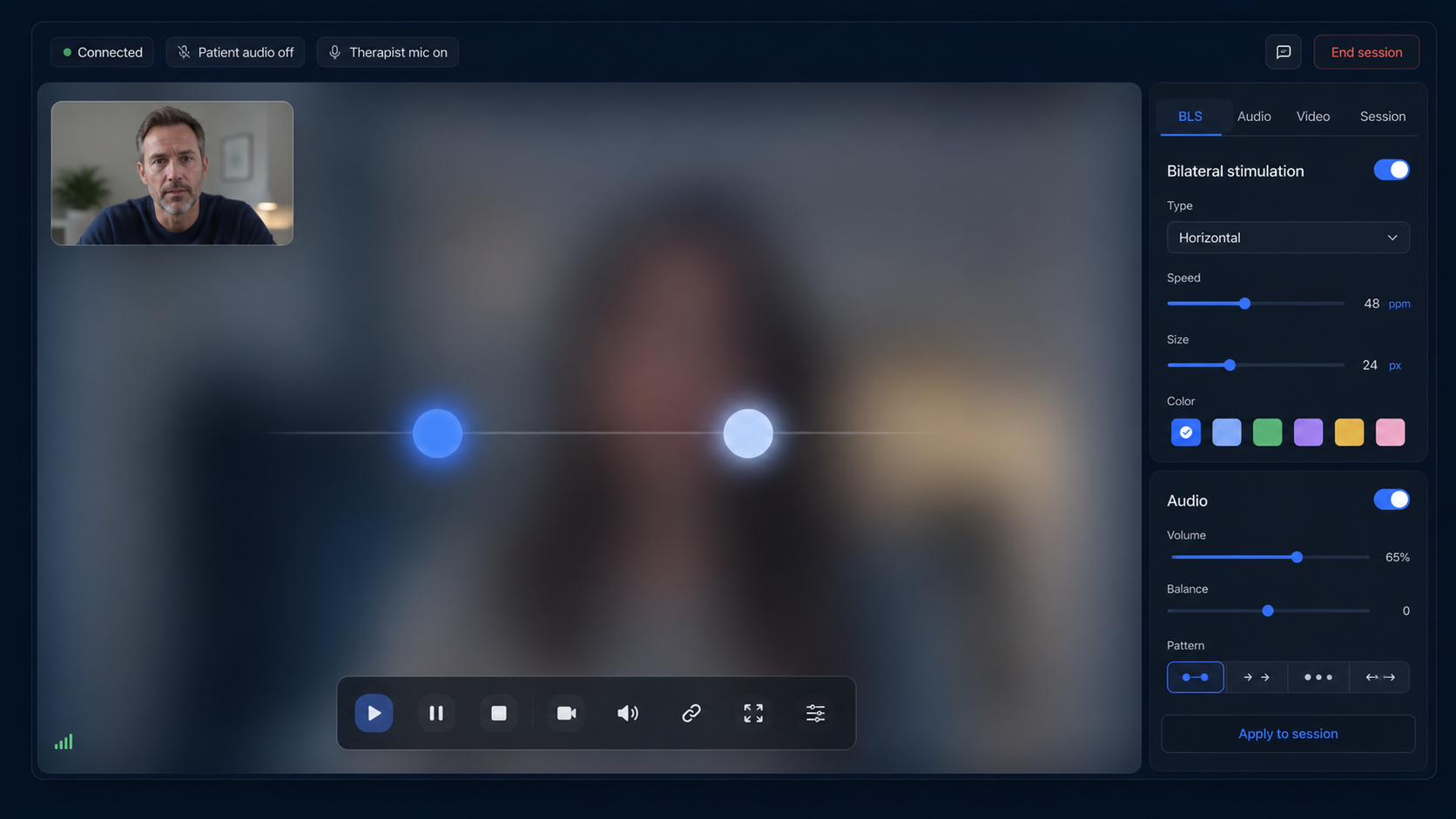
EMDRSuite supports session controls and records but does not provide DBT, crisis availability, between-session coaching, risk assessment, diagnosis, treatment contracts, or multidisciplinary coordination. Software access cannot make a clinician or setting competent for this work.
FAQ
EMDR borderline personality disorder
Is BPD the same as complex PTSD?
No. They can overlap, but they have distinct diagnostic formulations and should not be treated as interchangeable.
Is EMDR now a proven first-line treatment for BPD?
No. Recent trials are promising, but active-treatment comparisons, replication, and longer follow-up remain limited.
Must DBT always come before EMDR?
No universal sequence is established; indication, current risk, ongoing care, competence, goals, and response should guide planning.
Does EMDRSuite provide crisis management or DBT?
No. It supplies session technology and records, not specialist treatment or crisis care.
References
EMDR and borderline personality disorder: evidence, DBT, risk, and treatment planning
EMDRSuite
Put the guide into practice with EMDRSuite
Run remote EMDR with visual BLS, bilateral sounds, secure patient links, video-ready sessions, saved settings, and notes.
Continue with related EMDR guides