Sleep improvement after trauma therapy is not insomnia treatment evidence
EMDR for insomnia: sleep evidence, PTSD, and CBT-I
Separate chronic insomnia from PTSD-related sleep disturbance when considering EMDR, using CBT-I guidelines, trauma evidence, sleep assessment, and safety limits.
By the EMDRSuite Editorial Team
Product claims checked against the current EMDRSuite code and interface.
No independent clinical reviewer is named for this guide.
Insomnia needs its own assessment
Difficulty falling asleep, staying asleep, waking early, or feeling unrefreshed can reflect chronic insomnia, circadian disruption, sleep apnea, restless legs, pain, substances, medication, mania, depression, PTSD, caregiving, environment, or another medical condition. Trauma should not be inferred from poor sleep alone.
Assess duration, schedule, opportunity for sleep, daytime impairment, snoring or breathing pauses, movement symptoms, nightmares, substances, medication, risk, and sleepiness while driving. A sleep diary and validated insomnia measure answer different questions from SUD or VOC.
CBT-I is the guideline-supported first-line treatment
The American College of Physicians strongly recommends cognitive behavioral therapy for insomnia as initial treatment for adults with chronic insomnia. The American Academy of Sleep Medicine also strongly recommends multicomponent CBT-I and advises against sleep hygiene as a stand-alone treatment.
CBT-I includes sleep-specific behavioral and cognitive components; it is not ordinary CBT, relaxation alone, generic resourcing, or bilateral stimulation. Medication decisions and assessment for sleep disorders remain within appropriate medical and sleep-care roles.
PTSD sleep outcomes do not establish an insomnia protocol
EMDR can reduce PTSD symptoms for some people, and sleep may improve when trauma symptoms improve. However, a recent EMDR meta-analysis described sleep findings as low or very low certainty, while a PTSD sleep network meta-analysis found the clearest sleep-quality result for CBT-I.
Studies of PTSD, nightmares, or secondary sleep scales cannot prove that EMDR treats primary chronic insomnia. Persistent insomnia may need targeted CBT-I even after successful trauma-focused therapy, and worsening sleep, mania, suicidality, or dangerous fatigue requires prompt reassessment.
Measure sleep separately and protect the next day
If EMDR addresses a trauma target, track insomnia severity, sleep opportunity, daytime functioning, nightmares, PTSD, medication, and adverse effects separately. Schedule and pacing should account for temporary arousal, fatigue, work, childcare, and driving responsibilities after a session.
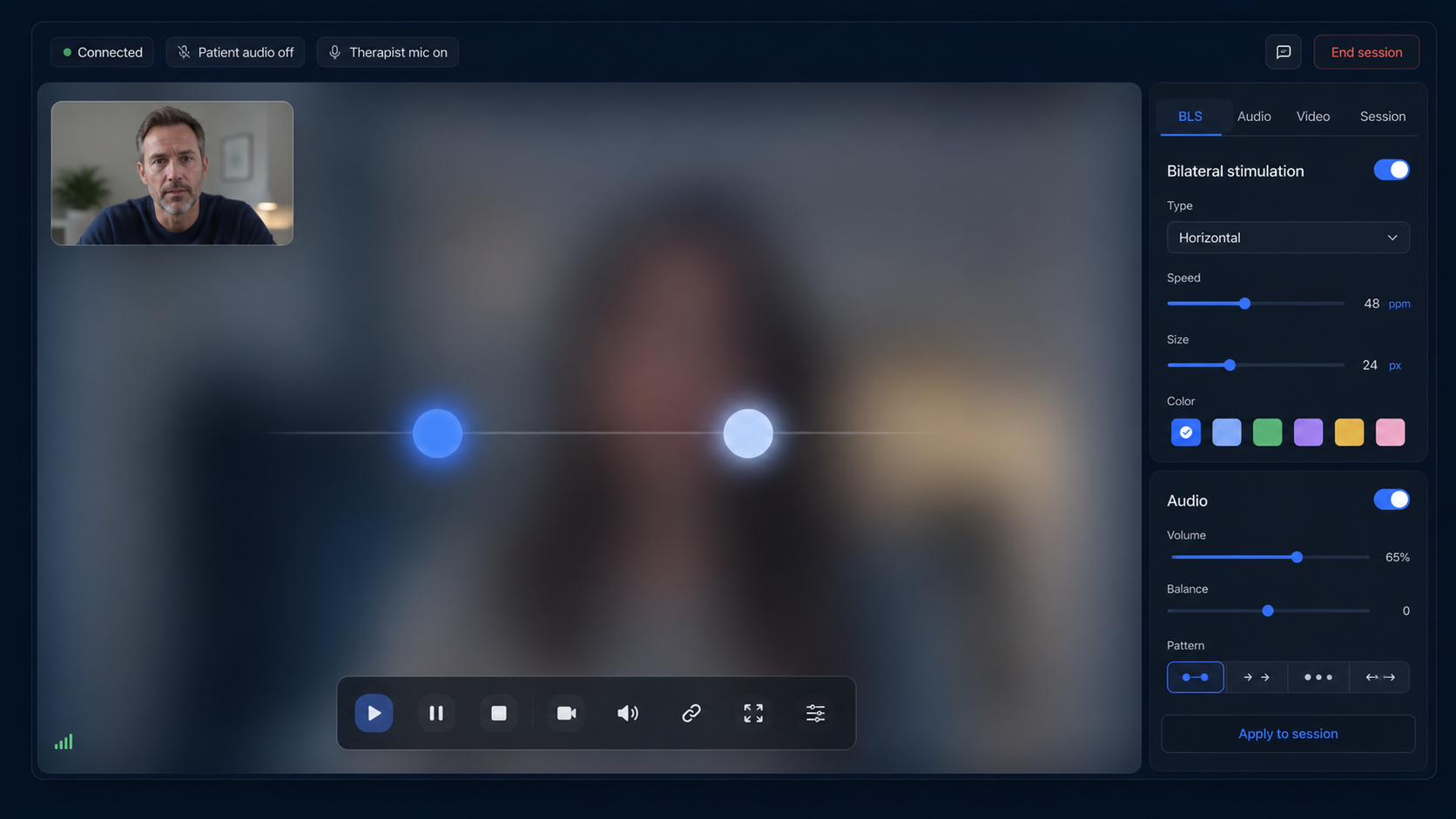
EMDRSuite provides video, bilateral stimulation, and therapist records. It does not diagnose insomnia or sleep apnea, deliver CBT-I, prescribe medication, interpret sleep studies, monitor a sleeping patient, determine fitness to drive, or guarantee sleep improvement.
FAQ
EMDR for insomnia
Is EMDR a first-line treatment for chronic insomnia?
No. Major guidelines recommend CBT-I as the initial treatment.
Can sleep improve during EMDR for PTSD?
It may, but that does not prove a specific treatment effect for primary insomnia.
Is sleep hygiene the same as CBT-I?
No. AASM advises against sleep hygiene as a stand-alone treatment.
Can EMDRSuite monitor sleep?
No. It provides session technology, not sleep measurement or treatment.
References
EMDR for insomnia: sleep evidence, PTSD, and CBT-I
EMDRSuite
Put the guide into practice with EMDRSuite
Run remote EMDR with visual BLS, bilateral sounds, secure patient links, video-ready sessions, saved settings, and notes.
Continue with related EMDR guides