Migraine is a neurological disorder, not proof of stored trauma
EMDR for migraine: small studies, standard care, and red flags
Review EMDR for migraine without overstating two small studies: distinguish acute pain, prevention, trauma targets, medical care, medication, and urgent red flags.
By the EMDRSuite Editorial Team
Product claims checked against the current EMDRSuite code and interface.
No independent clinical reviewer is named for this guide.
Diagnose the headache before choosing psychotherapy
Migraine is a neurological disorder with episodic or chronic attacks and possible sensory, gastrointestinal, cognitive, and aura symptoms. Stress or traumatic experiences can matter to some people, but migraine does not demonstrate unresolved trauma and a painful memory is not automatically the mechanism of an attack.
Clarify diagnosis, attack pattern, aura, medication use, disability, sleep, hormones, other conditions, and urgent changes. NICE advises investigation or referral for sudden severe headache, new neurological deficit, impaired consciousness, fever, major pattern change, recent head trauma, or other concerning features.
The randomized study tested a combined intervention in 43 people
A 2008 study randomized 43 people during an acute migraine to medication care or phase one of an integrated intervention combining diaphragmatic breathing, cranial compression, and EMDR. Both groups improved; the combined intervention reduced pain faster immediately after treatment.
That design cannot separate EMDR from breathing or cranial compression, used heterogeneous medications as comparison, and assessed an abortive intervention rather than long-term migraine prevention. It does not establish an EMDR migraine protocol or replacement for medical treatment.
The remaining direct evidence is preliminary
A later pilot included 11 people with chronic daily headache and treated headache-related traumas. Frequency and duration decreased, but pain intensity did not; medication and emergency visits also fell during the small uncontrolled study.
An AHRQ comparative review classified EMDR evidence for acute episodic migraine as low strength and based on single or very few trials. Established acute and preventive options have a much larger evidence base and should be discussed with an appropriately qualified medical professional.
Formulate trauma and migraine outcomes separately
EMDR may be relevant when a person also has PTSD, medical trauma, anticipatory fear, or another clearly assessed memory target. Measure those outcomes separately from headache days, attack duration, pain, medication, disability, and adverse events so improvement in one domain is not mistaken for cure of another.
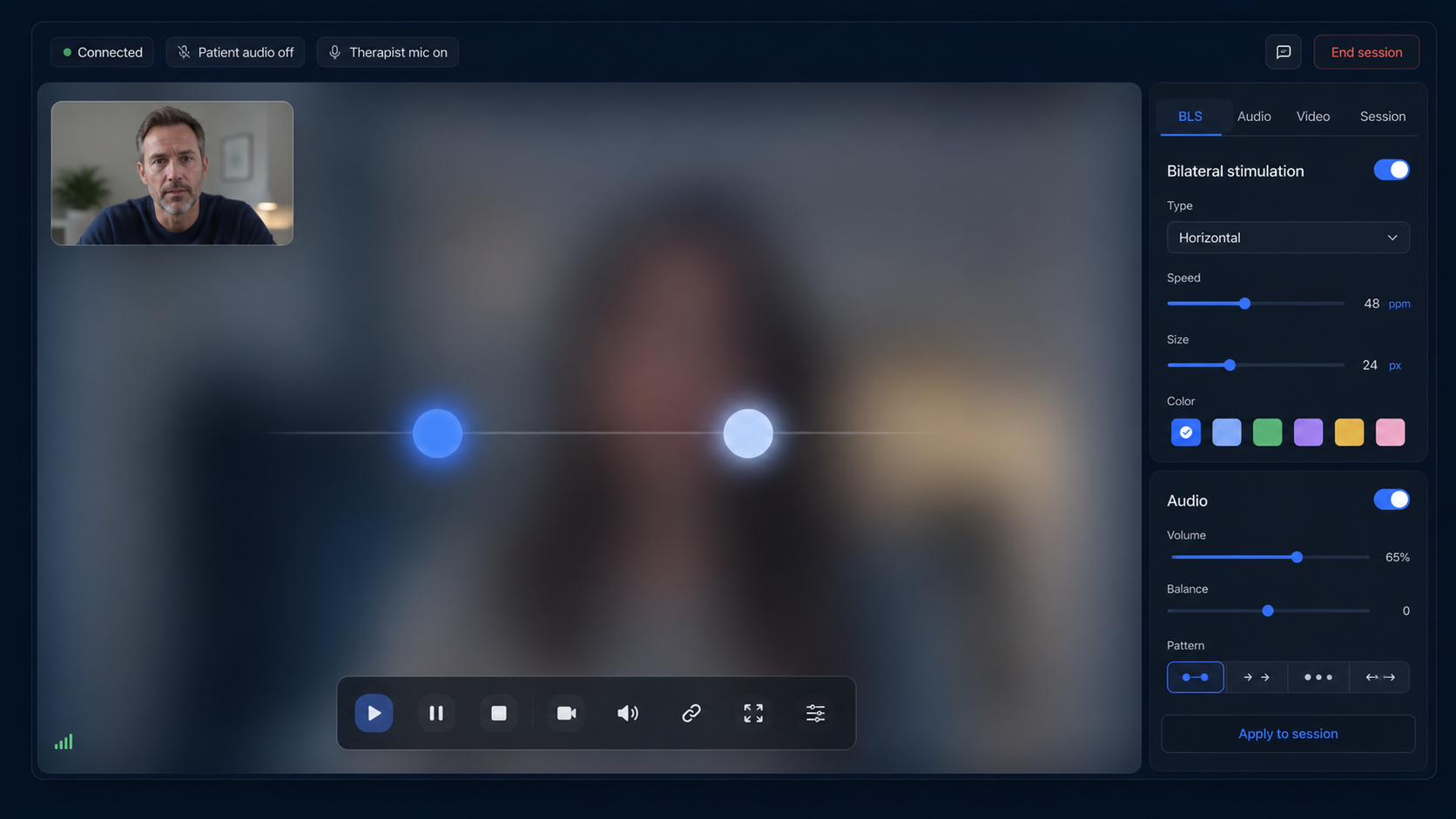
EMDRSuite does not diagnose migraine, identify aura or red flags, advise medication, monitor neurological symptoms, provide emergency care, deliver breathing or cranial techniques, select memories, or promise fewer headaches. It supports qualified therapists' remote-session workflow only.
FAQ
EMDR for migraine
Is EMDR an established migraine treatment?
No. Direct evidence consists mainly of one small combined-treatment trial and an 11-person pilot.
Did the randomized study test EMDR alone?
No. It combined EMDR with breathing and cranial compression.
Should migraine medication be stopped for EMDR?
No medication change should be made without the prescribing clinician.
Can EMDRSuite detect a dangerous headache?
No. New or concerning symptoms require appropriate medical assessment.
References
EMDR for migraine: small studies, standard care, and red flags
EMDRSuite
Put the guide into practice with EMDRSuite
Run remote EMDR with visual BLS, bilateral sounds, secure patient links, video-ready sessions, saved settings, and notes.
Continue with related EMDR guides