EMDR cognition guide
EMDR negative and positive cognition list: printable wording map
Use a printable EMDR negative and positive cognition list, editable wording map, and VOC field while preserving the patient's exact target-specific language.
By the EMDRSuite Editorial Team
Product claims checked against the current EMDRSuite code and interface.
No independent clinical reviewer is named for this guide.
Cognitions describe meaning, not only thoughts
Within an EMDR target assessment, the negative cognition captures a currently held negative belief about the self that is connected with the selected target. The positive cognition expresses what the patient would prefer to believe about the self in relation to that target.
The wording is clinically meaningful because nearby phrases can carry different implications. A library may help recall common domains such as responsibility, safety, or choice, but the final record should reflect the patient's experience and the therapist's formulation.
Use lists as prompts, never as answers
A cognition list can reduce memory load during a live session and make terminology easier to find. It becomes counterproductive when it encourages selecting the neatest pair, forcing a phrase that does not fit, or treating two columns as automatic replacements.
Good software keeps the list optional, allows free text, and makes clear that the therapist and patient establish the clinically relevant wording. It should not score, recommend, or infer a cognition from clinical notes.
Connect the positive cognition to VOC
VOC is recorded for the selected positive cognition, not as a general rating of confidence or wellbeing. Keeping the exact positive wording beside the 1-to-7 score makes later entries interpretable and reduces ambiguity when the formulation changes.
If the wording changes during the work, the record should distinguish the revised cognition from the original assessment instead of silently rewriting history. That distinction supports clearer reevaluation and professional documentation.
Protect cognition records as clinical information
Cognitions, target descriptions, emotions, and body sensations can be sensitive clinical data. They should remain in the authorized therapist record, not in URLs, analytics, ordinary support messages, or the patient joining screen.
EMDRSuite provides a multilingual cognition reference beside editable clinical fields. It is a workflow aid for qualified therapists, not a diagnostic library, a treatment script, or a self-guided exercise.
Phase 3 language resource
Printable EMDR negative and positive cognition list and wording map
Use the examples as optional language prompts, then record the patient's exact target-specific wording. A checked pair is a discussion candidate, not a clinical selection.
No server storage · no autosave · close or reload to clear
Do not force a matched pair. The positive cognition should be desirable, target-specific, and ecologically valid in the present; free text always takes priority over this reference.
Reference and drafting aid for appropriately trained professionals. It is not a prescribed cognition list, case formulation, assessment, readiness test, treatment script, or substitute for the patient's own language and clinical judgment.
FAQ
EMDR negative cognition list
What is a negative cognition in EMDR?
At a general level, it is a negative belief about the self associated with the selected target and identified during assessment by the trained therapist and patient.
What is a positive cognition in EMDR?
It is the preferred adaptive belief linked to the target. Its felt validity is commonly recorded with the VOC scale.
Should a therapist copy a cognition directly from a list?
A list is only a prompt. The selected wording needs to fit the patient's present experience and the therapist's clinical formulation.
Does EMDRSuite recommend cognitions?
No. It offers an optional multilingual reference and editable fields; it does not select, rank, or clinically interpret cognitions.
References
EMDR negative and positive cognition list: printable wording map
EMDRSuite
Put the guide into practice with EMDRSuite
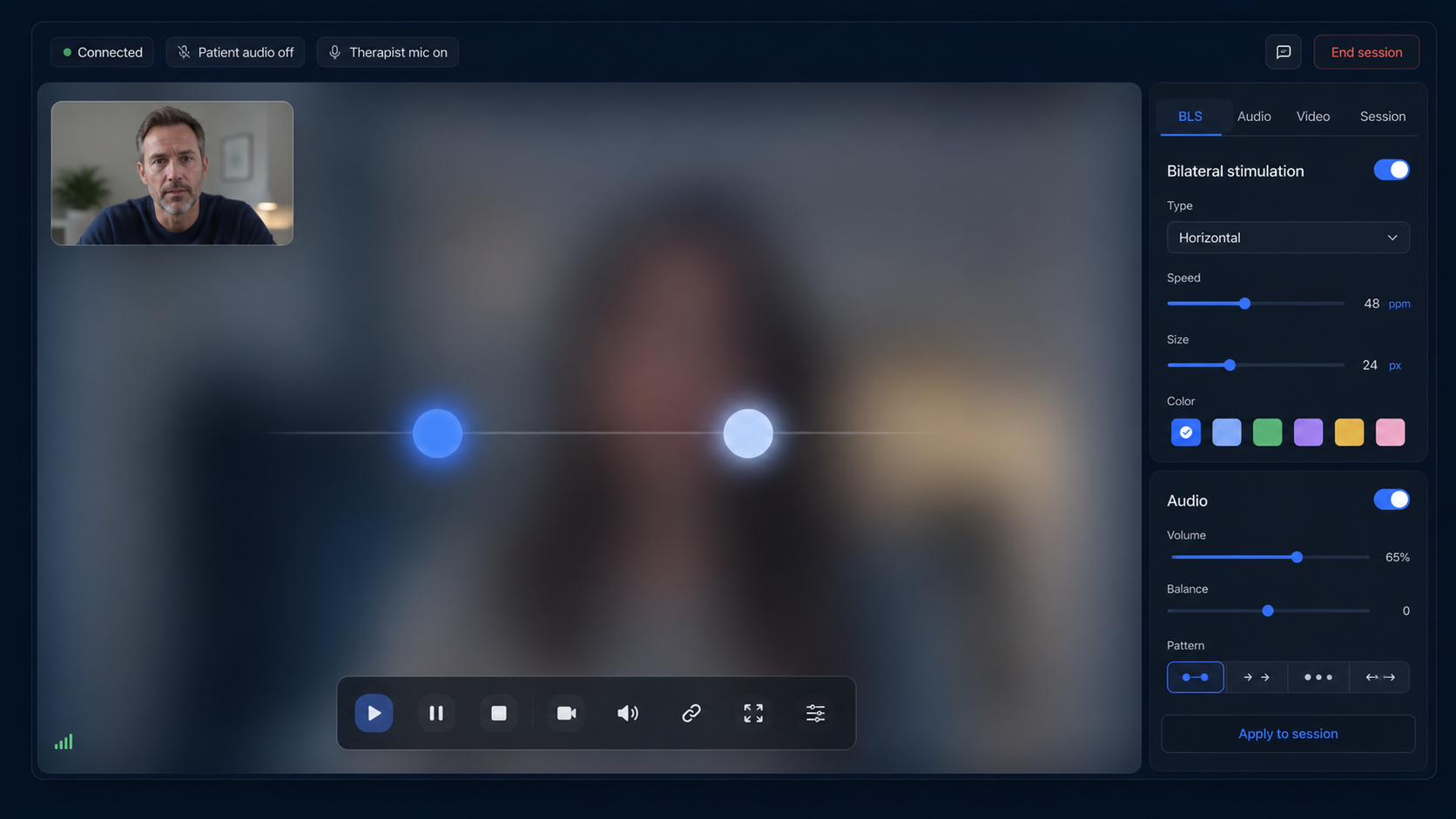
Run remote EMDR with visual BLS, bilateral sounds, secure patient links, video-ready sessions, saved settings, and notes.
Continue with related EMDR guides