Phase 7 professional guide
EMDR Phase 7 closure for incomplete targets: documentation and continuity
A professional EMDR Phase 7 closure guide for incomplete targets: what to document, how closure differs from completion, and what to preserve for reevaluation.
By the EMDRSuite Editorial Team
Product claims checked against the current EMDRSuite code and interface.
No independent clinical reviewer is named for this guide.
Closure happens every session; target completion does not
Phase 7 refers to bringing the appointment to an appropriate close whether or not work on the selected target has reached the intended endpoint. Confusing closure with completion can make records ambiguous and can hide what needs attention at the next contact.
A clear note distinguishes the end of the scheduled session, the current status of the target, and any plan for subsequent reevaluation. It should avoid claiming resolution solely because the room was closed or a timer ended.
Record continuity, not a transcript
Useful documentation can identify the target reference, phase reached, relevant ratings or observations in context, whether the target remained incomplete, the closure status, instructions or arrangements actually provided, and the intended follow-up. The exact content depends on profession, setting, jurisdiction, and the authoritative clinical record.
A concise continuity note is usually more useful than an exhaustive transcript. Patient identity, memory content, and sensitive observations should remain in the authorized record rather than analytics, URLs, ordinary support messages, or a technical incident log.
Keep closure and reevaluation linked but distinct
Closure records the end-of-session context. Reevaluation at a later contact reviews prior work, current response, and implications for the treatment plan. Preserving the original closing snapshot helps the therapist compare rather than reconstruct it from memory.
Software should keep dated entries and make amendments visible. It should not infer that a lower rating means a target is complete, automatically move the phase forward, or prescribe what the next session must contain.
For remote sessions, close the technical room too
Distance work adds practical steps: stop active BLS, confirm two-way contact, apply the agreed continuity plan if connection is uncertain, end patient access appropriately, and separate any technical event from the clinical note.
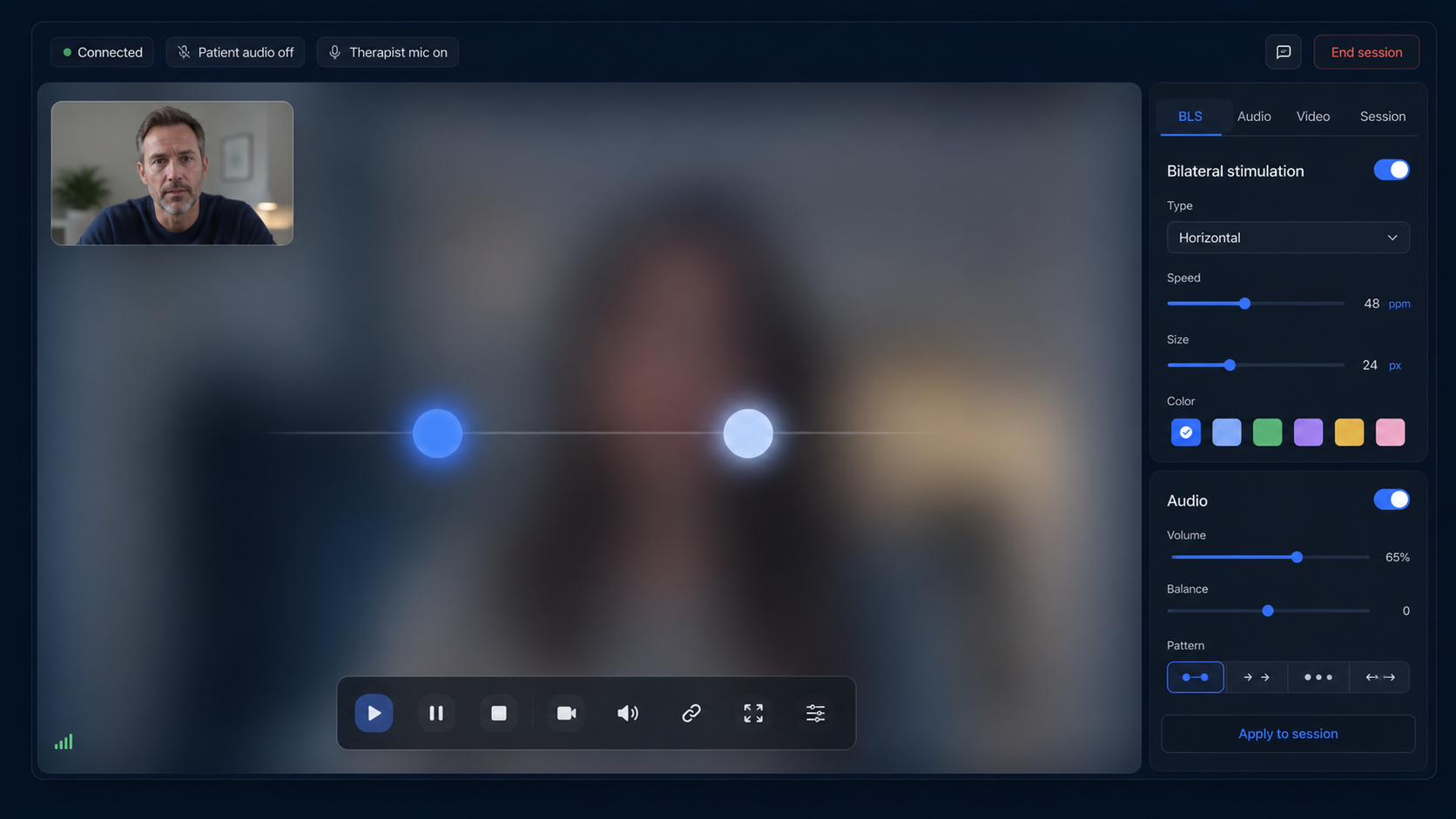
EMDRSuite lets the therapist stop the stimulus and complete the session from the same room. Clinical closure, follow-up, emergency action, and the decision to resume later remain professional responsibilities.
FAQ
EMDR Phase 7 closure
Is an incomplete EMDR target a failed session?
No. Target status and session value cannot be reduced to a completion flag; the therapist documents what occurred and plans appropriate reevaluation.
What is the difference between closure and reevaluation?
Closure addresses the end of the current session. Reevaluation reviews prior work and current response at a later point in the treatment process.
Should software automatically mark a target complete when SUD falls?
No. Ratings require context and do not replace the therapist's assessment or the broader phase framework.
Where should a video connection problem be documented?
Clinical impact belongs in the authorized clinical record when relevant; operational details should be kept separately and minimized, without patient or target content in ordinary support channels.
References
EMDR Phase 7 closure for incomplete targets: documentation and continuity
EMDRSuite
Put the guide into practice with EMDRSuite
Run remote EMDR with visual BLS, bilateral sounds, secure patient links, video-ready sessions, saved settings, and notes.
Continue with related EMDR guides