Touchstone memory is an AIP targeting concept, not recovered-memory proof
EMDR touchstone memory: targeting, evidence, and memory limits
Distinguish touchstone memory from feeder memory and floatback, review target-selection evidence, and protect collaborative, memory-informed practice.
By the EMDRSuite Editorial Team
Product claims checked against the current EMDRSuite code and interface.
No independent clinical reviewer is named for this guide.
Touchstone describes an early, clinically linked target
EMDR practice literature uses touchstone memory for an early or crucial memory understood to organize a maladaptive network connected with a current problem. Target timelines place such memories alongside present triggers and future responses within the three-pronged approach.
A feeder memory is an earlier disturbance hypothesized to block current processing, while a peelback memory emerges through associations. Floatback or affect scan are possible search strategies; none of these labels proves that a selected memory is historically first, causally primary, or the only useful target.
Targeting literature supports formulation, not a diagnostic test
Practice papers, case reports, and a 2026 trial protocol describe selecting an initial touchstone, often the earliest linked memory. The protocol demonstrates how one study plans treatment; it does not validate touchstone status or show that earliest-first is superior for every client.
Contemporary affect-focused writing also argues that chronological memory search is not the only route into relevant experience. No validated test for identifying a touchstone memory and no trial isolating touchstone-first selection were identified in the reviewed sources.
Earliest recalled is not etiologically first
Memory is reconstructive. The earliest remembered event does not prove the first event, a root cause, factual completeness, or a memory stored outside awareness. Confidence, vividness, emotional intensity, and therapeutic meaning are not independent verification.
Target selection should be collaborative, consistent with the client's goals and known history, and open to revision. Avoid suggestive searches, certainty about uncorroborated memories, or legal and diagnostic claims based on an EMDR association.
This page does not teach self-directed memory search
The guide explains terminology and evidence boundaries rather than providing floatback prompts or a self-administered route into traumatic material. Clinicians need training, consent, readiness assessment, closure, and a plan for dissociation or destabilization.
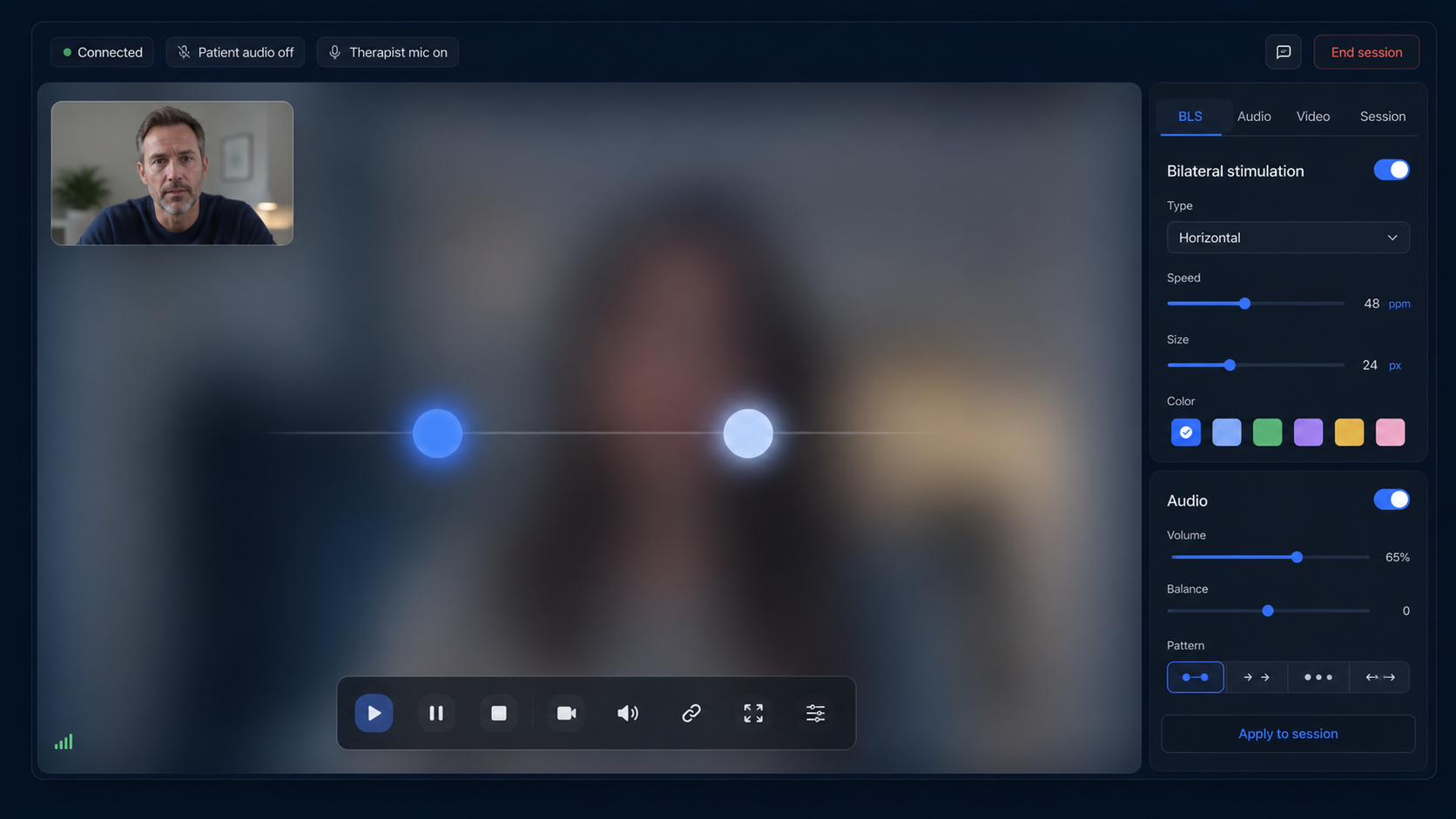
EMDRSuite supports remote session logistics and therapist-controlled BLS. It does not infer or rank target memories, label a touchstone, verify an autobiographical account, or decide which memory should be processed.
FAQ
EMDR touchstone memory
Is a touchstone memory always the earliest memory?
No. It is commonly described as early and foundational within a formulation, but the earliest recalled event is not necessarily historically first, causal, or the best initial target.
How is touchstone different from feeder memory?
Touchstone refers to an early organizing memory in a network. Feeder memory usually refers to an earlier disturbance hypothesized to maintain or block processing of another target.
Does finding a touchstone recover a hidden memory?
No. Association in therapy does not verify repression, historical accuracy, or causation. Memory should be approached as reconstructive and claims should remain appropriately uncertain.
Does EMDRSuite select touchstone memories?
No. Target formulation and sequencing remain clinician-client decisions; the product does not infer, rank, or validate memories.
References
EMDR touchstone memory: targeting, evidence, and memory limits
EMDRSuite
Put the guide into practice with EMDRSuite
Run remote EMDR with visual BLS, bilateral sounds, secure patient links, video-ready sessions, saved settings, and notes.
Continue with related EMDR guides