A blocking belief is a formulation hypothesis, not a hidden diagnosis
EMDR blocking beliefs questionnaire: evidence and boundaries
Review Jim Knipe's blocking-beliefs concept, questionnaire provenance, evidence limits, differential formulation, copyright, and safe clinical use.
By the EMDRSuite Editorial Team
Product claims checked against the current EMDRSuite code and interface.
No independent clinical reviewer is named for this guide.
Knipe introduced hidden blocking beliefs and a worksheet
Legacy Library records trace Jim Knipe's article on hidden blocking beliefs to the 1997 EMDRIA Newsletter and a corrected worksheet to 1998. The concept describes a belief or point of view that may be relevant when processing appears blocked.
A blocking belief is not automatically the negative cognition selected in standard target assessment. It also differs from a feeder memory, ecological appropriateness, lack of readiness, an alliance rupture, misunderstanding, current danger, or a clinician intervention that has become too directive.
The questionnaire is a clinical aid, not a validated test
EMDRIA education continues to teach Knipe's questionnaire within broader work on avoidance, defenses, attunement, affect management, and the eight phases. The 2026 Toolbox Method paper states that support for the wider framework is still primarily empirical and practice-based.
No psychometric validation of the Blocking Beliefs Questionnaire and no controlled outcome study isolating it were identified through 28 August 2026. A response may support collaborative exploration; it cannot reveal an objective hidden truth or establish why processing stopped.
Formulation must stay collaborative and falsifiable
Possible explanations should be checked against the client's language, goals, consent, present conditions, developmental and cultural context, and alternative hypotheses. Labeling disagreement or hesitation as resistance can conceal safety concerns or pressure a client toward the therapist's preferred story.
Parts or defense language may help some clients but should remain optional metaphor rather than fact or diagnosis. When processing changes, assess risk, dissociation, window of tolerance, current threat, medication or substance effects, and technical interruptions before selecting an interweave.
Use original training material rather than copied PDFs
This page does not reproduce the questionnaire, worksheet items, scripts, or scoring. Search demand for a PDF does not override copyright, training, informed consent, or scope-of-practice requirements.
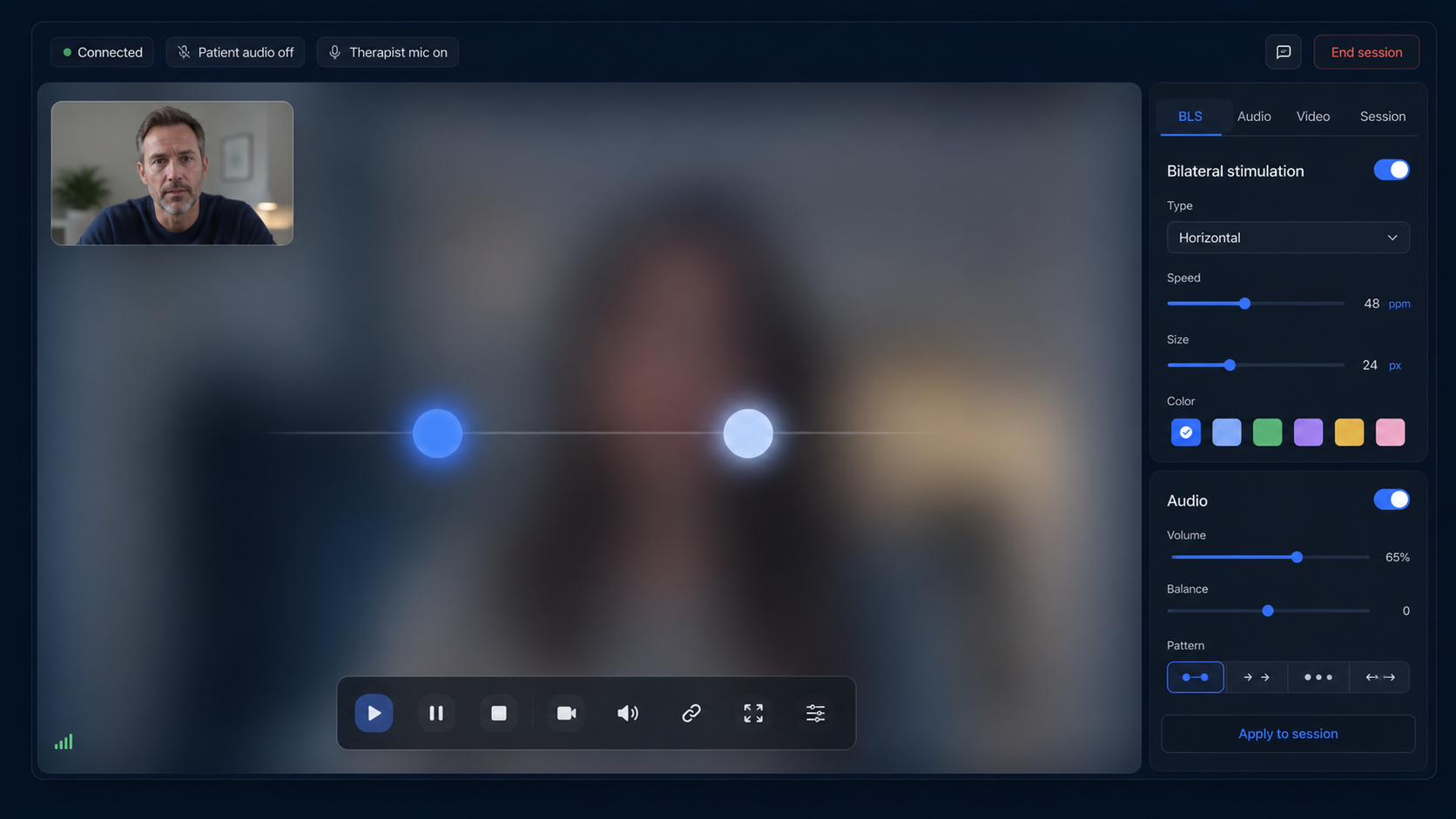
EMDRSuite can document therapist-authored notes and deliver therapist-controlled BLS. It does not generate the questionnaire, detect blocking beliefs, interpret answers, or recommend cognitive interweaves.
FAQ
EMDR blocking beliefs questionnaire
What is a blocking belief in EMDR?
It is a clinical formulation term for a belief or viewpoint that may help explain stalled processing. It remains a hypothesis to explore, not a diagnosis or hidden fact.
Is a blocking belief the same as a negative cognition?
No. A standard negative cognition is part of target assessment. A proposed blocking belief concerns why change may feel unsafe, unacceptable, impossible, or otherwise constrained.
Is the questionnaire psychometrically validated?
No psychometric validation or controlled component study was identified in the reviewed sources through 28 August 2026.
Can I download the questionnaire here?
No. This evidence page does not reproduce the questionnaire or worksheet. Use authorized source material and appropriate professional training.
References
EMDR blocking beliefs questionnaire: evidence and boundaries
EMDRSuite
Put the guide into practice with EMDRSuite
Run remote EMDR with visual BLS, bilateral sounds, secure patient links, video-ready sessions, saved settings, and notes.
Continue with related EMDR guides