Attachment-Focused EMDR is a named integrative model, not a synonym for all relational EMDR
Attachment-Focused EMDR: model, evidence, and training boundaries
Distinguish Parnell's Attachment-Focused EMDR from standard EMDR and broader attachment-informed care while reviewing evidence and safety.
By the EMDRSuite Editorial Team
Product claims checked against the current EMDRSuite code and interface.
No independent clinical reviewer is named for this guide.
The name refers to Parnell's specific integrative model
Laurel Parnell's 2013 book describes attachment-based modifications to EMDR, emphasizing the therapeutic relationship, expanded preparation and resourcing, target development, interweaves, and adaptations to the standard protocol. The Parnell Institute uses Attachment-Focused EMDR and AF-EMDR for its training model.
That model is not interchangeable with every attachment-informed EMDR session, standard EMDR for relational trauma, attachment therapy generally, RDI, ego-state work, or a universal protocol for complex PTSD.
Research on EMDR and attachment is not a trial of AF-EMDR
A 2023 uncontrolled pilot followed 18 adults receiving supervised eight-phase EMDR and observed some reductions in attachment insecurity. The authors described the evidence as emerging; the study did not test Parnell's model against standard EMDR or another treatment.
Randomized studies support complete EMDR for some adults with PTSD from childhood trauma, including direct and phase-based delivery. They answer questions about EMDR for PTSD, not whether AF-EMDR's added components are necessary, superior, or independently effective.
Attachment language should not become diagnosis or recovered-memory certainty
Attachment style is not a complete diagnosis, fixed identity, or proof of what happened before explicit memory. Current relational patterns may have multiple developmental, cultural, neurodivergent, medical, social, and situational explanations.
Use collaborative formulation rather than blaming caregivers or promising attachment repair. Imagery and body responses do not verify forgotten events, and treatment claims should distinguish PTSD symptom evidence from changes in relationships or attachment measures.
Training claims and remote scope need precision
Clinicians should state whether they are trained in standard EMDR, Parnell's named model, another attachment-informed approach, or an integration of their own. Consent should explain meaningful modifications, evidence uncertainty, alternatives, supervision, and how progress will be measured.
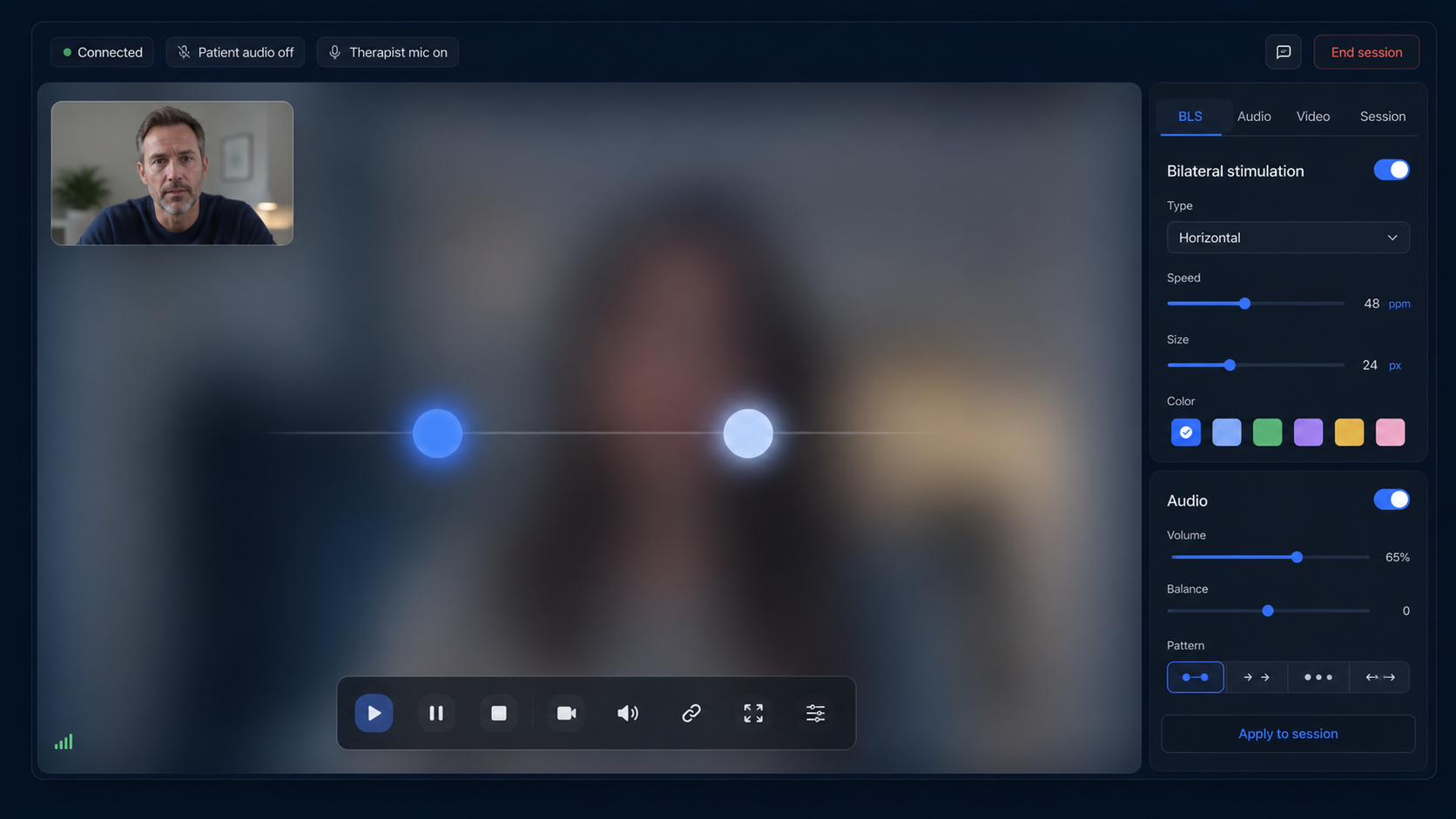
EMDRSuite provides remote video, BLS, patient access, and session controls. It does not teach or certify AF-EMDR, generate attachment figures, classify attachment, reconstruct preverbal memories, or choose protocol modifications.
FAQ
Attachment-Focused EMDR
Who developed Attachment-Focused EMDR?
Laurel Parnell developed the named model and described it in her 2013 book.
Is AF-EMDR the same as standard EMDR?
No. It is an integrative model with attachment-oriented modifications and expanded resourcing.
Do attachment studies prove AF-EMDR?
No. Small EMDR attachment studies and PTSD trials do not isolate Parnell's model or its added components.
Does EMDRSuite teach Attachment-Focused EMDR?
No. It supplies remote-session technology and does not provide training, certification, attachment assessment, or protocols.
References
Attachment-Focused EMDR: model, evidence, and training boundaries
EMDRSuite
Put the guide into practice with EMDRSuite
Run remote EMDR with visual BLS, bilateral sounds, secure patient links, video-ready sessions, saved settings, and notes.
Continue with related EMDR guides