Childhood trauma is an exposure history, not one adult diagnosis
EMDR for childhood trauma in adults: evidence and clinical boundaries
Review EMDR for adults affected by childhood trauma using two direct trials, PTSD guidance, differential assessment, safeguarding, and outcome limits.
By the EMDRSuite Editorial Team
Product claims checked against the current EMDRSuite code and interface.
No independent clinical reviewer is named for this guide.
Start with the current problem, not the umbrella label
Childhood trauma may refer to abuse, neglect, loss, violence, illness, discrimination, caregiving disruption, or another experience before adulthood. It can be associated with PTSD, complex PTSD, depression, dissociation, substance use, relationship difficulties, or no current disorder. Exposure does not itself establish a diagnosis or treatment target.
Assess present symptoms, function, strengths, current safety, ongoing contact or coercion, safeguarding duties, dissociation, psychosis, sleep, substance use, self-harm, medical factors, and what the person wants to change. Do not infer unremembered abuse from a symptom, attachment style, body sensation, or questionnaire score.
A 155-person trial directly tested childhood-trauma PTSD
An international randomized trial included 155 adults with PTSD linked to trauma before age 16. Up to twelve 90-minute sessions of EMDR or imagery rescripting produced large symptom reductions at eight weeks, d = 1.73 for EMDR and d = 1.72 for imagery rescripting, with 7.7% dropout and no significant between-treatment difference.
This supports two active trauma-focused options for diagnosed childhood-trauma PTSD. It does not show that every adult with adversity needs trauma processing, that EMDR was superior, or that change in PTSD proves the historical interpretation of a memory.
A phase-based trial does not settle sequencing for everyone
A later trial randomized 68 adult survivors of childhood abuse with PTSD to eight STAIR sessions followed by twelve sessions of EMDR or narrative therapy. Both groups improved through 12 months and did not differ significantly. Because both received skills training and an active trauma phase, it does not isolate either component.
NICE recommends manualized EMDR for eligible adults with PTSD after non-combat trauma and notes that more sessions may be needed after multiple traumas. A network meta-analysis of 90 trials and 6,560 adults supports EMDR and trauma-focused CBT broadly, with moderate-to-low evidence quality; it is not specific to childhood trauma.
Measure adult recovery rather than completion of a memory list
Agree whether treatment concerns PTSD, one memory, nightmares, avoidance, shame, relationships, dissociation, or functioning. Track that outcome, review readiness and consent over time, and preserve alternatives such as trauma-focused CBT or imagery rescripting. More memories are not automatically better targets.
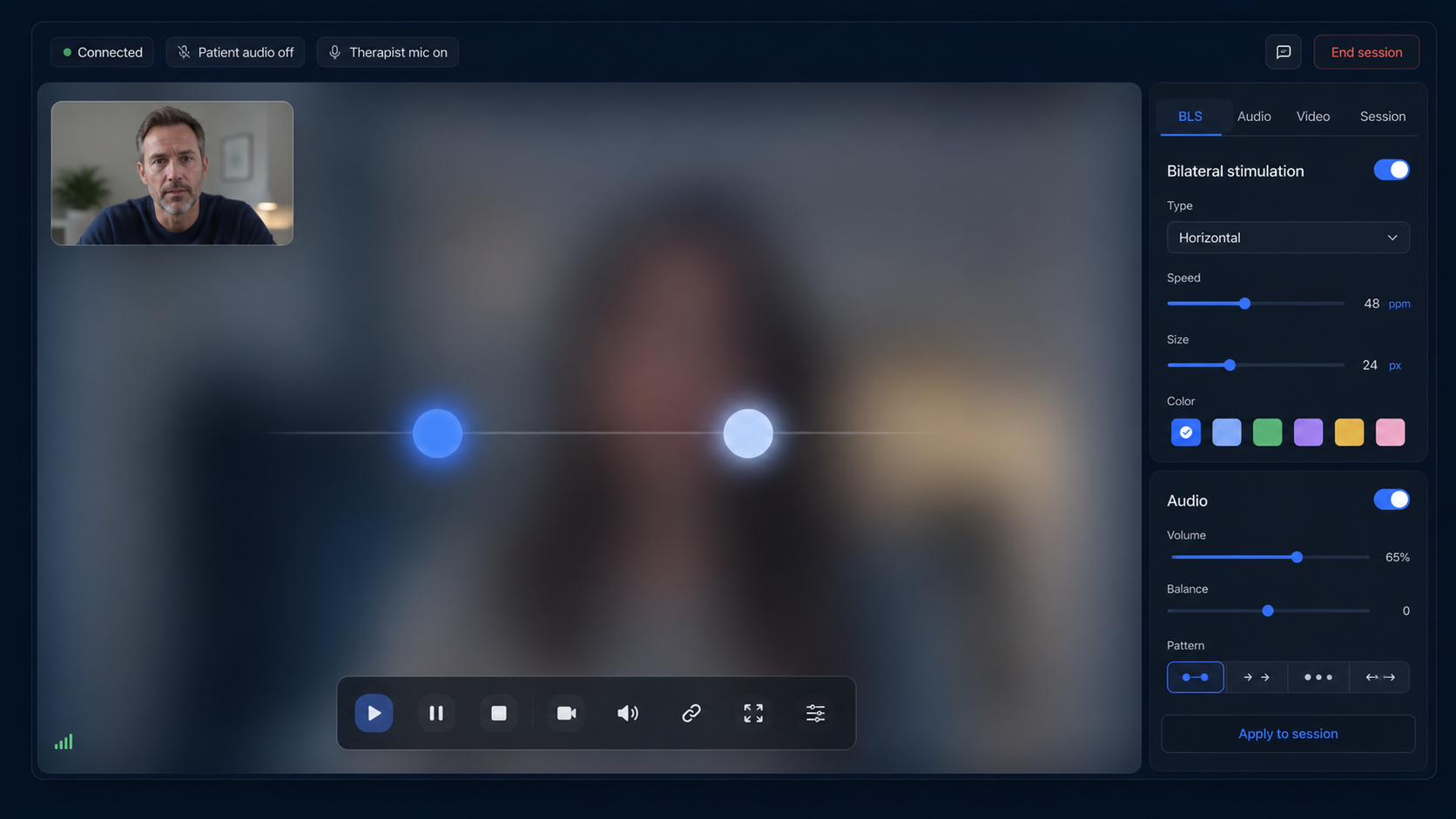
EMDRSuite does not diagnose childhood trauma, investigate abuse, recover or verify memories, assess safeguarding, select targets, determine readiness, monitor crisis risk, or replace supervision. It provides therapist-controlled video, bilateral stimulation, worksheets, and records for qualified clinical use.
FAQ
EMDR for childhood trauma
Does childhood trauma always cause PTSD?
No. Outcomes vary, and diagnosis depends on current symptoms, duration, impairment, and differential assessment.
What direct EMDR evidence exists?
A 155-person active-comparator trial found large improvements with both EMDR and imagery rescripting and no significant difference.
Is a stabilization phase always required?
Not automatically. Sequencing should follow assessment, risk, preference, dissociation, skills, setting, and the evidence for the specific presentation.
Can EMDRSuite confirm childhood abuse?
No. It cannot investigate events or verify memories.
References
EMDR for childhood trauma in adults: evidence and clinical boundaries
EMDRSuite
Put the guide into practice with EMDRSuite
Run remote EMDR with visual BLS, bilateral sounds, secure patient links, video-ready sessions, saved settings, and notes.
Continue with related EMDR guides