Abreaction describes intense responding; it is not required healing or proof of reprocessing
Abreaction during EMDR: meaning, safety, dissociation, and response
Understand what clinicians may call abreaction, why intensity is not proof of success, evidence gaps on harms, and remote safety planning.
By the EMDRSuite Editorial Team
Product claims checked against the current EMDRSuite code and interface.
No independent clinical reviewer is named for this guide.
Abreaction is a description, not an outcome measure
Clinicians may use abreaction for a marked emotional, bodily, behavioral, or memory-linked reaction during therapy. The term is used inconsistently and does not by itself distinguish tolerable activation, panic, dissociation, a trauma response, a medical event, or an adverse effect.
Intensity is not required for EMDR to work and is not proof that a memory was accurate, fully accessed, released, or reprocessed. Quiet sessions are not treatment failure, and dramatic sessions are not automatically therapeutic progress.
EMDR harm reporting is too limited for confident frequency claims
A 2025 review examined 51 randomized EMDR trials from recent meta-analyses. Only nine mentioned adverse effects, only one used systematic assessment, and five of the nine reported effects that were generally mild and temporary.
That underreporting means neither clinicians nor websites should claim that abreactions are always normal, harmless, cleansing, or rare. Dropout alone cannot measure harm, and post-session distress needs explicit monitoring rather than retrospective reassurance.
Dissociation and medical risk require differential assessment
Loss of orientation, marked detachment, unresponsiveness, confusion, unusual movements, chest pain, fainting, neurological change, intoxication, or escalating self-harm risk should not be relabeled as productive processing. Pause and assess within competence, using emergency or medical pathways when indicated.
Preparation, consent, pacing, dual attention, stop signals, stabilization, and closure are individualized clinical responsibilities. No universal script or SUD threshold can decide whether to continue.
Remote sessions need an observable safety plan before activation
EMDRIA's virtual guidance specifically anticipates dissociation and abreaction. Confirm the patient's location, privacy, emergency contact and local services, camera and audio fallback, disconnection plan, explicit stop signal, time for closure, and follow-up when clinically needed.
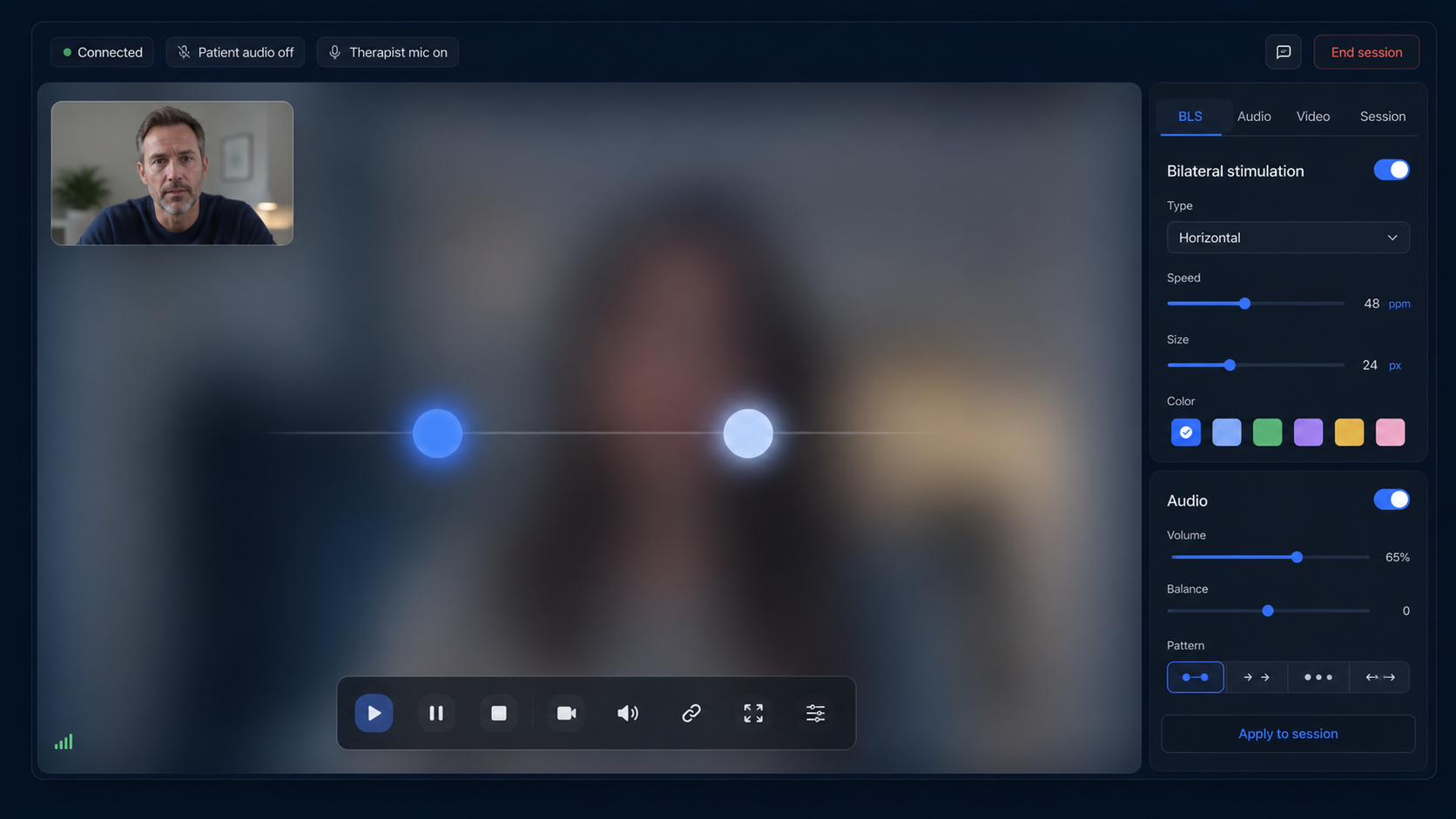
EMDRSuite supports live presence, safety signaling, reconnection, BLS controls, and session completion. It cannot detect an abreaction, score tolerance, diagnose dissociation, summon emergency care, or decide whether processing should continue.
FAQ
EMDR abreaction
What does abreaction mean in EMDR?
It is an inconsistently used term for an intense emotional, bodily, behavioral, or memory-linked response during therapy.
Does a strong abreaction mean EMDR is working?
No. Intensity is neither required nor proof of accurate memory, release, or successful reprocessing.
Are EMDR adverse effects well measured?
No. A recent review found that only 9 of 51 trials mentioned adverse effects and only one assessed them systematically.
Can EMDRSuite detect an abreaction?
No. It supports live remote sessions but does not diagnose, score tolerance, monitor medical risk, or make continuation decisions.
References
Abreaction during EMDR: meaning, safety, dissociation, and response
EMDRSuite
Put the guide into practice with EMDRSuite
Run remote EMDR with visual BLS, bilateral sounds, secure patient links, video-ready sessions, saved settings, and notes.
Continue with related EMDR guides