Early experience, memory, and uncertainty
EMDR for preverbal trauma or no explicit memory: what evidence can and cannot show
A therapist guide to preverbal trauma, infantile amnesia, implicit and autobiographical memory, body sensations, suggestion risk, target selection, and responsible uncertainty.
By the EMDRSuite Editorial Team
Product claims checked against the current EMDRSuite code and interface.
No independent clinical reviewer is named for this guide.
No explicit memory does not prove a preverbal traumatic event
Adults usually have few autobiographical memories from the first three to four years of life. Reviews describe infantile amnesia as a developmental phenomenon involving multiple memory, brain, language, and self systems, not a simple locked archive waiting to be opened.
Early experiences can influence later development without yielding a retrievable narrative. That possibility cannot identify what happened to one person, when it happened, who was involved, or whether a current symptom comes from infancy.
A body sensation is clinically real but not historical verification
Sensations, impulses, images, emotions, relationship expectations, and fragments can be important present experiences. They may have many contributors, including current stress, known trauma, learning, pain, medical factors, sleep, anxiety, and suggestion.
Do not label a sensation as a body memory of abuse or birth trauma, and do not present imagery that emerges during bilateral stimulation as recovered fact. Vividness, emotion, familiarity, and confidence are not independent corroboration.
Memory work requires neutral language and active suggestion safeguards
Recent reviews of recovered-memory research emphasize reconstructive memory and the absence of a unique mechanism that verifies a recovered account. Therapist expectations, repeated searching, leading questions, hypnosis-like practices, and inaccurate memory metaphors can increase risk.
Ask open questions, distinguish experience from inference, document uncertainty, avoid confirming an unverified narrative, and consider forensic or safeguarding implications. If a new allegation or immediate danger emerges, follow local professional and legal duties without investigating it in therapy.
Target what is available without inventing what is missing
A clinician may formulate around present triggers, symptoms, beliefs, sensations, relationship patterns, or clearly remembered events when indicated and within competence. The treatment goal can be improved functioning and reduced distress, not production of an origin story.
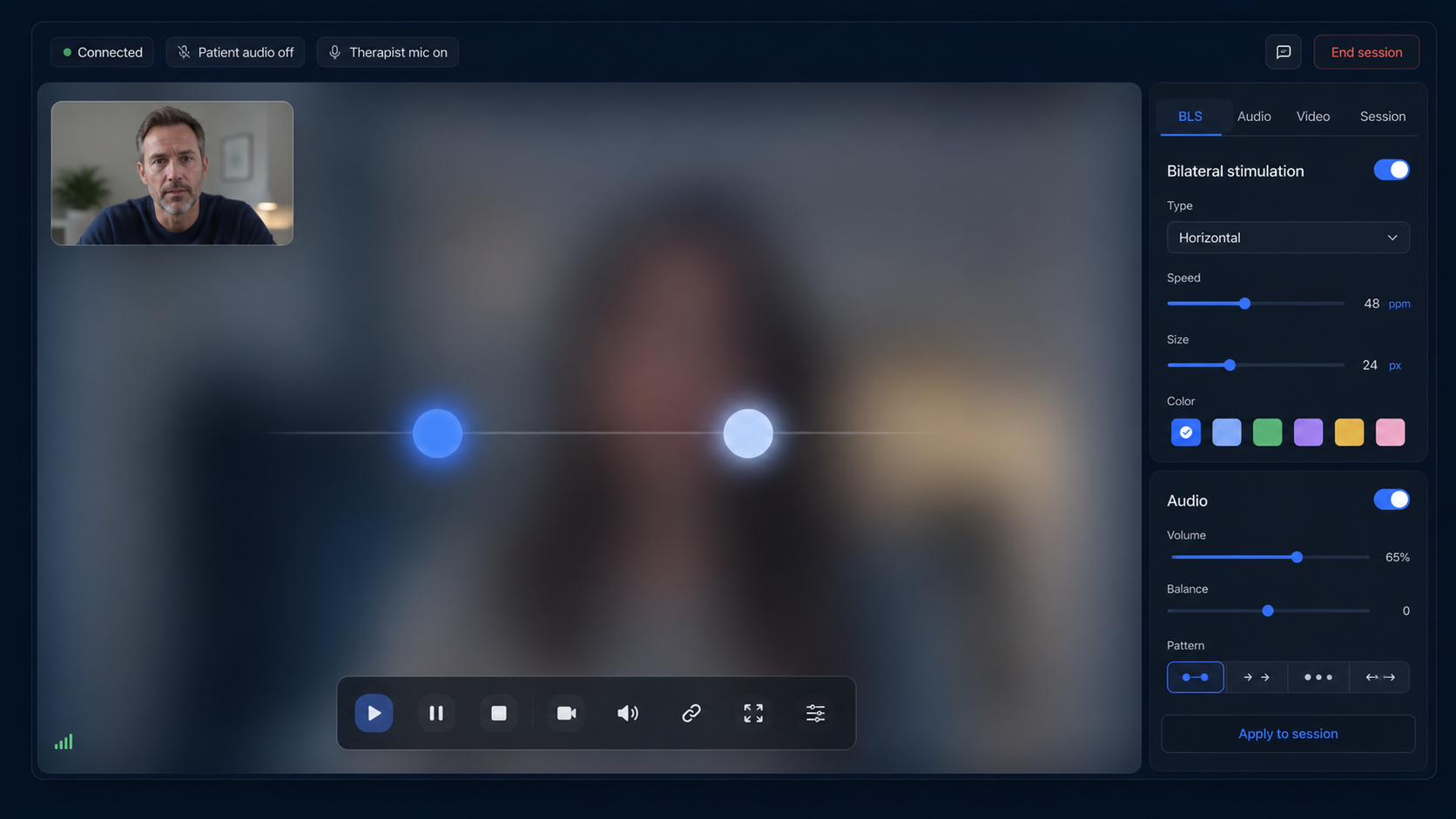
EMDRSuite can deliver therapist-controlled bilateral stimulation and store clinician-entered notes. It cannot recover memories, verify historical truth, detect preverbal trauma, interpret body sensations, or protect a therapist from suggestive practice.
FAQ
EMDR preverbal trauma
Can adults remember trauma from infancy?
Adults generally lack ordinary autobiographical recall from infancy; later experiences or fragments cannot by themselves verify a specific infant event.
Are body sensations proof of implicit trauma memory?
No. They are valid present experiences but do not establish a historical event or its cause.
Can EMDR recover a hidden memory?
EMDR should not be offered as a memory-recovery or fact-verification procedure.
What can be targeted when there is no clear memory?
A qualified clinician may work with present triggers, symptoms, meanings, or known events while preserving uncertainty and avoiding invented narratives.
References
EMDR for preverbal trauma or no explicit memory: what evidence can and cannot show
EMDRSuite
Put the guide into practice with EMDRSuite
Run remote EMDR with visual BLS, bilateral sounds, secure patient links, video-ready sessions, saved settings, and notes.
Continue with related EMDR guides