Present-moment practice and trauma-memory processing are not the same task
EMDR and mindfulness for PTSD: evidence, integration, and limits
Compare EMDR and mindfulness-based interventions for PTSD by task, evidence quality, sequencing, adverse responses, remote practice, and product boundaries.
By the EMDRSuite Editorial Team
Product claims checked against the current EMDRSuite code and interface.
No independent clinical reviewer is named for this guide.
Mindfulness and EMDR direct attention differently
Mindfulness-based programmes train ways of attending to present experience, often through repeated meditation practice. EMDR is an eight-phase psychotherapy that assesses specific memories and uses dual attention with BLS during reprocessing, then closure and reevaluation.
Both may involve noticing sensations, thoughts and emotion without making them identical. Grounding, present orientation, relaxation, mindfulness, dual attention and memory reprocessing have different purposes and should be named accurately in consent and records.
Mindfulness evidence is substantial but methodologically uneven
A 2024 umbrella review identified 69 systematic reviews, including 27 meta-analyses and 83 primary studies. Only 7.2% of reviews were rated rigorous; a meta-meta-analysis from 22 meta-analyses and 35 unique articles estimated a medium PTSD symptom effect.
A military-focused review included 19 articles and 1,326 participants, while an earlier meditation review included 10 trials and 643 participants and rated findings low to moderate quality. None establishes that mindfulness equals or outperforms EMDR in a direct randomized comparison.
Integration needs purpose, consent, and response monitoring
A brief present-focused practice may support orientation or closure for some patients, but one calmer session does not prove readiness for trauma processing. Others may find sustained inward attention, closed eyes, silence or body focus activating, dissociative, inaccessible or culturally mismatched.
Define whether mindfulness is a separate treatment, an adjunct, a patient preference or one optional skill. Offer alternatives, an opt-out, eyes-open practice and explicit stop control; monitor PTSD, function, adherence and adverse responses separately.
EMDRSuite is not a meditation programme or attention sensor
Remote integration requires privacy, camera and audio choices, emergency planning, reconnection and clarity about what happens between sessions. A platform cannot infer mindful awareness from silence, gaze, breathing or a lower SUD rating.
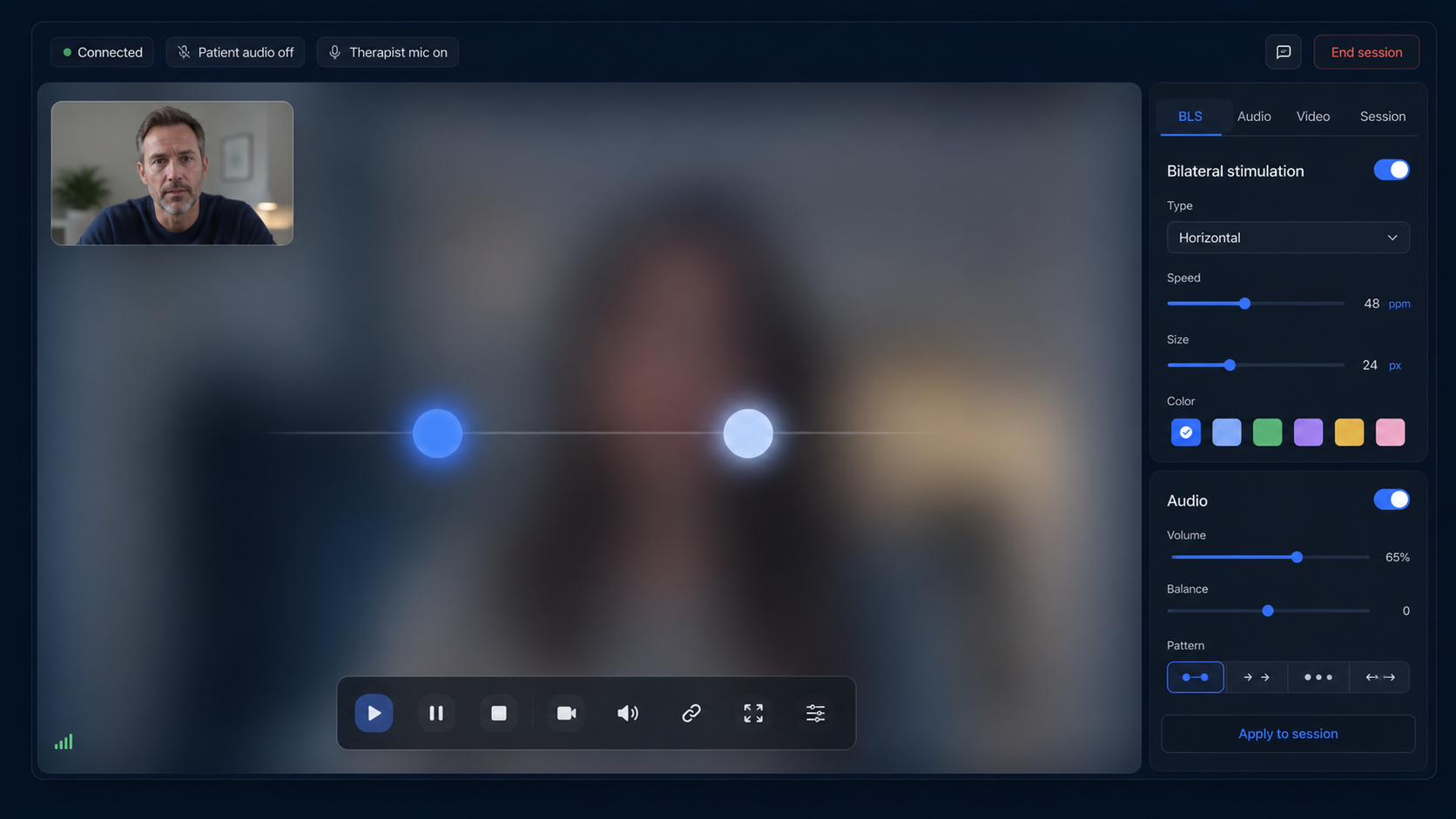
EMDRSuite provides video, therapist-controlled BLS and notes. It does not teach mindfulness, generate meditations, monitor breathing or attention, certify readiness, choose sequencing or replace trained psychotherapy.
FAQ
EMDR and mindfulness
Is mindfulness the same as EMDR?
No. They use different treatment structures and attentional tasks.
Which has stronger guideline support for PTSD?
EMDR is a named trauma-focused treatment in major guidelines; mindfulness evidence is promising but heterogeneous.
Can mindfulness prepare everyone for EMDR?
No. It may help some people and activate or exclude others; readiness requires broader assessment.
Does EMDRSuite deliver mindfulness?
No. It provides video and BLS controls, not a meditation programme or attention monitor.
References
EMDR and mindfulness for PTSD: evidence, integration, and limits
EMDRSuite
Put the guide into practice with EMDRSuite
Run remote EMDR with visual BLS, bilateral sounds, secure patient links, video-ready sessions, saved settings, and notes.
Continue with related EMDR guides