Body awareness is broader than one branded method
EMDR vs Somatic Experiencing: evidence and practical differences
Compare EMDR with Somatic Experiencing and broader somatic therapy: treatment structure, body attention, PTSD evidence, touch, pacing, and remote limits.
By the EMDRSuite Editorial Team
Product claims checked against the current EMDRSuite code and interface.
No independent clinical reviewer is named for this guide.
Both attend to the body, but with different structures
EMDR includes body sensations during assessment, processing, and the phase-six body scan within an eight-phase memory-focused protocol. Somatic Experiencing is a branded body-oriented approach that emphasizes interoceptive and proprioceptive sensations, resources, gradual contact with activation, and completion or regulation of defensive responses.
The umbrella term somatic therapy can refer to many unrelated practices. It should not be treated as a single protocol or evidence category. Touch may be used in some Somatic Experiencing practice, whereas EMDR does not require touch; any touch introduces separate consent, cultural, professional, and safeguarding considerations.
Research is promising but differently mature
EMDR is included in major adult PTSD guidelines. A Somatic Experiencing scoping review screened 83 papers and included 16; it found preliminary positive signals but mixed study quality and called for less biased randomized research. One waitlist-controlled trial included 63 adults with PTSD and reported symptom improvement.
A separate active-control trial randomized 114 people with back pain and post-traumatic stress symptoms. Adding Somatic Experiencing to physiotherapy produced no additional benefit on any outcome. These studies do not directly compare Somatic Experiencing with EMDR, so they cannot establish equivalence, superiority, or which patient benefits more.
Match the intervention to the assessed problem
For diagnosed PTSD, start with current guideline options, patient preference, previous response, risk, dissociation, medical context, accessibility, and clinician competence. Body-focused work can be relevant without assuming every somatic symptom is stored trauma or that autonomic language explains an individual's condition.
Define whether body-oriented skills are preparation, a complete treatment, or an adjunct. Track PTSD symptoms, functioning, pain or other target outcomes separately. Coordinate medical assessment where symptoms could have physical causes, and do not use a psychotherapy comparison to advise stopping medical care.
Remote stimulation is not somatic assessment
At distance, the therapist has less access to posture, movement, the room, and off-camera cues. Agree how sensations are reported, whether movement is safe, what ends the exercise, and what happens after loss of contact.
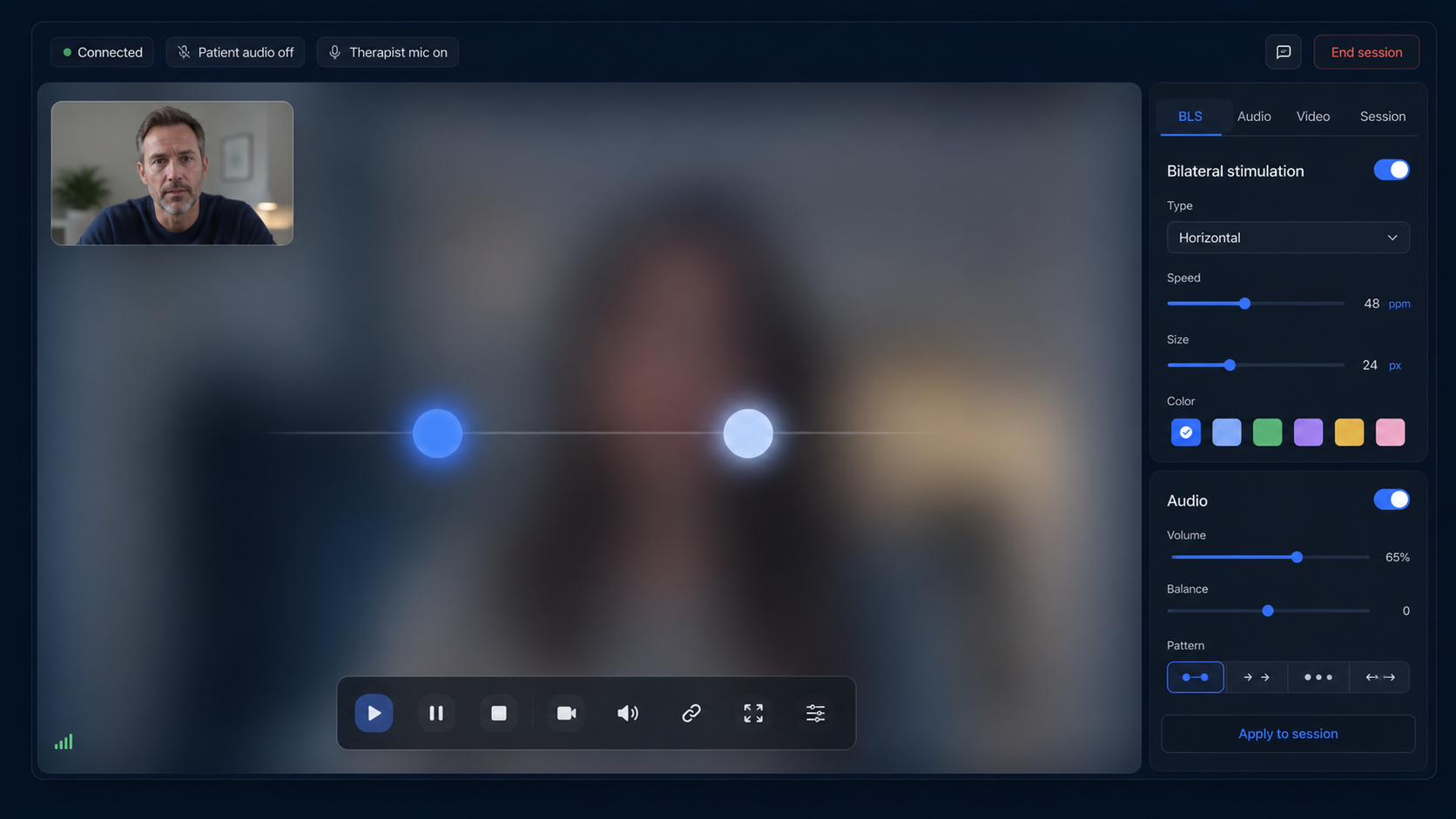
EMDRSuite provides video and bilateral visual or auditory stimulation. It does not sense physiology, measure autonomic state, provide touch, detect freeze or discharge, deliver Somatic Experiencing, or determine whether a bodily symptom is psychological or medical.
FAQ
EMDR vs somatic therapy
Is EMDR a somatic therapy?
EMDR includes body attention, but it is a distinct eight-phase psychotherapy rather than another name for Somatic Experiencing.
Which has stronger PTSD evidence?
EMDR currently has broader randomized and guideline support; Somatic Experiencing evidence is promising but more limited.
Can both be combined?
A qualified clinician may integrate compatible elements with clear rationale and consent, but combination is not automatically more effective.
Does EMDRSuite measure nervous-system regulation?
No. It provides communication and stimulus controls, not physiological monitoring or somatic diagnosis.
References
EMDR vs Somatic Experiencing: evidence and practical differences
EMDRSuite
Put the guide into practice with EMDRSuite
Run remote EMDR with visual BLS, bilateral sounds, secure patient links, video-ready sessions, saved settings, and notes.
Continue with related EMDR guides