Anger is an emotion; aggression and immediate danger require separate decisions
EMDR for anger: PTSD evidence, aggression, and safety boundaries
Review EMDR for anger without assuming trauma, overlooking aggression or danger, or substituting small PTSD effects for targeted anger treatment.
By the EMDRSuite Editorial Team
Product claims checked against the current EMDRSuite code and interface.
No independent clinical reviewer is named for this guide.
Name the anger problem before choosing a trauma treatment
Anger can be proportionate and protective, a PTSD symptom, a response to injustice, or part of depression, mania, psychosis, substance effects, brain injury, pain, sleep loss, coercive control, or learned aggression. Feeling angry is not the same as threatening, assaulting, stalking, or destroying property.
Ask about triggers, beliefs, bodily cues, frequency, duration, consequences, weapons or means, intoxication, driving, domestic abuse, child or dependent safety, legal constraints, remorse, control, and the person's goals. Imminent danger requires the relevant emergency or safeguarding response, not remote processing.
Trauma-focused therapy produces a small anger effect on average
A systematic review included 16 studies and 1,846 participants; its meta-analysis of eight randomized studies and 417 participants found a small-to-medium pooled effect on anger, Hedges's g = 0.33. Anger often remained after PTSD treatment.
This supports measuring anger during evidence-based PTSD care, not advertising EMDR as general anger management. The studies pooled trauma-focused approaches and do not show that every anger presentation is trauma-based or that EMDR is superior for aggression.
The direct EMDR anger study was small and PTSD-specific
One study had 15 PTSD completers in each of EMDR, exposure, and relaxation. All groups improved in anger and guilt, with no significant treatment differences; the authors warned that additional intervention may be required. A larger study of 374 service members also found mostly residual anger and aggression after PTSD treatment.
For moderate-to-severe anger in veterans, a 92-person randomized trial favored a targeted cognitive-behavioral anger intervention over supportive treatment. NICE similarly allows symptom-focused CBT for residual anger when trauma-focused treatment is declined, impossible, or completed.
Safety planning and accountability cannot be delegated to software
Track anger and aggressive behavior separately, include collateral information only with consent or lawful duty, and coordinate substance, medical, domestic-abuse, occupational, or legal services when indicated. Processing a grievance does not validate retaliation or remove responsibility for behavior.
EMDRSuite does not predict violence, monitor threats, contact emergency services, assess weapons, protect partners or children, enforce a safety plan, diagnose PTSD, select targets, or provide anger management. It must not be relied on during immediate danger.
FAQ
EMDR for anger
Does anger mean someone has PTSD?
No. Anger has many possible meanings and requires assessment of symptoms, context, behavior, and risk.
How large is the average effect of trauma-focused therapy?
The cited meta-analysis found Hedges's g = 0.33 for anger.
Can anger remain after successful PTSD treatment?
Yes. Residual anger may need targeted assessment and intervention.
Can EMDRSuite assess violence risk?
No. It cannot predict, monitor, or respond to aggression or immediate danger.
References
EMDR for anger: PTSD evidence, aggression, and safety boundaries
EMDRSuite
Put the guide into practice with EMDRSuite
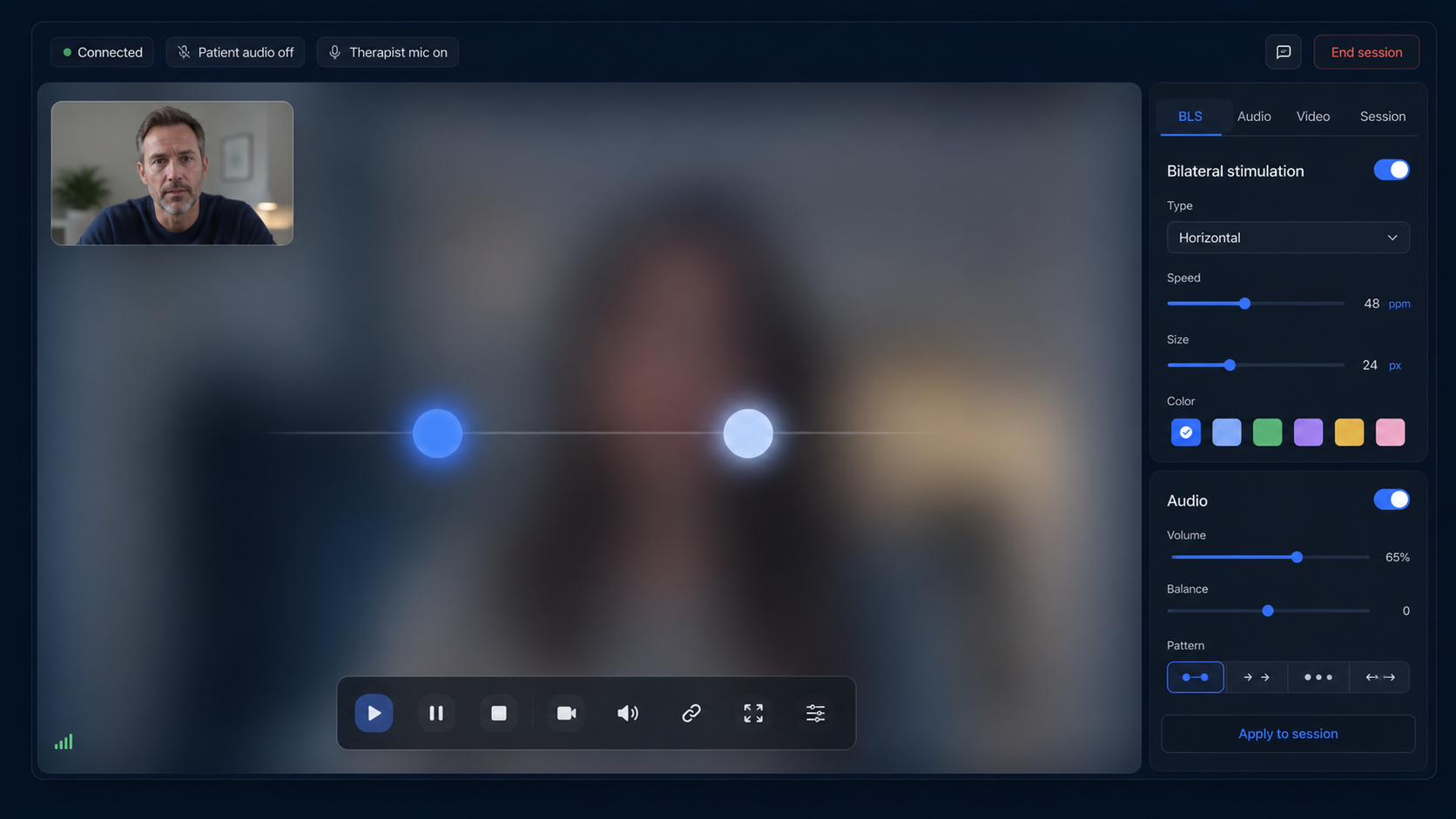
Run remote EMDR with visual BLS, bilateral sounds, secure patient links, video-ready sessions, saved settings, and notes.
Continue with related EMDR guides