Immediate safety, longer-term care, and trauma treatment
EMDR with self-harm or suicidal ideation: evidence, assessment, and safety boundaries
A therapist guide to EMDR when self-harm or suicidal thoughts are present, including urgent care, psychosocial assessment, preliminary evidence, safety planning, remote care, and monitoring.
By the EMDRSuite Editorial Team
Product claims checked against the current EMDRSuite code and interface.
No independent clinical reviewer is named for this guide.
Self-harm and suicidal ideation are related but not interchangeable
Self-harm includes intentional self-poisoning or injury regardless of apparent purpose; suicidal thoughts range from passive wishes to imminent intent with a feasible plan. Ask directly about recent behavior, intent, planning, access to means, history, escalation, protective factors, intoxication, medical injury, safeguarding, supports, and what has changed.
NICE says every episode deserves psychosocial assessment and that risk scales or global low, medium, and high labels should not predict suicide, determine access to treatment, or decide discharge. Immediate physical care, emergency response, or specialist assessment takes priority when required.
Neither automatic exclusion nor automatic processing is defensible
The VA notes that an acute suicidal emergency should be addressed without delay, while intermittent manageable thoughts do not necessarily preclude evidence-based PTSD treatment. A diagnosis, a single score, or any lifetime history cannot answer whether EMDR is appropriate today.
Formulate acuity and temporality, the function and pattern of self-harm, the condition being treated, engagement, consent, available care, clinician competence, and the service's ability to respond between and during sessions. Continuing routine remote reprocessing during an escalating emergency is not a safety plan.
EMDR-specific evidence is preliminary, not a crisis-treatment mandate
A randomized study included 42 adult outpatients with suicidal ideation: 20 received up to 12 web-based EMDR sessions and 22 treatment as usual. Both groups reported lower median suicidal ideation at four months, and the sample was too small for a direct comparative conclusion.
A broader systematic review found that PTSD-focused and combined treatments can reduce PTSD and suicide-related outcomes, with most evidence involving CPT or prolonged exposure rather than EMDR. Do not advertise EMDR as suicide prevention, emergency care, or a replacement for interventions specifically recommended after self-harm.
A written safety and communication plan must work outside the app
Agree warning signs, internal strategies, people and services to contact, collaborative means safety, urgent pathways, follow-up, location and backup contact for remote sessions, disconnection response, and what information may be shared under consent or duty. Review the plan as risk changes and document actual actions, not only a template.
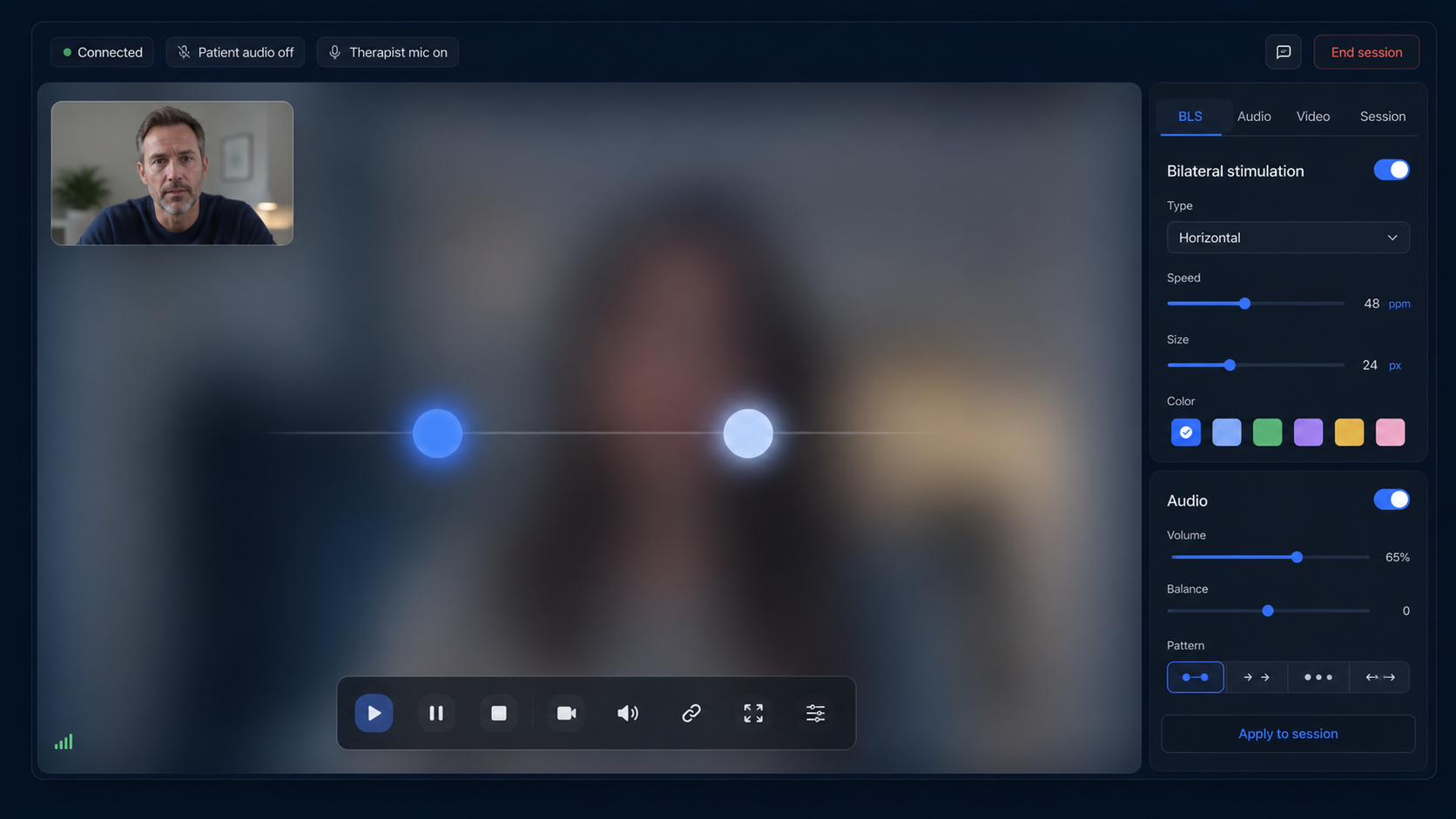
EMDRSuite cannot detect intent, monitor a person between sessions, contact emergency services, restrict access to means, perform psychosocial assessment, guarantee crisis response, or decide discharge. If someone is in immediate danger, use the relevant local emergency or crisis service rather than relying on this page or software.
FAQ
EMDR suicidal ideation
Does any suicidal thought automatically prohibit EMDR?
No. Acute emergency and manageable intermittent thoughts are different, but both require direct assessment and an adequate care context.
Can EMDR prevent suicide?
That claim is not established. Early evidence is preliminary and EMDR is not emergency or suicide-prevention care.
Should a risk score decide whether treatment is offered?
No. NICE advises against using scales or global risk labels to predict suicide or determine treatment and discharge.
Can EMDRSuite alert emergency services?
No. It does not monitor risk or provide crisis response; clinicians need a real-world plan and local pathways.
References
EMDR with self-harm or suicidal ideation: evidence, assessment, and safety boundaries
EMDRSuite
Put the guide into practice with EMDRSuite
Run remote EMDR with visual BLS, bilateral sounds, secure patient links, video-ready sessions, saved settings, and notes.
Continue with related EMDR guides