Clinical populations
EMDR for complex PTSD: evidence, assessment, and treatment-planning boundaries
A clinician-facing review of ICD-11 complex PTSD, EMDR evidence, phase-based debate, dissociation, and the planning claims current research does and does not support.
By the EMDRSuite Editorial Team
Product claims checked against the current EMDRSuite code and interface.
No independent clinical reviewer is named for this guide.
Complex trauma exposure and complex PTSD are not interchangeable
Complex trauma usually describes prolonged, repeated, or interpersonal exposure. Complex post-traumatic stress disorder is a diagnosis in ICD-11: the person meets PTSD criteria and also shows persistent disturbance in affect regulation, self-concept, and relationships. Exposure history alone does not establish the diagnosis.
DSM-5 does not contain a separate complex PTSD diagnosis, although its PTSD criteria and dissociative subtype overlap with parts of the ICD-11 construct. A professional page should preserve this distinction instead of using trauma history, symptom complexity, and diagnosis as synonyms.
EMDR-specific evidence is promising but narrower than the PTSD evidence base
A systematic review of six randomized trials involving 251 children and adults exposed to complex childhood trauma found reductions in PTSD and some associated symptoms, but the studies were small and heterogeneous. This supports further clinical consideration, not a claim that one protocol is established for every complex presentation.
Major PTSD guidelines recommend trauma-focused therapies, including EMDR in defined populations. Evidence about ICD-11 complex PTSD specifically remains newer, and treatment studies often use different definitions of complex trauma, childhood adversity, dissociation, or PTSD severity. Those populations should not be merged when explaining certainty.
The phase-based question remains a clinical debate, not a universal rule
Phase-based care commonly starts with safety, alliance, regulation, and interpersonal skills before direct trauma processing. Immediate trauma-focused care starts the trauma-focused treatment without a mandatory extended stabilization module. Current comparative evidence has not established that one sequence is superior for every person with complex PTSD.
Preparation is still part of EMDR and should be individualized. The evidence does not justify either rushing into reprocessing or imposing an indefinite preparatory phase solely because a person has a complex history. Readiness, risk, consent, functioning, dissociation, preference, and response over time remain clinically relevant.
Document decisions as revisable hypotheses
A useful formulation separates diagnosis, exposure history, current symptoms, strengths, risks, dissociative phenomena, relational context, target sequence, and practical constraints. It also states why the proposed pace and sequence fit this person rather than presenting a generic complex-trauma pathway as fact.
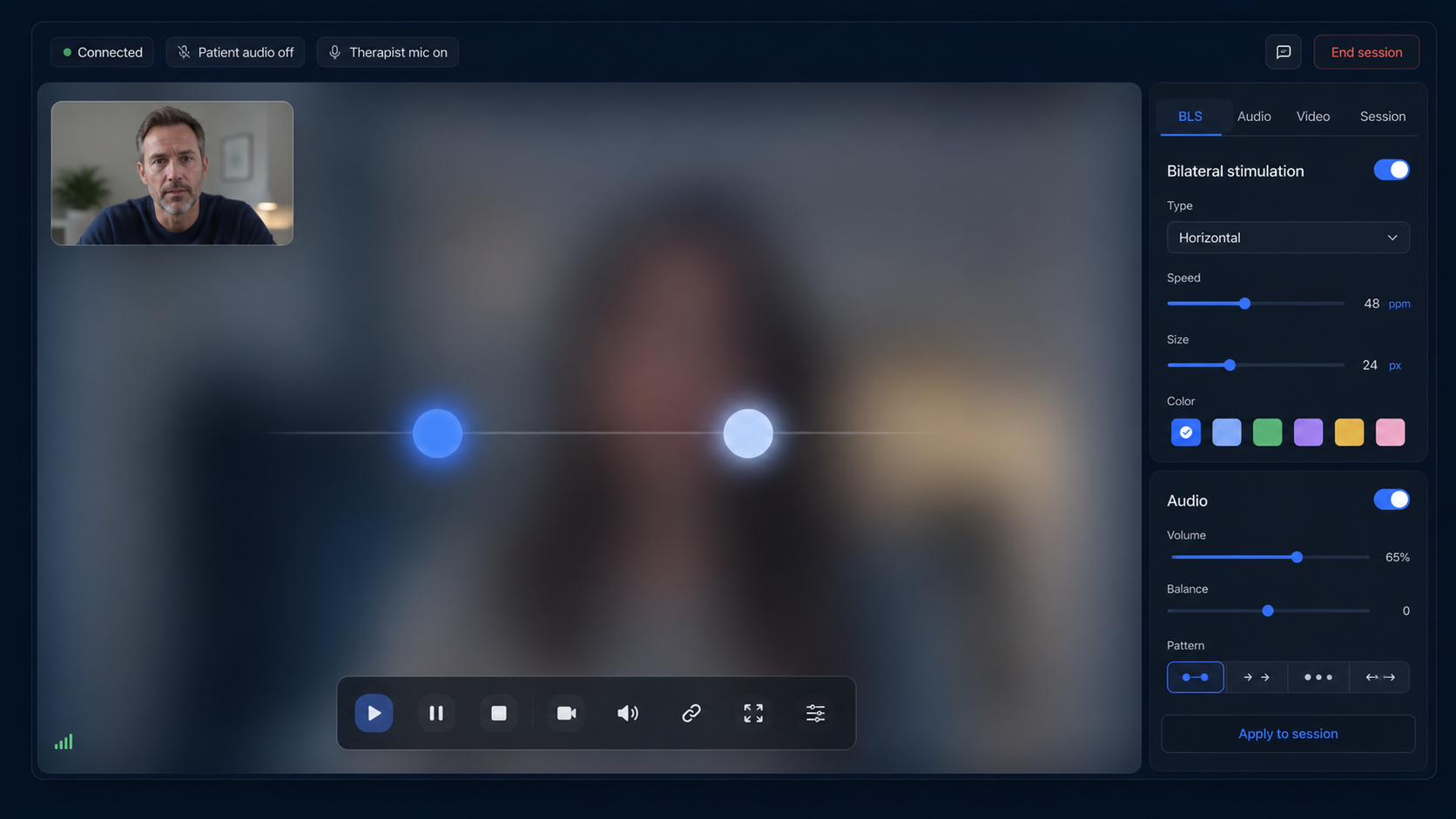
Record consent, measures, functional outcomes, between-session effects, adverse responses, and reasons to pause or change course. EMDRSuite can organize these records and remote-session controls, but it cannot determine diagnosis, readiness, protocol adaptation, or the need for specialist consultation.
FAQ
EMDR for complex PTSD
Is complex trauma the same as complex PTSD?
No. Complex trauma describes exposure; ICD-11 complex PTSD is a diagnosis with PTSD symptoms plus disturbances in self-organization.
Is EMDR proven for every complex PTSD presentation?
No. EMDR has strong PTSD guideline support and promising complex-trauma research, but direct CPTSD evidence is smaller and heterogeneous.
Must every complex PTSD case complete a long stabilization phase?
Current evidence does not establish a mandatory duration or one sequence for everyone. Preparation and pacing require individualized assessment.
Can software recommend when reprocessing should start?
No. A tool can support documentation and delivery; readiness and treatment sequencing are clinician responsibilities.
References
EMDR for complex PTSD: evidence, assessment, and treatment-planning boundaries
EMDRSuite
Put the guide into practice with EMDRSuite
Run remote EMDR with visual BLS, bilateral sounds, secure patient links, video-ready sessions, saved settings, and notes.
Continue with related EMDR guides