Dental phobia is a treatment-access problem as well as a fear score
EMDR for dental phobia: evidence, exposure, and return to care
Compare EMDR, CBT, and exposure for dental phobia using a direct 31-person trial, a 173-trial review, treatment attendance, and dental safety.
By the EMDRSuite Editorial Team
Product claims checked against the current EMDRSuite code and interface.
No independent clinical reviewer is named for this guide.
Distinguish acute dental anxiety from persistent phobic avoidance
Fear during an urgent procedure, chronic dental anxiety, and specific dental phobia are related but not interchangeable. The feared event may be pain, injections, choking, gagging, loss of control, criticism, bad news, restraint, cost, or repetition of a harmful experience.
Assess current pain, infection, swelling, bleeding, medication, sedation history, medical risk, years of avoidance, oral-health impact, PTSD, panic, needle fear, sensory or disability needs and the dentist's actual plan. Psychological formulation must not postpone urgent dental assessment.
A small direct trial supports a cautious EMDR signal
A randomized trial assigned 31 adults with dental phobia to EMDR or waiting list. The EMDR group improved on dental anxiety and behavior; 83.3% had undergone regular dental treatment one year later.
The sample was small and comparison was waiting list, not CBT, exposure, sedation, or another active therapy. It does not identify who benefits, isolate eye movements, define harms, or prove that EMDR is the best first-line option.
The broader evidence favors behavioral treatment and CBT
A 2024 review included 173 randomized trials. For chronic dental anxiety, moderate-certainty evidence supported CBT; for dental phobia, low-to-moderate certainty supported psychotherapy and CBT specifically. Earlier reviews also found benefit but noted low study quality.
In a 40-person randomized study, one-session and five-session exposure both reduced avoidance, and 77% sought dental care during follow-up. Return to ordinary dental treatment, completion of needed care and sustained attendance matter alongside questionnaire change.
Therapy and dentistry need a shared practical plan
Clarify whether EMDR targets a traumatic dental event, future catastrophe, shame, pain memory, helplessness, or a comorbid PTSD target. Coordinate pacing, stop signals, positioning, sensory adaptations, analgesia or sedation decisions with the dental team.
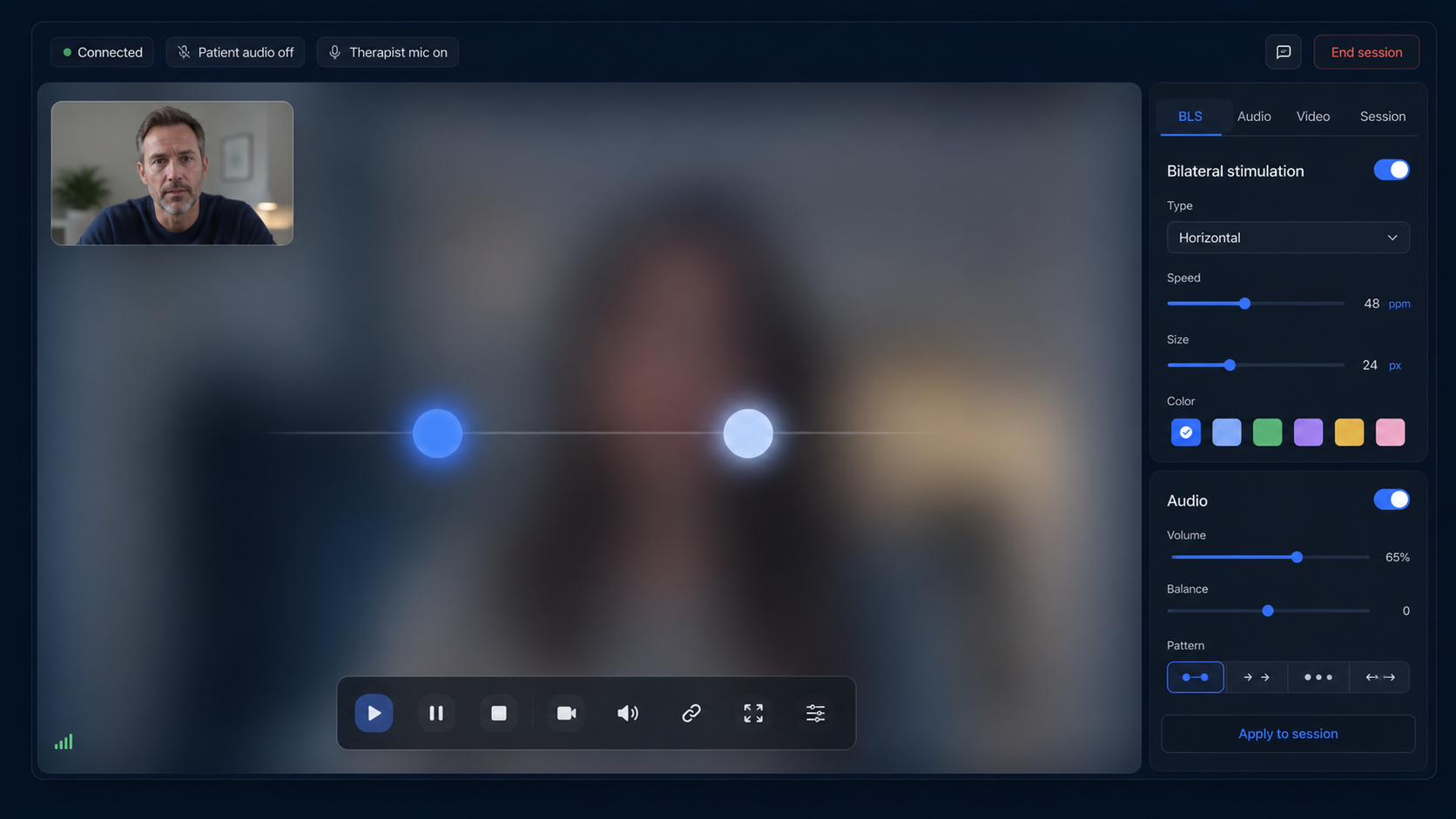
EMDRSuite does not diagnose dental phobia, examine teeth, assess infection or anesthesia, prescribe analgesia or sedation, conduct dental exposure, monitor a procedure, select memories, or replace urgent dental care. It supports the therapist's remote session only.
FAQ
EMDR for dental phobia
Is dental anxiety always a dental phobia?
No. Acute procedural anxiety, chronic anxiety and specific phobia require different assessment and planning.
What did the direct EMDR trial find?
In 31 adults, EMDR outperformed waiting list and 83.3% of the EMDR group had regular dental treatment by one year.
What has the broader evidence?
Behavioral treatment and CBT have a larger evidence base, including effects on return to dental care.
Can EMDRSuite assess tooth pain or sedation?
No. It does not provide dental assessment, medication, sedation, or procedural monitoring.
References
EMDR for dental phobia: evidence, exposure, and return to care
EMDRSuite
Put the guide into practice with EMDRSuite
Run remote EMDR with visual BLS, bilateral sounds, secure patient links, video-ready sessions, saved settings, and notes.
Continue with related EMDR guides