Age and development
EMDR for children and adolescents with PTSD: evidence and guideline limits
Compare pediatric PTSD evidence, NICE's age-specific EMDR recommendation, developmental adaptation, caregiver involvement, safeguarding, and remote-practice boundaries.
By the EMDRSuite Editorial Team
Product claims checked against the current EMDRSuite code and interface.
No independent clinical reviewer is named for this guide.
Adult PTSD recommendations should not be copied onto younger populations
Children and adolescents differ in development, dependence on caregivers, communication, consent and assent, safeguarding, education, and the contexts in which symptoms are noticed. Evidence and recommendations must therefore be read by age group rather than inherited from adult guidance.
NICE says to consider EMDR for ages 7 to 17 with PTSD or clinically important PTSD symptoms more than three months after trauma only when they do not respond to or engage with trauma-focused CBT. This is narrower than a general statement that guidelines recommend pediatric EMDR.
The evidence is encouraging and still uneven
A 2025 systematic review found nine eligible studies, including eight randomized trials with 794 participants. EMDR reduced PTSD symptoms compared with waitlist or usual care, while the two direct comparisons with trauma-focused CBT found no significant difference. The authors also identified limited cost-effectiveness evidence and a need for stronger trials.
A larger 2024 network meta-analysis across pediatric PTSD treatments found benefit for EMDR against passive controls, but trauma-focused CBT had the broadest and most consistent evidence. Long-term EMDR data and direct active-treatment comparisons remain less extensive than the headline effect against no treatment may suggest.
Developmental adaptation is part of delivery, not a cosmetic rewrite
Language, pacing, target access, sensory modality, session length, regulation support, and explanation of procedures need to fit developmental level and individual communication. Caregiver involvement may support history, safety, attendance, and between-session care, but its form depends on age, context, confidentiality, and risk.
Training and supervision should match both EMDR and the relevant age group. A platform cannot infer capacity, assent, family dynamics, safeguarding concerns, or whether caregiver presence is helpful. Local law and professional rules determine consent, privacy, record access, and mandatory reporting duties.
Remote work requires a child-specific operational plan
Before a remote session, verify physical location, who is present or nearby, privacy, emergency contacts, reconnection steps, and what will happen if the young person leaves view or becomes distressed. Technology checks should involve the responsible adult when appropriate without turning them into an unplanned observer.
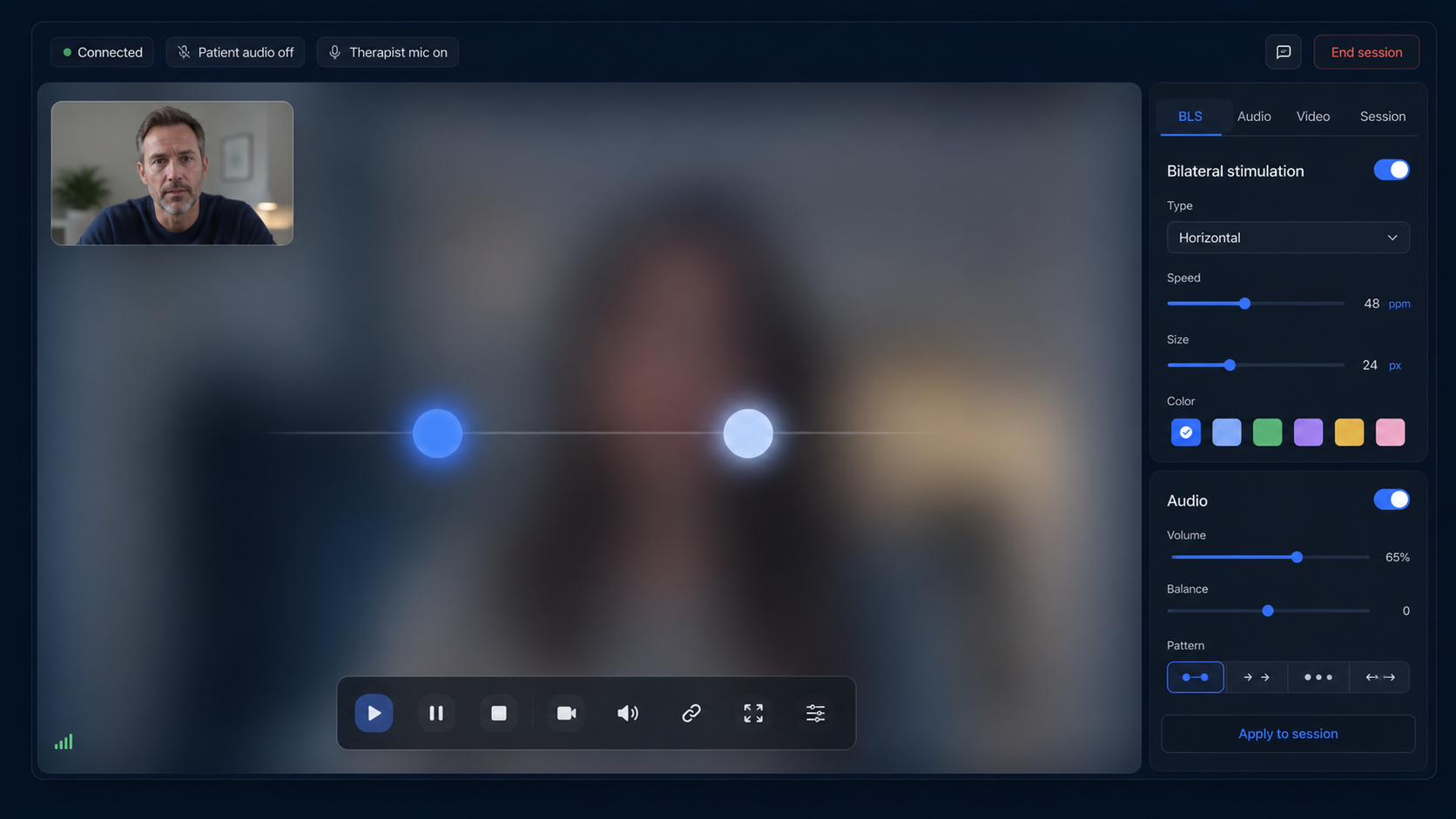
Document clinical rationale, consent and assent, caregiver role, safeguarding review, measures, adaptations, and follow-up. EMDRSuite can provide private access, video, therapist-controlled bilateral stimulation, and records; it does not replace child-specialist competence or local safeguarding procedures.
FAQ
EMDR for children and adolescents
Do guidelines recommend EMDR first-line for every child with PTSD?
No. NICE gives an age- and sequence-specific recommendation and places trauma-focused CBT first for children and young people.
Is EMDR effective for pediatric PTSD?
Evidence is encouraging, especially versus waitlist or usual care, but direct comparisons and long-term data are more limited than for trauma-focused CBT.
Should a caregiver always attend the full session?
Not automatically. Involvement depends on age, development, safety, confidentiality, clinical rationale, preference, and applicable rules.
Does remote EMDR remove safeguarding duties?
No. Remote delivery adds location, privacy, supervision, emergency, and reconnection considerations; existing duties still apply.
References
EMDR for children and adolescents with PTSD: evidence and guideline limits
EMDRSuite
Put the guide into practice with EMDRSuite
Run remote EMDR with visual BLS, bilateral sounds, secure patient links, video-ready sessions, saved settings, and notes.
Continue with related EMDR guides