Presenting problems and evidence
EMDR for chronic pain: current evidence, medical boundaries, and planning
A source-led guide distinguishing chronic primary and secondary pain, promising EMDR findings, NICE guidance, multidisciplinary care, and responsible outcome tracking.
By the EMDRSuite Editorial Team
Product claims checked against the current EMDRSuite code and interface.
No independent clinical reviewer is named for this guide.
Chronic primary and secondary pain require different questions
NICE defines chronic pain as pain persisting or recurring for more than three months. Chronic primary pain is not adequately accounted for by an underlying condition or its impact is disproportionate; chronic secondary pain has an underlying condition that does account for it. Both can coexist.
This distinction does not mean pain is imaginary or merely psychological. Assessment should consider medical diagnosis, red flags, medication, sleep, mobility, function, mood, trauma history, beliefs, social context, and current care. Psychotherapy must not delay appropriate medical evaluation or condition-specific treatment.
The EMDR evidence is promising and still preliminary
A 2025 systematic review found nine studies, including seven randomized trials. All reported improvement, but populations, pain measures, EMDR protocols, effect sizes, and methodological limitations varied. The review explicitly notes that EMDR has not been established as routine clinical practice for pain management.
An earlier review found only two controlled trials with 80 participants plus ten observational studies with 116 participants. Effects varied widely, and the authors concluded that too few high-quality studies existed for definite treatment recommendations. Newer studies expand the signal but do not erase those design questions.
Guidelines support a broader pain pathway
NICE NG193 recommends person-centred assessment and, for chronic primary pain, consideration of ACT or CBT for pain delivered by appropriately trained professionals. EMDR is not named as a routine psychological intervention in that recommendation.
Guidance for chronic primary pain cannot be copied onto every chronic secondary condition. Medical, rehabilitation, physical, pharmacological, psychological, and social components may need coordination. The role of EMDR, if any, should be defined within that wider plan rather than marketed as a cure.
Measure more than pain intensity
A clinically useful plan distinguishes possible trauma targets from the pain condition itself and specifies whether EMDR aims at trauma symptoms, pain-related distress, or another agreed process. Track pain, interference, mobility, sleep, participation, distress, medication context, adverse responses, and follow-up.
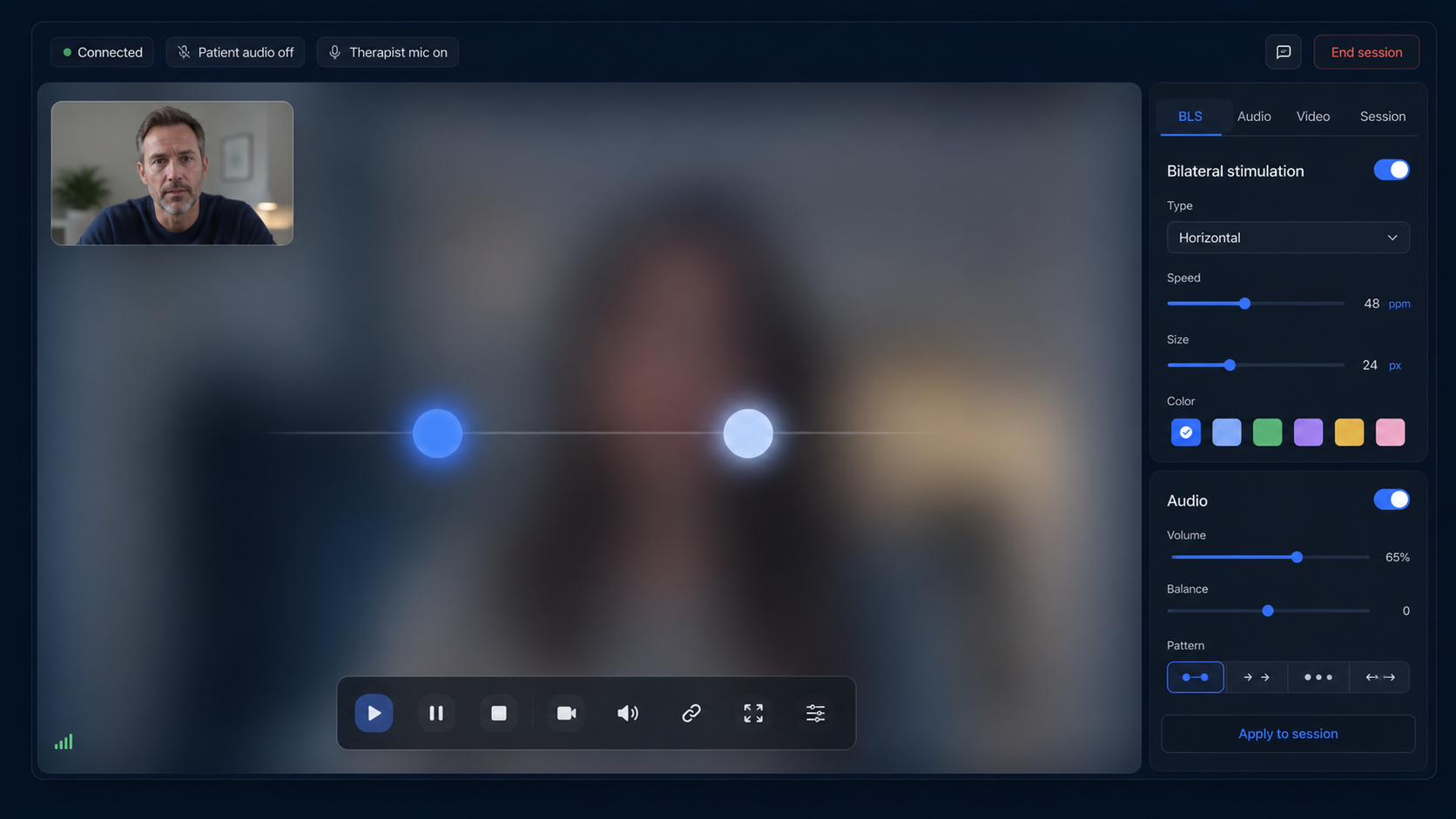
Remote work requires a safe physical setup, a plan for symptom change or interruption, and clarity about who manages medical concerns. EMDRSuite supports video, bilateral stimulation, settings, and notes; it cannot diagnose pain, detect red flags, replace a multidisciplinary team, or determine that EMDR is appropriate.
FAQ
EMDR for chronic pain
Is chronic pain only psychological?
No. Pain is real, and primary and secondary pain can coexist. Psychological care is one possible component of a person-centred, medically informed plan.
Is EMDR established as routine chronic-pain treatment?
No. Reviews report promising findings, but studies are heterogeneous and the 2025 review says routine practice is not established.
Does NICE recommend EMDR for chronic primary pain?
NG193 names ACT and CBT for pain, not EMDR, while emphasizing assessment and shared planning.
Can remote EMDR replace medical pain care?
No. It must not delay medical assessment, red-flag response, rehabilitation, medication review, or condition-specific care.
References
EMDR for chronic pain: current evidence, medical boundaries, and planning
EMDRSuite
Put the guide into practice with EMDRSuite
Run remote EMDR with visual BLS, bilateral sounds, secure patient links, video-ready sessions, saved settings, and notes.
Continue with related EMDR guides