EMDR populations and occupational context
EMDR for first responders: cumulative occupational trauma, evidence, and confidentiality
A therapist guide to EMDR evidence for police, fire, EMS, rescue, and public-safety workers, with cumulative exposure, confidentiality, work systems, and remote care.
By the EMDRSuite Editorial Team
Product claims checked against the current EMDRSuite code and interface.
No independent clinical reviewer is named for this guide.
First responder is an occupational context, not a diagnosis
Police, firefighters, EMS clinicians, rescue and disaster workers, dispatchers, corrections staff, and other public-safety roles differ in duties, cultures, exposure, employment, and access to care. Repeated incidents, direct threat, witnessing, responsibility, organizational stress, injury, fatigue, moral conflict, grief, and public scrutiny may interact, but not every worker develops PTSD.
Assess diagnosis, cumulative and index exposures, depression, anxiety, substance use, sleep, pain, traumatic brain injury, moral injury, suicide risk, anger, family impact, current operations, legal proceedings, and occupational safety. Do not reduce every difficulty to one worst call or treat resilience language as a substitute for care.
The population-specific EMDR evidence has important limits
A systematic review found eight EMDR studies among first responders and described variation in intervention type, duration, frequency, and timing. It reported possible symptom benefit but rated studies weak or medium quality and found early-intervention conclusions inconclusive. Broader intervention reviews also combine different therapies and occupations.
Present EMDR as one potentially relevant trauma-focused option when clinically indicated, not an occupational inoculation, mandatory post-incident procedure, or proven method to prevent PTSD. Individual treatment evidence cannot prove that a workforce program improves readiness, retention, absence, claims, or organizational resilience.
Confidentiality and work roles need explicit boundaries
Clarify who the client is, who pays, what the employer or insurer can receive, fitness-for-duty separation, mandated disclosures, records, workers' compensation, legal requests, peer support, and whether participation is voluntary. The therapist should not promise absolute confidentiality beyond applicable rules, nor let operational command obtain ordinary therapy notes through a session tool.
Plan around shifts, sleep, weapons or safety-sensitive duties, call-outs, ongoing exposure, court dates, return to work, and between-session support. Occupational familiarity helps alliance, but stereotypes about toughness, disclosure, culture, or preferred BLS should not replace individual assessment and consent.
Target planning may need a cumulative and systems view
Map candidate incidents, present triggers, anticipatory situations, losses, injuries, guilt or responsibility themes, and adaptive professional experiences without turning a career chronology into an automatic processing queue. Current unsafe conditions, bullying, discrimination, workload, or organizational harm may require practical action in addition to trauma therapy.
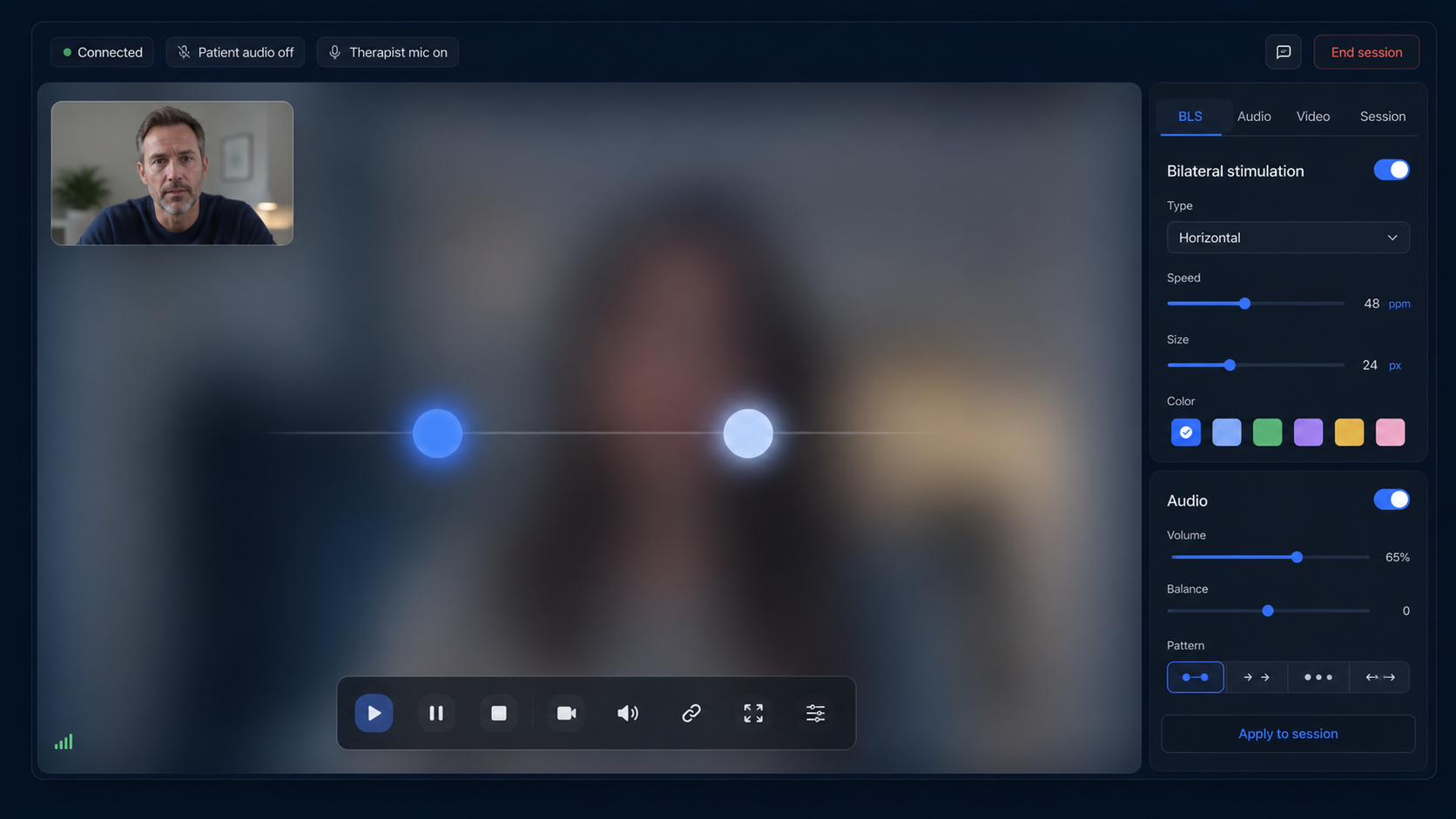
EMDRSuite can organize therapist-entered targets and deliver remote visual or auditory BLS. It does not screen a workforce, identify moral injury, assess fitness for duty, report to an employer, prevent PTSD, recommend return to work, or replace occupational medicine, emergency response, consultation, and the treating therapist's judgment.
FAQ
EMDR for first responders
Is EMDR proven specifically for all first responders?
No. Population-specific findings are promising but heterogeneous and limited; they do not establish universal effectiveness.
Can EMDR prevent PTSD after every critical incident?
Evidence for early intervention in first responders is inconclusive, and mandatory universal processing is not supported.
Should an employer receive EMDR session notes?
Ordinary treatment records require strict professional, legal, contractual, and consent boundaries; a software platform should not make them an employer report.
Does EMDRSuite assess fitness for duty?
No. It supports therapy workflow and does not perform occupational assessment, reporting, or return-to-work decisions.
References
EMDR for first responders: cumulative occupational trauma, evidence, and confidentiality
EMDRSuite
Put the guide into practice with EMDRSuite
Run remote EMDR with visual BLS, bilateral sounds, secure patient links, video-ready sessions, saved settings, and notes.
Continue with related EMDR guides