A flashback is a symptom description, not a diagnosis or automatic signal to process
EMDR for flashbacks: PTSD evidence, grounding, and safety
Distinguish trauma flashbacks from intrusive memories, dissociation, psychosis, and acute risk before EMDR, grounding, or another clinical pathway.
By the EMDRSuite Editorial Team
Product claims checked against the current EMDRSuite code and interface.
No independent clinical reviewer is named for this guide.
Clarify what the person means by flashback
A trauma flashback can involve vivid sensory, emotional, bodily, or behavioral re-experiencing with a reduced sense that the event is in the past. It differs from an unwanted autobiographical memory, rumination, nightmare, panic image, hallucination, dissociative episode, intoxication, delirium, or neurological event even when ordinary language uses the same word.
Ask about trauma linkage, triggers, sensory form, time orientation, awareness, memory gaps, duration, frequency, danger, driving, substances, sleep, medication, psychosis, neurological change, self-harm, and harm to others. New confusion, loss of consciousness, injury, or immediate danger requires the appropriate urgent pathway.
EMDR evidence applies to assessed PTSD, not the word flashback alone
A 2025 review identified 16 randomized trials with 1,031 adults published after the NICE guideline and found EMDR better than waiting list or usual care for PTSD, with no significant difference from trauma-focused CBT. Most studies were small and all but one had moderate or high risk of bias.
NICE recommends EMDR for eligible adults with PTSD or clinically important PTSD symptoms and specifies a phased manual, target memories, self-calming, and techniques for managing flashbacks. That recommendation does not make every altered-awareness episode an EMDR target.
Orient to the present before deciding whether to continue
During an active flashback, first assess immediate safety and ability to engage. Simple, consent-based orientation can include keeping eyes open, naming current place and date, noticing the environment, moving safely, or contacting support; the VA notes that grounding can also frustrate some people and should be stopped if it worsens the situation.
Do not continue bilateral stimulation automatically through disorientation, connection loss, unsafe movement, driving, or uncertainty about who and where the person is. Record what occurred, restore choice, and review readiness, target, modality, pace, remote suitability, and contingency planning.
Measure flashbacks without reducing recovery to frequency
Track frequency, duration, intensity, orientation, triggers, avoidance, sleep, dissociation, PTSD severity, functioning, risk, and adverse change. A person can improve while occasional memories remain, and fewer reports can also reflect avoidance, numbing, memory difficulty, or loss of contact.
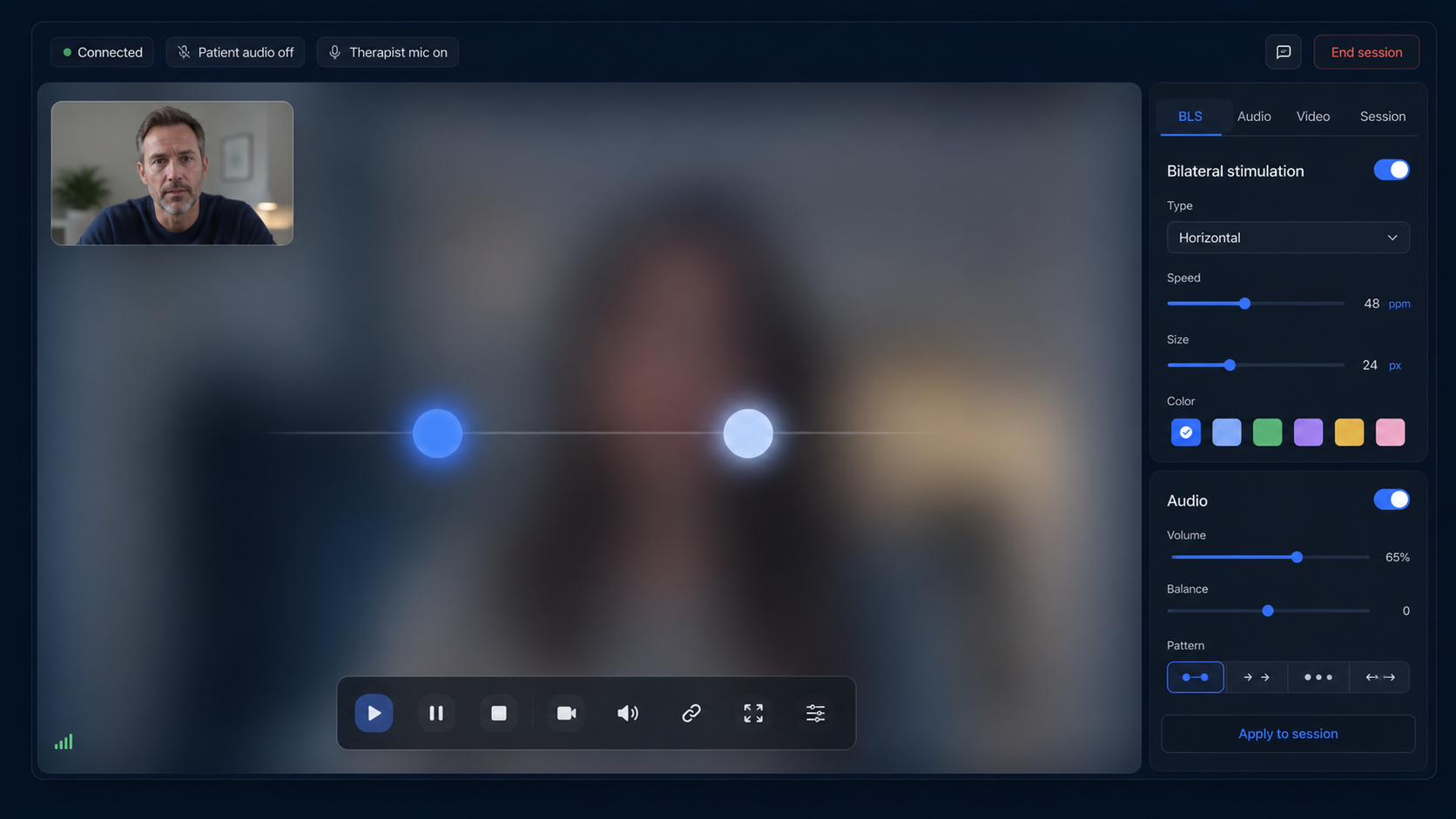
EMDRSuite does not diagnose PTSD, identify a flashback, monitor orientation or consciousness, distinguish psychosis or seizure, detect danger, perform grounding, select targets, drive a contingency response, or contact local help. Those are clinical and emergency responsibilities.
FAQ
EMDR for flashbacks
Are all intrusive memories flashbacks?
No. Clarify sensory re-experiencing, present-time quality, awareness, trauma linkage, and differential diagnoses.
Does EMDR treat flashbacks?
EMDR is supported for assessed PTSD; flashbacks should be measured within the full diagnosis and treatment plan.
Should BLS continue during disorientation?
Not automatically. Pause, assess safety and orientation, restore choice, and follow the contingency plan.
Can EMDRSuite detect a flashback?
No. It cannot assess awareness, diagnosis, neurological change, psychosis, or immediate risk.
References
EMDR for flashbacks: PTSD evidence, grounding, and safety
EMDRSuite
Put the guide into practice with EMDRSuite
Run remote EMDR with visual BLS, bilateral sounds, secure patient links, video-ready sessions, saved settings, and notes.
Continue with related EMDR guides