Treatment formats and evidence
Intensive EMDR therapy: what the evidence says about massed sessions and planning
A clinical review separating intensive EMDR from multicomponent PTSD programmes, with dosage evidence, active comparisons, selection, monitoring and aftercare.
By the EMDRSuite Editorial Team
Product claims checked against the current EMDRSuite code and interface.
No independent clinical reviewer is named for this guide.
Intensity describes scheduling, not a single protocol
An intensive or massed programme delivers trauma-focused treatment more frequently or within a shorter calendar period than conventional weekly care. Programmes differ in total minutes, number and length of sessions, overnight setting, therapist continuity, adjunctive exercise, psychoeducation and whether they combine EMDR with prolonged exposure or another treatment.
Those differences prevent the label intensive EMDR from naming one standardized intervention. A faster calendar does not necessarily mean fewer treatment minutes, a complete target sequence, lower cost, better fit or a superior outcome for an individual patient.
Broad intensive-treatment findings cannot be assigned to EMDR alone
A systematic review found 11 intensive PTSD-treatment studies, a large weighted symptom effect of 1.57 and pooled dropout of 5.51%. The programmes and evidence-based treatments varied. A newer dosage and intensity meta-analysis covered 73 RCTs and 5,696 participants across trauma-focused therapies, with average completion of 71.8% and higher completion in highly intensive formats.
These findings support intensive delivery as a credible treatment-format question. They do not isolate EMDR, prove that more sessions cause better outcomes, or show that one fixed schedule is optimal. Personalization, completed dose, setting and selection may explain part of the observed results.
EMDR-specific and multicomponent studies answer different questions
A pragmatic randomized study assigned 96 crime survivors to intensive EMDR or intensive progressive counting. Both groups improved and no significant outcome or efficiency difference was found. It supports an active intensive comparison, not EMDR superiority.
An eight-day study of 347 people reported low dropout and large improvement, but combined 16 sessions of EMDR and prolonged exposure with physical activity and psychoeducation and had no randomized active control. Its outcomes cannot be attributed to EMDR or schedule alone.
Selection, load and aftercare need an explicit plan
Assess diagnosis, targets, health, sleep, substance use, dissociation, suicide risk, medications, travel, caregiving, recovery time, support and the person's ability to attend and integrate concentrated work. Define measurement points, stopping criteria, clinician availability and urgent escalation.
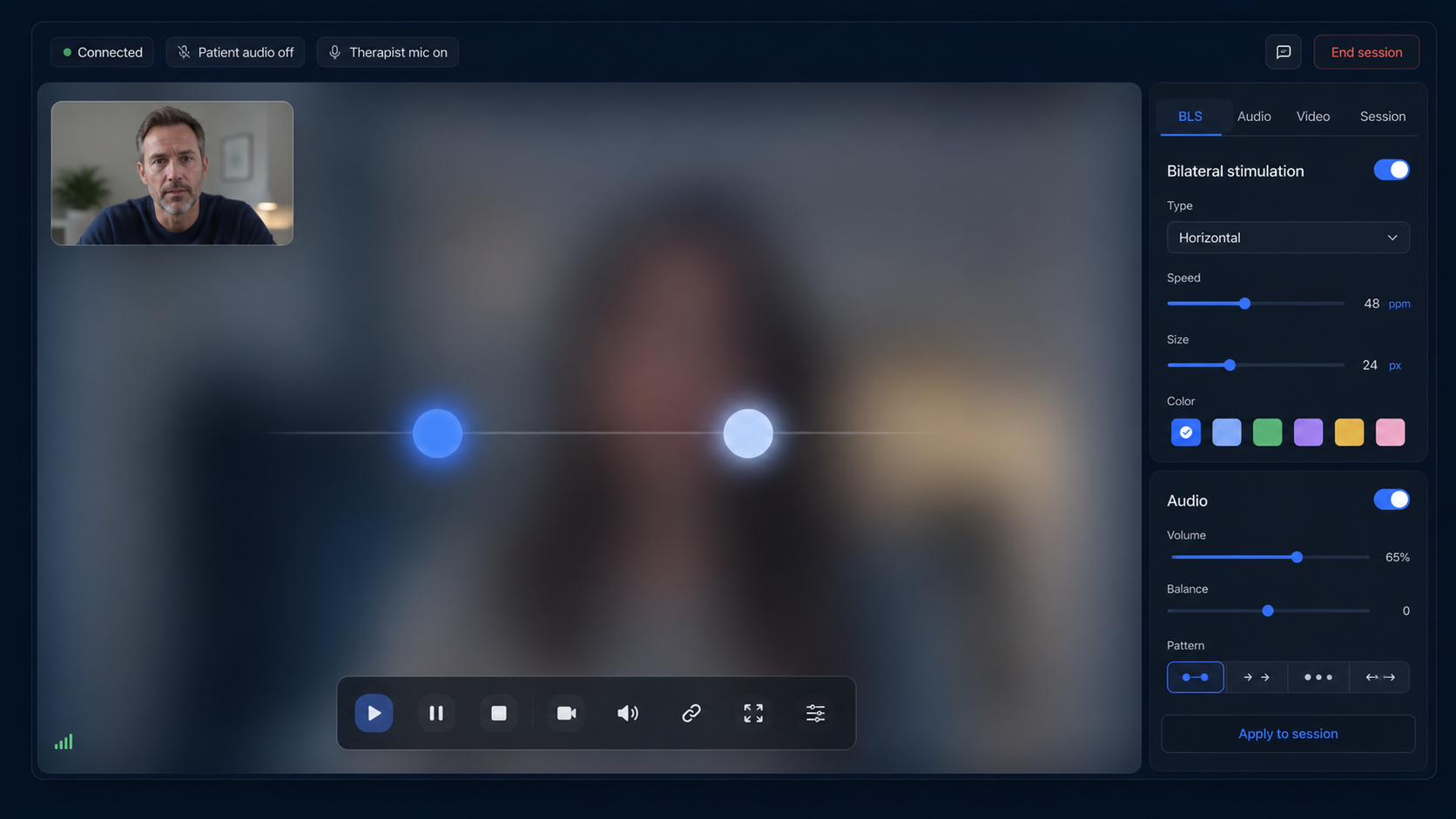
Document total dose, daily structure, breaks, target boundaries, handovers, adverse-event monitoring and follow-up. EMDRSuite can organize remote sessions and settings, but it does not supply an intensive programme, determine capacity, coordinate multidisciplinary care or guarantee faster recovery.
FAQ
intensive EMDR therapy
Is intensive EMDR one standardized protocol?
No. Schedules and components vary widely, and many published programmes combine EMDR with prolonged exposure, exercise and psychoeducation.
Do intensive programmes always work better than weekly treatment?
No. Findings are promising, particularly for completion, but they do not prove universal superiority or an optimal schedule for every patient.
Can results from combined programmes be credited to EMDR?
No. Multicomponent studies cannot isolate the effect of EMDR, another therapy, physical activity, total dose or programme structure.
Does EMDRSuite provide an intensive treatment programme?
No. It provides session technology; programme design, selection, monitoring and aftercare remain clinical and organizational responsibilities.
References
Intensive EMDR therapy: what the evidence says about massed sessions and planning
EMDRSuite
Put the guide into practice with EMDRSuite
Run remote EMDR with visual BLS, bilateral sounds, secure patient links, video-ready sessions, saved settings, and notes.
Continue with related EMDR guides