Therapy, memory, and legal role boundaries
EMDR during legal proceedings: memory, testimony, records, and therapist boundaries
A therapist guide to EMDR when testimony or litigation is active, reconstructive memory, suggestion risk, treating and forensic roles, consent, documentation, and legal coordination.
By the EMDRSuite Editorial Team
Product claims checked against the current EMDRSuite code and interface.
No independent clinical reviewer is named for this guide.
Therapy and fact-finding have different purposes
The treating therapist aims to reduce suffering and improve functioning; investigators and courts determine facts under jurisdiction-specific rules. EMDR should not be used to recover evidence, verify whether an event occurred, improve witness confidence or produce a complete historical narrative.
Clarify whether proceedings are criminal, civil, family, immigration, employment or compensation related; what stage they have reached; whether the person may testify; and which lawyers, investigators or forensic professionals are involved. Obtain current legal and professional advice rather than assuming one country's practice applies everywhere.
Memory is reconstructive and confidence is not accuracy
Autobiographical recall can change with retrieval, time, new information and suggestion. A 2021 review raised concerns that eye movements, inaccurate memory metaphors and suggestive therapist beliefs could affect memory quality or false-memory risk; newer reviews emphasize therapist training and avoiding attempts to recover unremembered trauma.
These concerns do not prove that EMDR automatically contaminates testimony or that a post-treatment memory is false. A 2026 case-series of five Italian Supreme Court decisions involving minors found no categorical rejection of testimony after EMDR, while highlighting documentation and separation of therapeutic and investigative roles. That narrow legal sample cannot settle other cases or jurisdictions.
Consent and records must address foreseeable legal access
Explain that therapy notes, communications or testimony may be requested or compelled subject to local law, and that confidentiality has limits. Use neutral, accurate language: distinguish what the patient reported, what the therapist observed, what intervention occurred and what remains unknown.
Avoid leading questions, affirming historical truth without independent basis, forensic conclusions outside competence, unnecessary detail and dual roles that impair treatment or legal fairness. APA guidance distinguishes treating information from psycholegal opinions and asks practitioners to consider effects on both therapy and proceedings.
Coordinate without delaying urgent care automatically
Legal involvement does not by itself mean trauma treatment must be refused. Balance access to care, symptom severity, safety, patient preference, testimony timing, role conflicts, advice from authorized legal or forensic professionals and reasonable alternatives, then document the rationale and review point.
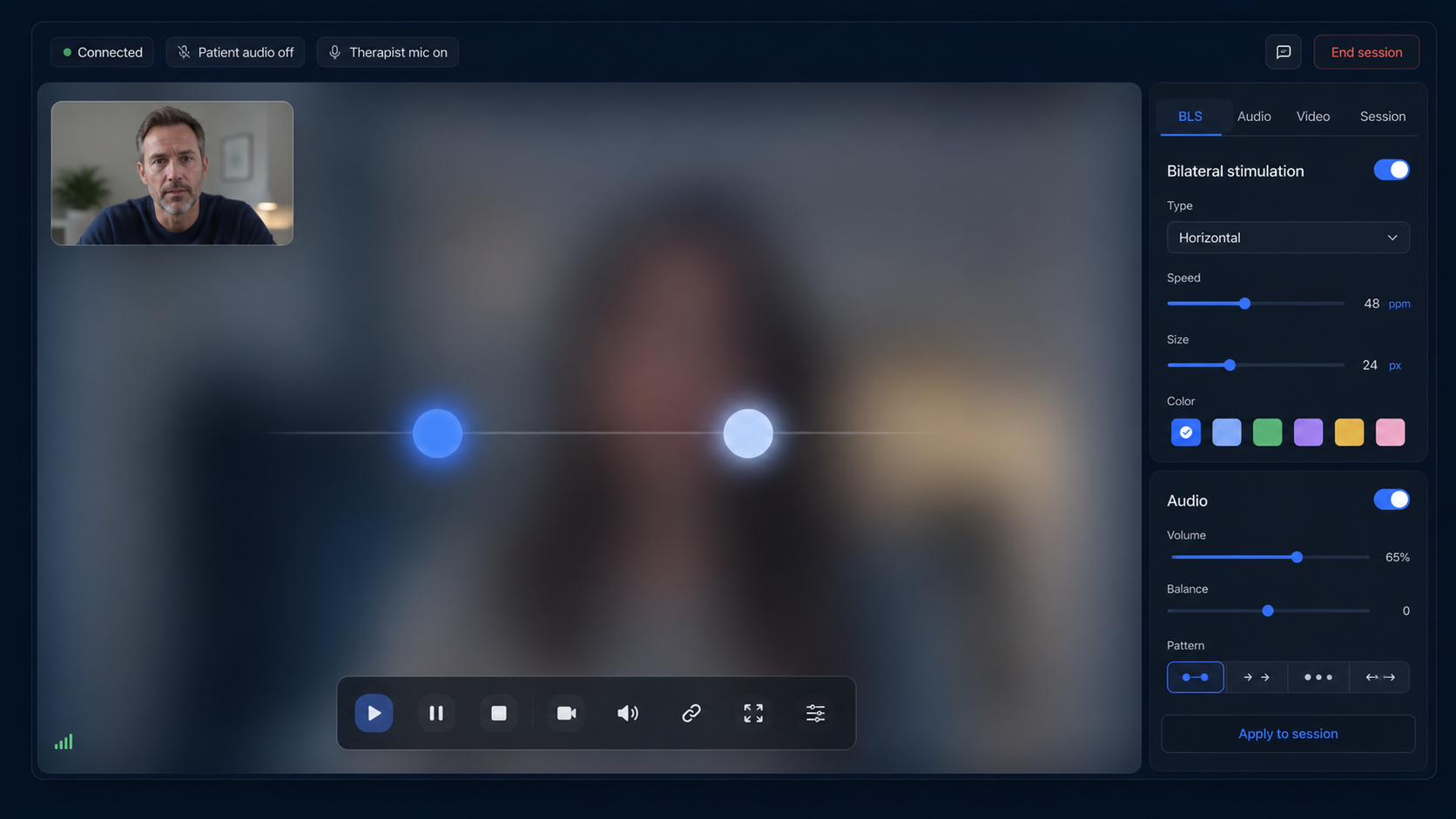
EMDRSuite can support a private therapist-led session and deliberate clinical notes. It does not establish memory accuracy, preserve forensic evidence, determine admissibility, issue a legal hold, respond to a court order or decide whether therapy should begin, pause or continue.
FAQ
EMDR legal proceedings
Does EMDR automatically make testimony unreliable?
No. The evidence and limited case law do not support a categorical rule; specific methods, records, roles and jurisdiction matter.
Can EMDR verify whether a memory is true?
No. Therapy cannot establish historical or legal accuracy, and confidence or vividness is not proof.
Should all therapy stop during a court case?
Not automatically. The decision requires individualized clinical, ethical and jurisdiction-specific legal consideration.
Is EMDRSuite a forensic record system?
No. It supports clinical work, not evidence preservation, admissibility decisions or forensic investigation.
References
EMDR during legal proceedings: memory, testimony, records, and therapist boundaries
EMDRSuite
Put the guide into practice with EMDRSuite
Run remote EMDR with visual BLS, bilateral sounds, secure patient links, video-ready sessions, saved settings, and notes.
Continue with related EMDR guides