Do not individualize an occupational exposure that also needs organizational action
EMDR for vicarious trauma: secondary stress, evidence, and work safeguards
Distinguish vicarious trauma, secondary traumatic stress, PTSD, compassion fatigue, and burnout before considering EMDR or workplace changes.
By the EMDRSuite Editorial Team
Product claims checked against the current EMDRSuite code and interface.
No independent clinical reviewer is named for this guide.
Related occupational terms are not interchangeable
Secondary traumatic stress describes trauma-like symptoms after indirect exposure; vicarious trauma often refers to cumulative changes in beliefs and worldview; compassion fatigue is used inconsistently; burnout centers on chronic workplace stress. PTSD has specific exposure, symptom, duration, and impairment requirements.
Assess direct and indirect exposure, intrusive symptoms, avoidance, arousal, worldview, moral distress, depression, sleep, substance use, suicidality, personal trauma activation, workload, supervision, harassment, role conflict, and whether the environment remains unsafe. Do not turn an organizational failure into a private resilience deficit.
Prevalence estimates are wide and do not diagnose an individual
A review of 23 studies in mental health professionals reported personal-trauma prevalence from 19% to 81% and secondary traumatic stress from 19% to 70%; 14 of 18 studies found a positive association between them. The wide ranges reflect different samples, measures, thresholds, and mostly observational designs.
A meta-analysis synthesized 38 studies of risk factors. These data identify possible patterns, not who is impaired, fit for duty, responsible for harm, or in need of EMDR.
Intervention evidence is much thinner than the prevalence literature
A 2026 systematic review found only three eligible intervention studies for secondary traumatic stress among trauma-facing professionals. A separate organizational review synthesized 23 quantitative, eight qualitative, and five mixed-method studies and highlighted supportive supervision, peer networks, balanced caseloads, and an acknowledging culture.
A 50-person field trial in emergency medical technicians reported reduced general stress after five EMDR sessions versus control, but it did not establish an EMDR protocol for therapist vicarious trauma. The cited evidence contains no direct controlled trial isolating EMDR for that specific construct.
Personal treatment cannot replace employer duties
If a clinician has PTSD or a discrete occupational memory, assess whether evidence-based trauma treatment is appropriate. In parallel, address workload, exposure rotation, supervision, leave, peer support, reporting, accommodations, and occupational health. Track symptoms and work function without using therapy attendance as proof of fitness.
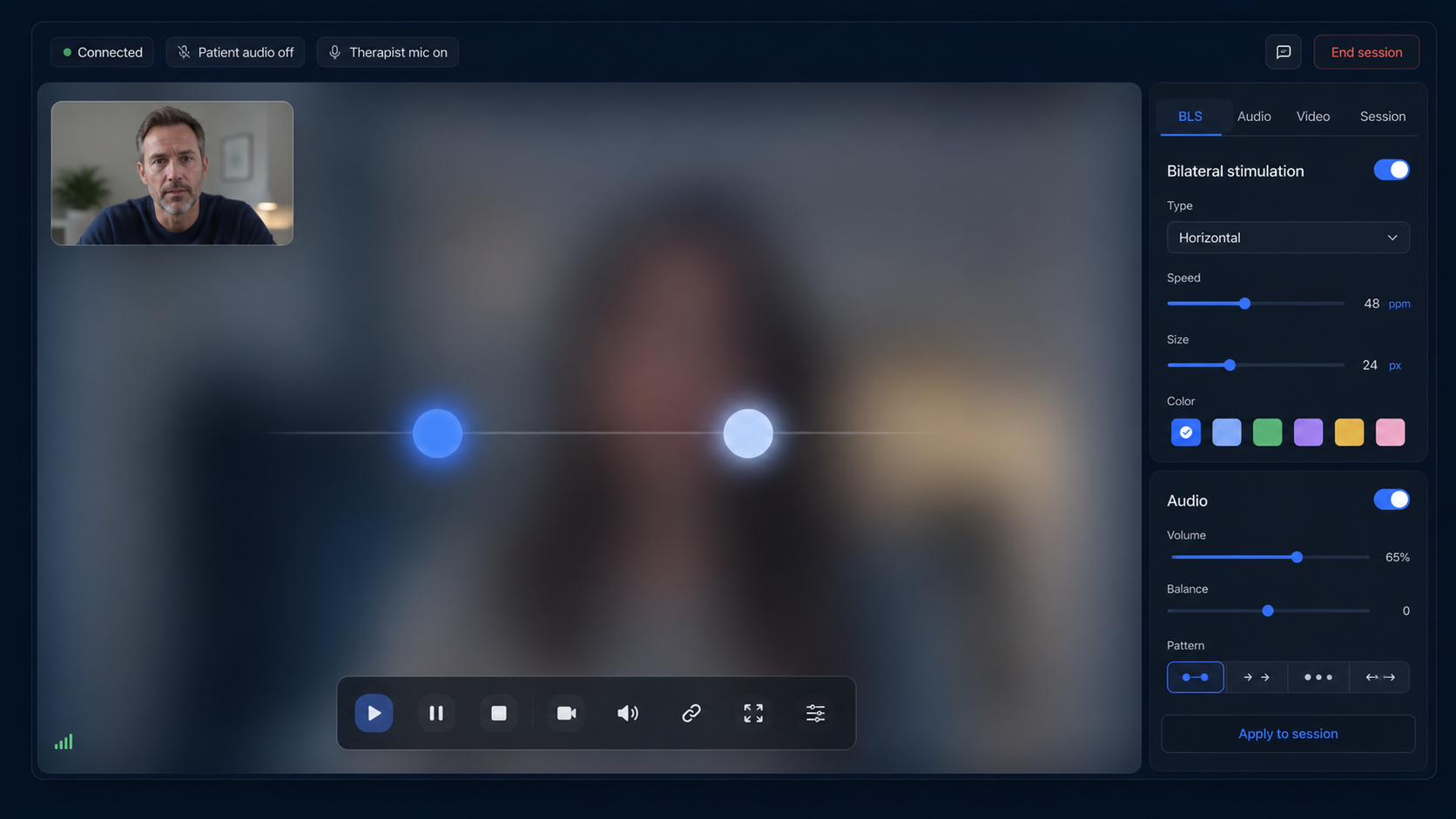
EMDRSuite does not diagnose secondary trauma, monitor staff wellness, calculate safe caseloads, provide supervision, notify employers, assess fitness for duty, manage emergencies, select targets, or replace organizational safeguards. It can support a confidential session chosen by a qualified therapist.
FAQ
EMDR for vicarious trauma
Are vicarious trauma and burnout the same?
No. They overlap but describe different exposure pathways and outcomes, and neither should be assumed without assessment.
How strong is intervention evidence?
A recent review found only three eligible secondary-traumatic-stress intervention studies.
Is EMDR specifically proven for therapist vicarious trauma?
The cited evidence does not establish a direct controlled trial for that construct.
Can personal therapy replace workplace changes?
No. Supervision, caseload, culture, safety, leave, and occupational duties may require separate action.
References
EMDR for vicarious trauma: secondary stress, evidence, and work safeguards
EMDRSuite
Put the guide into practice with EMDRSuite
Run remote EMDR with visual BLS, bilateral sounds, secure patient links, video-ready sessions, saved settings, and notes.
Continue with related EMDR guides