EMDR clinical practice
EMDR Phase 2 resourcing: calm place, container, regulation, and readiness
A therapist-focused guide to Phase 2 resourcing that places calm place and container within alliance, regulation, accessibility, testing, and individualized readiness.
By the EMDRSuite Editorial Team
Product claims checked against the current EMDRSuite code and interface.
No independent clinical reviewer is named for this guide.
Resourcing is broader than two named exercises
Phase 2 builds informed participation, a sufficiently secure therapeutic relationship, understanding of the process, communication and stop signals, regulation capacity, internal and external supports, and plans for disturbance during and between sessions. Calm or safe place and container are possible resources, not the definition of preparation.
EMDRIA clinicians describe resourcing as an ongoing individualized system, not a script. A person may connect better with sensory, relational, movement-based, concrete, culturally meaningful, or externally supported resources. Requiring vivid imagery can turn one exercise into an unnecessary test of whether the patient is doing EMDR correctly.
A resource must be usable under relevant conditions
Naming a place, image, cue, or container does not establish accessibility when stress rises. The therapist observes how the resource is developed, whether it remains tolerable, what happens when it is recalled, whether the patient can communicate difficulty, and whether adverse or contaminating material appears.
If a calm place becomes unsafe, feels false, or cannot be imagined, that response is information rather than failure. The clinician may modify, pause, select a different approach, return to formulation, or seek consultation according to competence. This page deliberately does not provide a read-aloud script.
Regulation, stabilization, and readiness are related but not identical
A useful coping response can support preparation without proving suitability for a particular target or intensity. Readiness also depends on consent, current safety, dual attention, dissociation, risk, support, formulation, therapeutic contact, available time, and the ability to stop or reorient.
Preparation is revisited whenever circumstances change. Remote work adds privacy, location, backup contact, device behavior, stimulus stop control, and interruption planning. A successful exercise or technology test cannot replace the wider clinical assessment.
Document response and choice, not just completion
Record the resource category and purpose, patient language and preferences, observable or reported response, accessibility tested, difficulties, adaptations, consent, between-session plan, and questions still open. Avoid storing unnecessary imagery details outside the authorized clinical record.
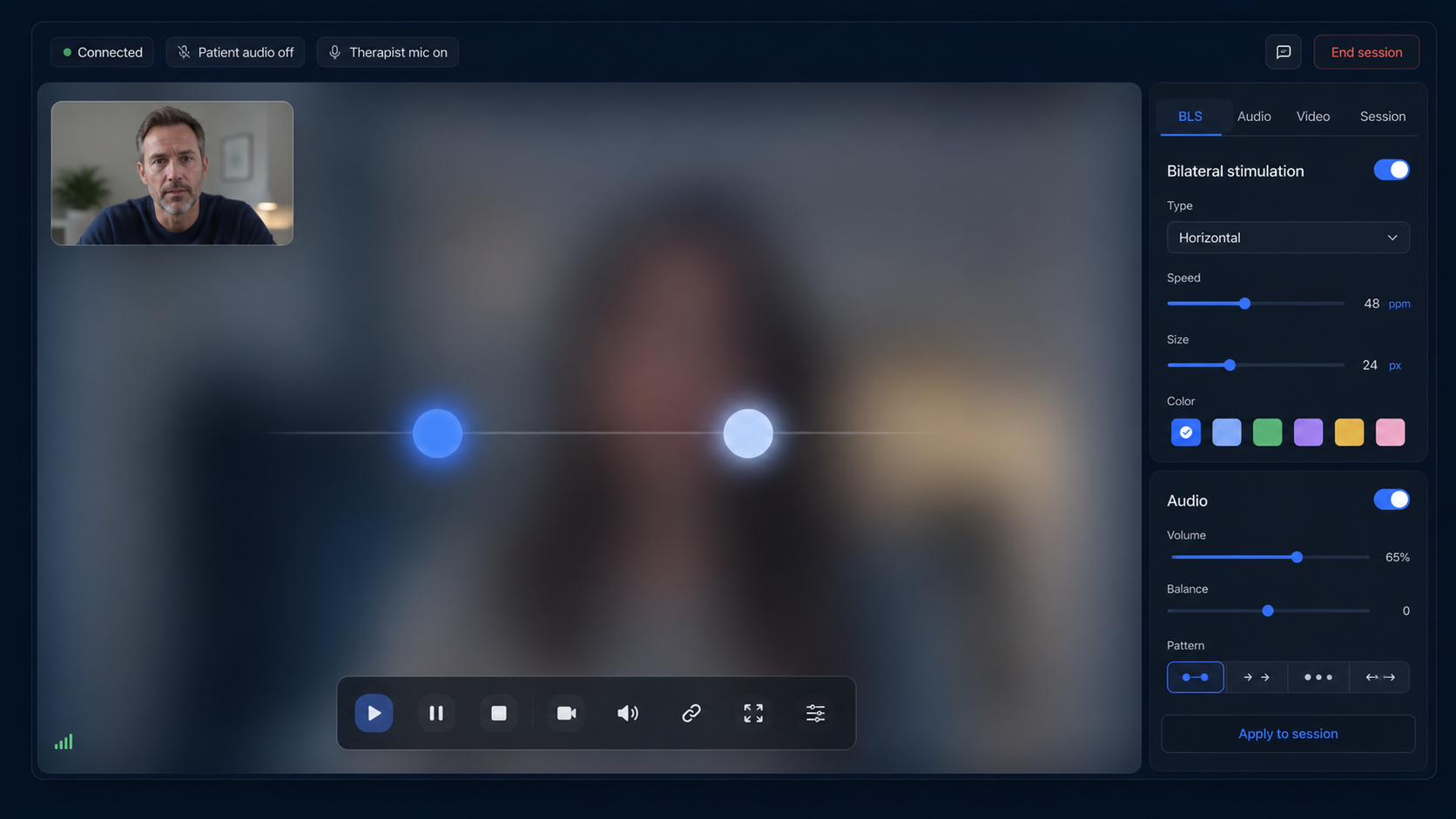
EMDRSuite can keep therapist-entered preparation notes beside the session and remote controls. It does not select resources, deliver self-guided stabilization, certify readiness, interpret a failed exercise, or replace individualized training, supervision, risk management, and clinical judgment.
FAQ
EMDR Phase 2 resourcing
Are calm place and safe place the same in EMDR?
Terminology varies. Both usually refer to an individualized preparation resource, but wording and suitability should fit the person rather than be imposed.
Is a container exercise required for every patient?
No single named exercise proves preparation. Resource selection and need depend on formulation, response, context, and therapist training.
What if the calm place feels unsafe?
Treat that response as clinically relevant information. Do not force the imagery; reassess, adapt, pause, or consult as appropriate.
Does EMDRSuite provide resourcing scripts?
No. It supports documentation and session controls without supplying self-guided or prescriptive clinical scripts.
References
EMDR Phase 2 resourcing: calm place, container, regulation, and readiness
EMDRSuite
Put the guide into practice with EMDRSuite
Run remote EMDR with visual BLS, bilateral sounds, secure patient links, video-ready sessions, saved settings, and notes.
Continue with related EMDR guides