Respect chosen faith, changed faith, and no faith without presuming pathology
EMDR for religious trauma and spiritual abuse: evidence and safeguards
Assess EMDR for religious trauma or spiritual abuse without pathologizing belief, overstating direct evidence, pressuring forgiveness, or missing current coercion.
By the EMDRSuite Editorial Team
Product claims checked against the current EMDRSuite code and interface.
No independent clinical reviewer is named for this guide.
Religious trauma is a search term, not a single diagnosis
People may use it for coercive control, threats, exclusion, conversion practices, clergy abuse, discrimination, forced confession, purity rules, spiritual manipulation, family rupture, or loss of community and meaning. Religion or spirituality can also be protective, neutral, culturally central, or freely chosen.
Ask what happened, who holds power now, whether there is ongoing contact or surveillance, and which beliefs or practices the person wants respected. Assess PTSD, depression, anxiety, grief, OCD or scrupulosity, psychosis, suicidality, housing, legal and safeguarding needs without treating faith, doubt, identity, or nonbelief as symptoms.
The harm literature is emerging and definitions vary
A 2025 scoping review of clergy sexual abuse included 12 research articles and found spiritual harm to be psychologically, emotionally, and spiritually complex but inconsistently defined. A separate systematic review examined spirituality and psychological well-being in adults abused by Catholic clergy.
Broader reviews show that positive and negative religious coping can relate differently to trauma outcomes. These associations do not prove that religion causes or cures a disorder, and studies focused on clergy sexual abuse cannot represent every coercive group, tradition, culture, or nonsexual harm.
There is no direct controlled EMDR trial for this label here
The cited sources do not identify a randomized trial of EMDR specifically for religious trauma or spiritual abuse. If the person has PTSD linked to identifiable events, general PTSD guidance may support manualized EMDR, but that is evidence for the diagnosed presentation rather than the popular label.
A target might involve a threat, punishment, ceremony, disclosure, expulsion, or betrayal. Processing it does not decide theology, establish institutional liability, prove an allegation, require forgiveness, or determine whether someone should leave, return, reconcile, report, or publicly identify.
Build cultural and power safeguards into the plan
Document the person's own language, values, pronouns, community ties, desired spiritual resources, and boundaries. Separate clinical care from pastoral, legal, investigative, or advocacy roles; coordinate only with informed consent unless a lawful safeguarding duty applies.
EMDRSuite does not diagnose religious trauma, evaluate doctrine, identify cults, investigate abuse, provide clergy or legal advice, pressure forgiveness, contact communities, select memories, or manage immediate danger. Those decisions remain with the person and responsible professionals.
FAQ
EMDR for religious trauma
Is religious trauma a formal diagnosis?
Not as a single diagnosis. A clinician assesses the actual symptoms, impairment, context, safety, and relevant diagnostic possibilities.
Is EMDR proven specifically for spiritual abuse?
The cited evidence does not include a direct controlled EMDR trial for that label.
Must treatment challenge a person's faith?
No. Care should respect freely chosen belief, changed belief, uncertainty, and nonbelief.
Can EMDRSuite decide whether abuse occurred?
No. It is not an investigative, theological, safeguarding, or legal service.
References
EMDR for religious trauma and spiritual abuse: evidence and safeguards
EMDRSuite
Put the guide into practice with EMDRSuite
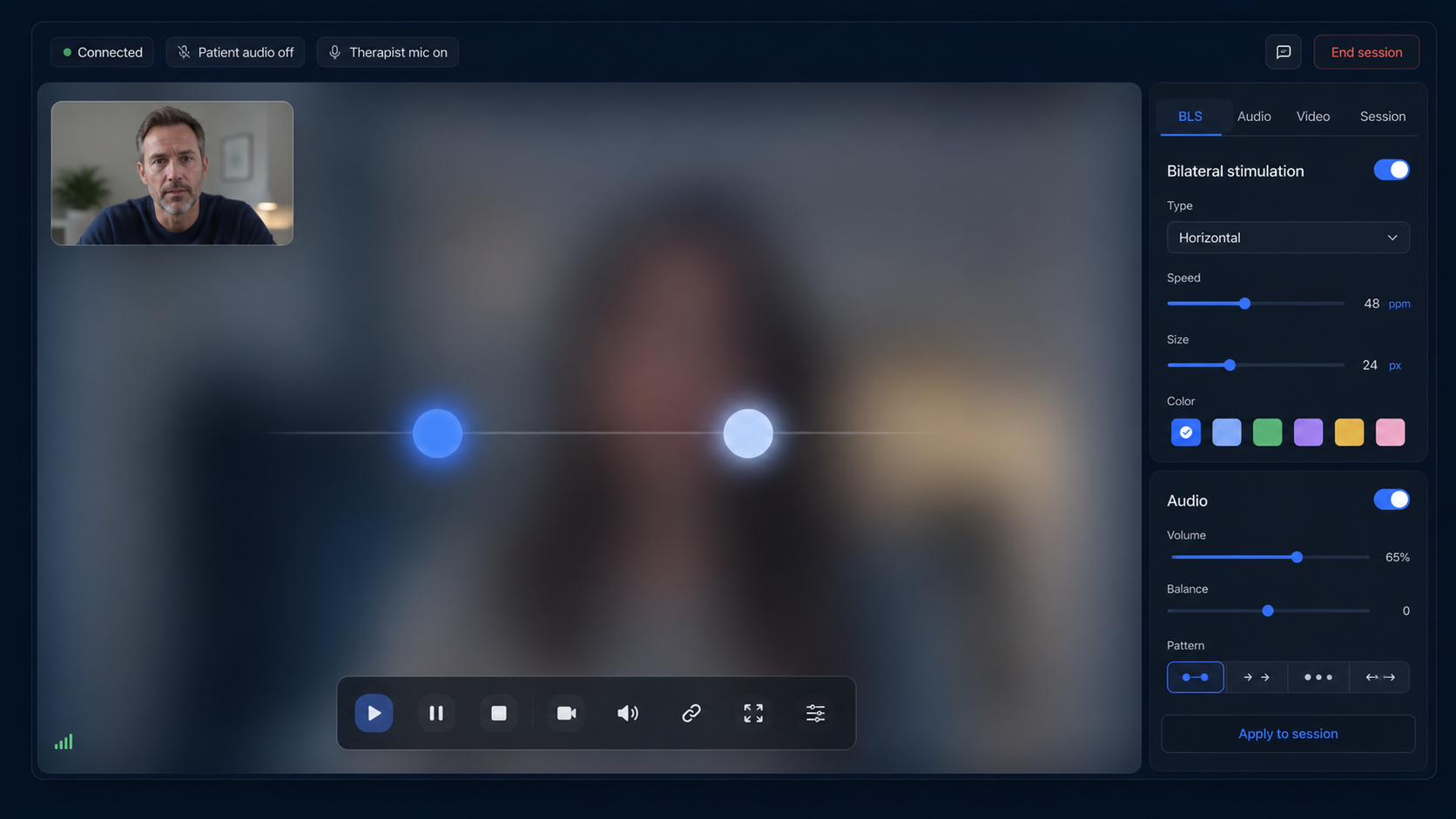
Run remote EMDR with visual BLS, bilateral sounds, secure patient links, video-ready sessions, saved settings, and notes.
Continue with related EMDR guides