Trauma contexts and current safety
EMDR after intimate partner violence: ongoing threat, evidence, and remote privacy
A therapist guide to PTSD care when coercion or re-exposure may continue, separating treatment from safety work, advocacy, legal decisions, and digital-risk planning.
By the EMDRSuite Editorial Team
Product claims checked against the current EMDRSuite code and interface.
No independent clinical reviewer is named for this guide.
Current threat and traumatic stress are related, not identical
Intimate partner violence can include physical, sexual, emotional, economic and technology-facilitated abuse, stalking and coercive control. Realistic present danger should not be relabelled as a distorted fear response, while PTSD symptoms still require assessment rather than assumption.
Ask about safety, escalation, strangulation or weapons where professionally appropriate, children and dependants, housing, finances, stalking, device access, suicide risk, injuries, substance use and available advocacy. Follow local law and safeguarding standards without making care conditional on leaving the relationship.
The evidence under ongoing threat remains preliminary
Reviews suggest psychological care can be feasible and helpful under ongoing threat, but studies are few, methods mixed and intimate-partner-violence findings variable. A meta-analysis found modest short-term symptom effects and no reduction in re-exposure; evidence quality was low.
Trauma-focused treatment does not stop an abusive person or replace material safety. Present EMDR as one possible PTSD treatment when indicated, not as protection, proof of readiness, or a substitute for advocacy and coordinated support.
Safety planning preserves autonomy
Separate clinical formulation from a practical, survivor-led safety plan. Offer choices and specialist resources without blame, coercion or assuming departure is immediately possible or safest. Document limits of confidentiality, communication preferences and what information could create risk.
Treatment pacing considers current incidents, sleep, housing, court dates, child contact and the consequences of post-session disturbance. Reassess as circumstances change; a plan is not a one-time checkbox.
Remote care can expose digital traces
A shared device, browser history, notifications, location sharing, headphones or an unexpected camera view can create risk. Agree on a safe channel, neutral messages, interruptions, disconnection and emergency response only when compatible with local standards and the person's choices.
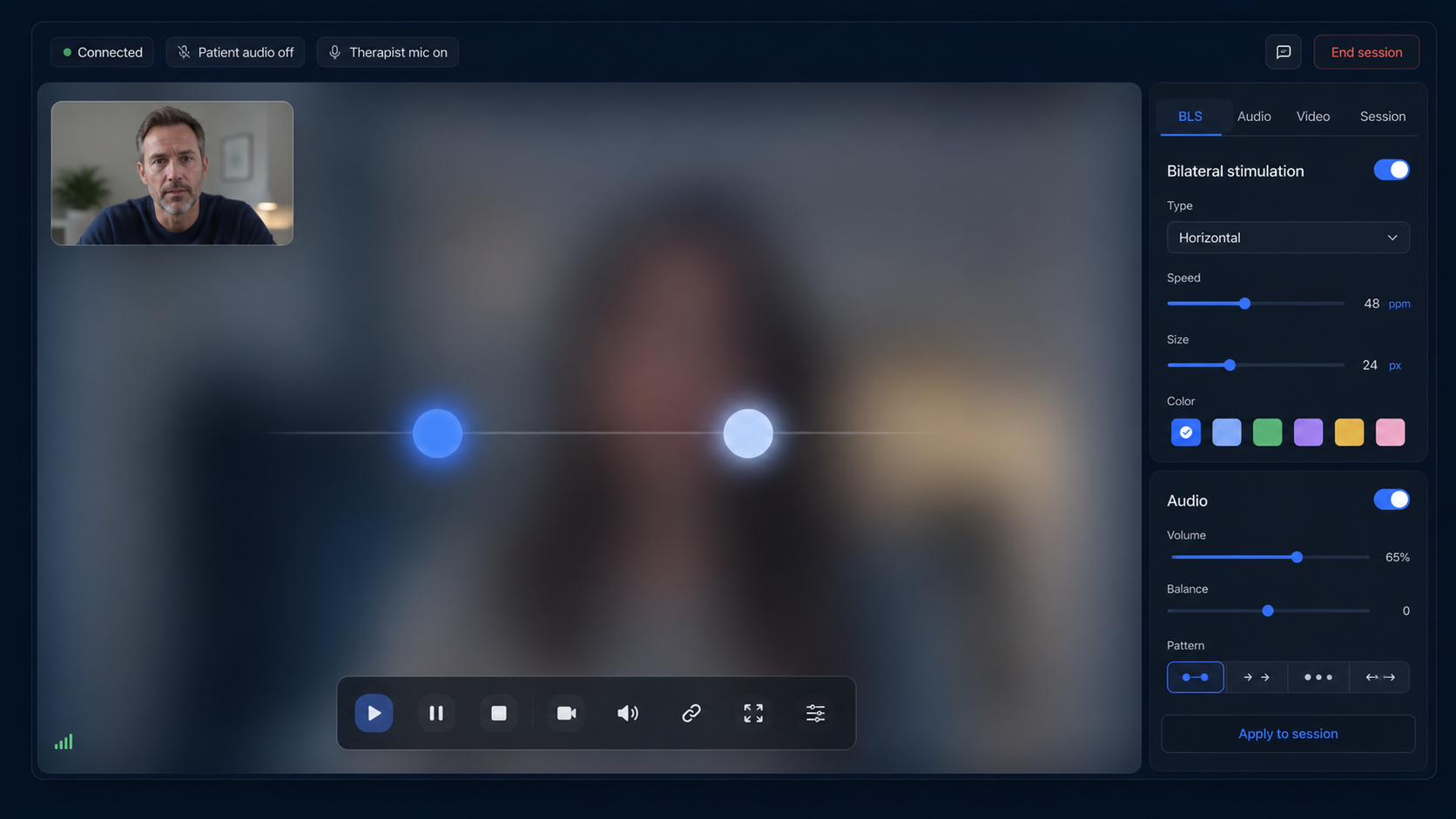
EMDRSuite cannot detect an abusive person, erase external device history, create a safety plan, contact emergency services, provide legal advice or determine whether remote care is safe. The therapist retains those decisions.
FAQ
EMDR intimate partner violence
Must someone leave a relationship before therapy?
No universal condition applies. Safety, autonomy, resources, law and individual circumstances guide planning.
Can EMDR reduce the risk of further violence?
No. Psychotherapy may address symptoms but does not control the abusive person or prevent re-exposure.
Is trauma-focused care impossible under ongoing threat?
Not necessarily, but evidence is preliminary and safety, adaptation and coordinated support need explicit review.
Can EMDRSuite detect coercive control?
No. It cannot identify abuse, monitor safety, conceal device traces or replace specialist services.
References
EMDR after intimate partner violence: ongoing threat, evidence, and remote privacy
EMDRSuite
Put the guide into practice with EMDRSuite
Run remote EMDR with visual BLS, bilateral sounds, secure patient links, video-ready sessions, saved settings, and notes.
Continue with related EMDR guides