A seizure-like episode requires medical differentiation before any trauma formulation
EMDR for seizures: epilepsy, functional seizures, PTSD, and safety
Separate epilepsy from functional seizures before considering EMDR, with evidence limits, dual diagnosis, first-seizure referral, medication, and remote safety.
By the EMDRSuite Editorial Team
Product claims checked against the current EMDRSuite code and interface.
No independent clinical reviewer is named for this guide.
Do not infer epilepsy or functional seizures from appearance
Episodes may reflect epilepsy, functional or dissociative seizures, syncope, cardiac or metabolic causes, sleep disorders, migraine, medication or substance effects, panic, or other neurological conditions. Functional seizures are real and involuntary; they are not faking, but they also cannot be diagnosed because trauma is present.
NICE recommends urgent specialist assessment after a first suspected seizure or recurrence after remission. A prolonged or repeated episode, breathing problem, injury, pregnancy concern, new neurological deficit, or failure to recover needs the locally appropriate emergency response.
EMDR does not treat epileptic electrical activity
EMDR can be considered for separately assessed PTSD in a person who also has epilepsy, but evidence for PTSD does not show seizure control. Do not stop or alter antiseizure medication, replace neurology, provoke an event, use BLS as a diagnostic test, or promise that processing trauma will prevent epileptic seizures.
The plan should record seizure type and diagnosis, typical recovery, prescribed rescue plan, known risks, medication effects, sleep, driving and water restrictions, emergency contacts, and how trauma work will pause. A remote therapist cannot verify consciousness, oxygenation, injury, or seizure semiology through a browser.
Functional-seizure EMDR evidence is two adolescents, not a trial
The direct publication described two adolescents with functional neurological disorder and psychogenic nonepileptic seizures; both improved after EMDR and no events were reported at six-month follow-up. It is a two-case study without randomization, blinding, or an active comparator.
Reviews describe EMDR research for functional seizures as scarce. The AAN guideline supports accurate positive diagnosis, assessment of co-occurring epilepsy and psychiatric conditions, respectful explanation, continuity, and evidence-based psychological intervention; it does not establish EMDR as a universal first-line seizure treatment.
Dual diagnosis and remote contingencies matter
A meta-analysis estimated epilepsy in 22% of people with functional seizures and functional seizures in 12% of people with epilepsy in specialized samples, with high heterogeneity. A functional diagnosis must not erase possible epilepsy, and epilepsy must not prevent assessment of functional events or PTSD.
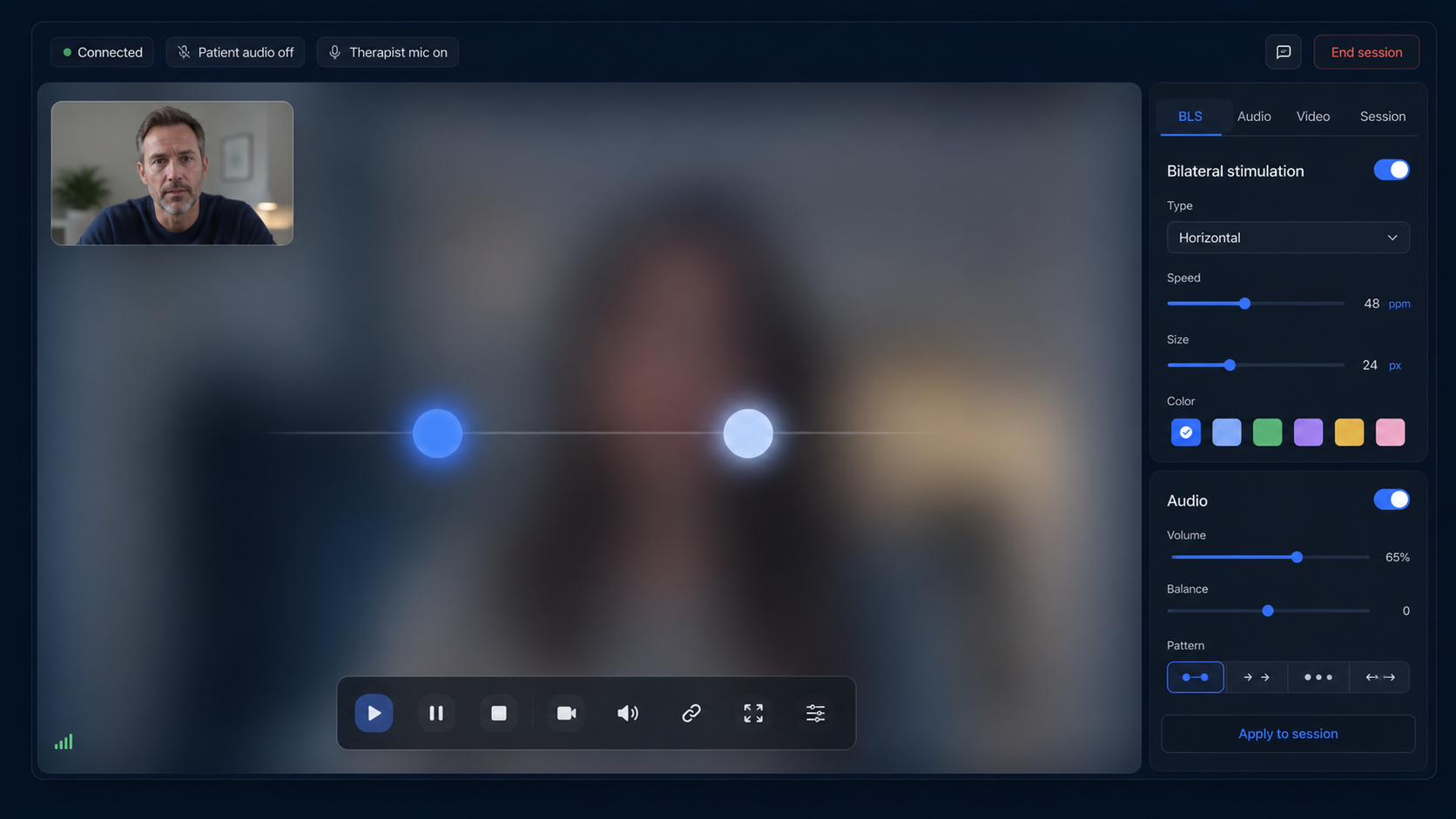
EMDRSuite does not diagnose epilepsy, functional seizures, PTSD, syncope, or emergencies; interpret video or EEG; monitor consciousness or breathing; manage medication; implement seizure first aid; detect falls; assess driving; or contact emergency services. Pause BLS, follow the agreed medical plan, and do not resume automatically after an event or connection loss.
FAQ
EMDR for seizures
Can EMDR treat epilepsy?
No evidence here shows that EMDR changes epileptic electrical activity or replaces antiseizure treatment.
Are functional seizures the same as epilepsy?
No, but both can coexist. Diagnosis requires specialist assessment and sometimes capture of typical events on video-EEG.
What direct EMDR evidence exists for PNES?
A publication described two adolescents; that uncontrolled evidence cannot establish general effectiveness or safety.
Can EMDRSuite monitor a seizure?
No. It cannot assess consciousness, breathing, injury, neurology, medication, event type, or emergency response.
References
EMDR for seizures: epilepsy, functional seizures, PTSD, and safety
EMDRSuite
Put the guide into practice with EMDRSuite
Run remote EMDR with visual BLS, bilateral sounds, secure patient links, video-ready sessions, saved settings, and notes.
Continue with related EMDR guides