TICES is a between-session awareness log, not a self-EMDR protocol
EMDR TICES log: meaning, form, privacy, and clinical limits
Understand the EMDR TICES log, what each letter means, how it relates to closure and reevaluation, and why a form is not a treatment protocol.
By the EMDRSuite Editorial Team
Product claims checked against the current EMDRSuite code and interface.
No independent clinical reviewer is named for this guide.
TICES names five fields for noticing disturbance
EMDRIA defines TICES as trigger, image, cognitions, emotions, and sensations. The log helps a client notice and record experiences between sessions, usually in a chart. It is a clinical aid associated with closure and later reevaluation, not another phase, a diagnostic test, a symptom score, or a complete EMDR protocol.
A useful entry can remain brief and use the minimum information needed for the agreed purpose. The therapist still decides how any observation fits history taking, formulation, readiness, target planning, closure, or referral; the acronym does not make that decision.
The official lineage supports the form, not an independent efficacy claim
Shapiro's third-edition manual lists a recommended weekly TICES report in Appendix A. EMDRIA also describes logging thoughts, situations, dreams, and memories during phase-seven closure so they can be reviewed later.
In the indexed and official sources reviewed through 28 August 2026, no controlled trial was identified that isolates the TICES log as an independent treatment. Evidence for trained EMDR therapy or PTSD guidelines cannot be relabeled as evidence that a worksheet itself improves outcomes.
A downloadable worksheet creates privacy and safety questions
Agree where the log is kept, whether it travels by email, who can see a shared device, what happens if risk or ongoing abuse is recorded, and when the therapist actually monitors it. Do not imply continuous review, emergency response, or confidentiality that the channel cannot provide.
Avoid unnecessary trauma narratives, names of third parties, legal allegations, passwords, or identifiers. A log can increase attention to distress for some people; use collaborative pacing, clear contact limits, crisis routes, and an option to stop or use another method.
EMDRSuite does not turn the patient room into a diary
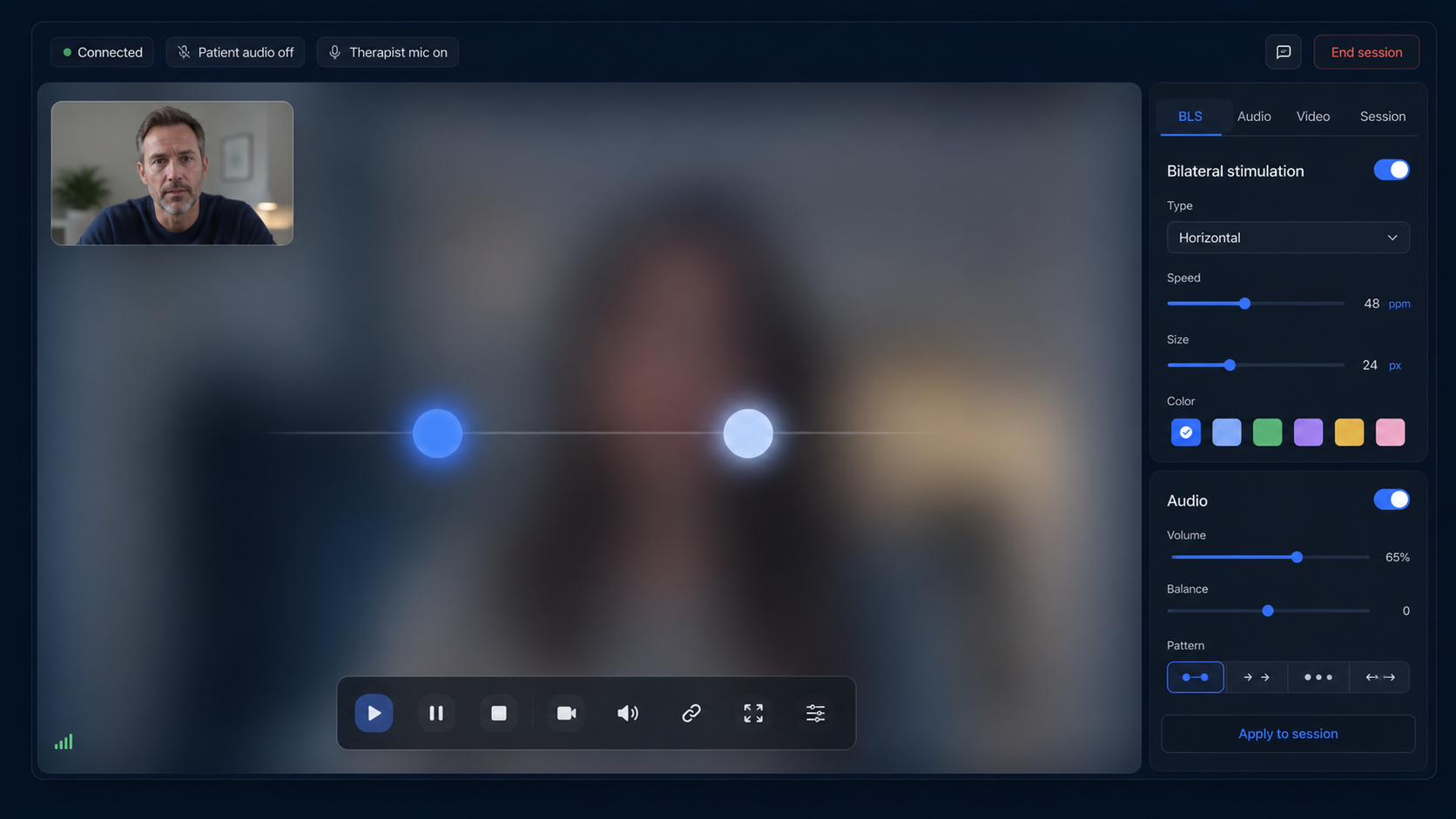
EMDRSuite keeps therapist notes in the professional workspace and gives the patient a focused session link. It does not provide a patient TICES journal, automatically interpret entries, choose targets, monitor risk between sessions, or send alerts.
A therapist can document clinically necessary observations under local policy, but should not claim that EMDRSuite supplies the protected manual form or that entering five fields constitutes EMDR treatment, training, consent, or outcome measurement.
FAQ
EMDR TICES log
What does TICES stand for?
Trigger, image, cognitions, emotions, and sensations.
Is TICES an EMDR protocol?
No. It is a between-session clinical aid, not the eight-phase protocol or a self-treatment method.
Does a TICES PDF prove effectiveness?
No. The form's official lineage does not establish independent outcome efficacy.
Does EMDRSuite include a patient TICES log?
No. It provides therapist-controlled session technology and therapist-only notes, not a monitored patient diary.
References
EMDR TICES log: meaning, form, privacy, and clinical limits
EMDRSuite
Put the guide into practice with EMDRSuite
Run remote EMDR with visual BLS, bilateral sounds, secure patient links, video-ready sessions, saved settings, and notes.
Continue with related EMDR guides