EMDR professional practice
EMDR treatment fidelity and protocol adaptations: document the clinical reasoning
A professional guide to EMDR fidelity, adherence, competence, responsive adaptation, drift, consultation, and documentation without automated protocol policing.
By the EMDRSuite Editorial Team
Product claims checked against the current EMDRSuite code and interface.
No independent clinical reviewer is named for this guide.
Fidelity, competence, and outcome answer different questions
Treatment fidelity asks whether the identified model and procedures were delivered as intended. Competence concerns the quality and judgment with which they were delivered. Outcome concerns change for the patient. A complete checklist can coexist with poor timing, and a good outcome does not prove every procedure was delivered faithfully.
The EMDR Fidelity Rating Scale was developed to evaluate adherence to the standard eight-phase approach and three-pronged protocol in research and clinical review. It is a structured rating instrument, not a universal self-certification badge or a substitute for training, observed practice, consultation, and patient-level assessment.
Responsive adaptation is not the same as silent drift
Adaptations may be needed for development, disability, language, culture, dissociation, medical needs, remote delivery, setting, or a specific protocol supported by training. A defensible adaptation preserves the clinical function, is within competence, responds to assessed need, is consented to where relevant, and is monitored for benefit or harm.
Drift occurs when core elements are omitted, reordered, or redefined without a clear rationale, awareness, or review. Calling every deviation individualized care prevents learning; treating every variation as error prevents accessibility and judgment. Name what was standard, what changed, why, and what evidence or consultation informed the choice.
Review integrity across a course of treatment
A single session may not display every phase or prong. Review formulation, preparation, target selection, assessment, processing, closure, reevaluation, past-present-future coverage, patient response, adverse effects, and changes over time. Distinguish a planned delay from an accidental omission and an incomplete session from an incomplete treatment model.
Useful review can include supervision, consultation, authorized recording or observation, case presentation, session summaries, and validated fidelity methods. Each has consent, confidentiality, rater-training, and context limits. A numerical score should identify questions for review, not conceal clinical reasoning.
Document the decision without turning software into a judge
Record the model or protocol used, relevant phase, intended function, observed response, adaptation and reason, consent or preference, consultation, result, and next review. Avoid copying proprietary manuals, storing unnecessary trauma details, or claiming fidelity from a completed screen alone.
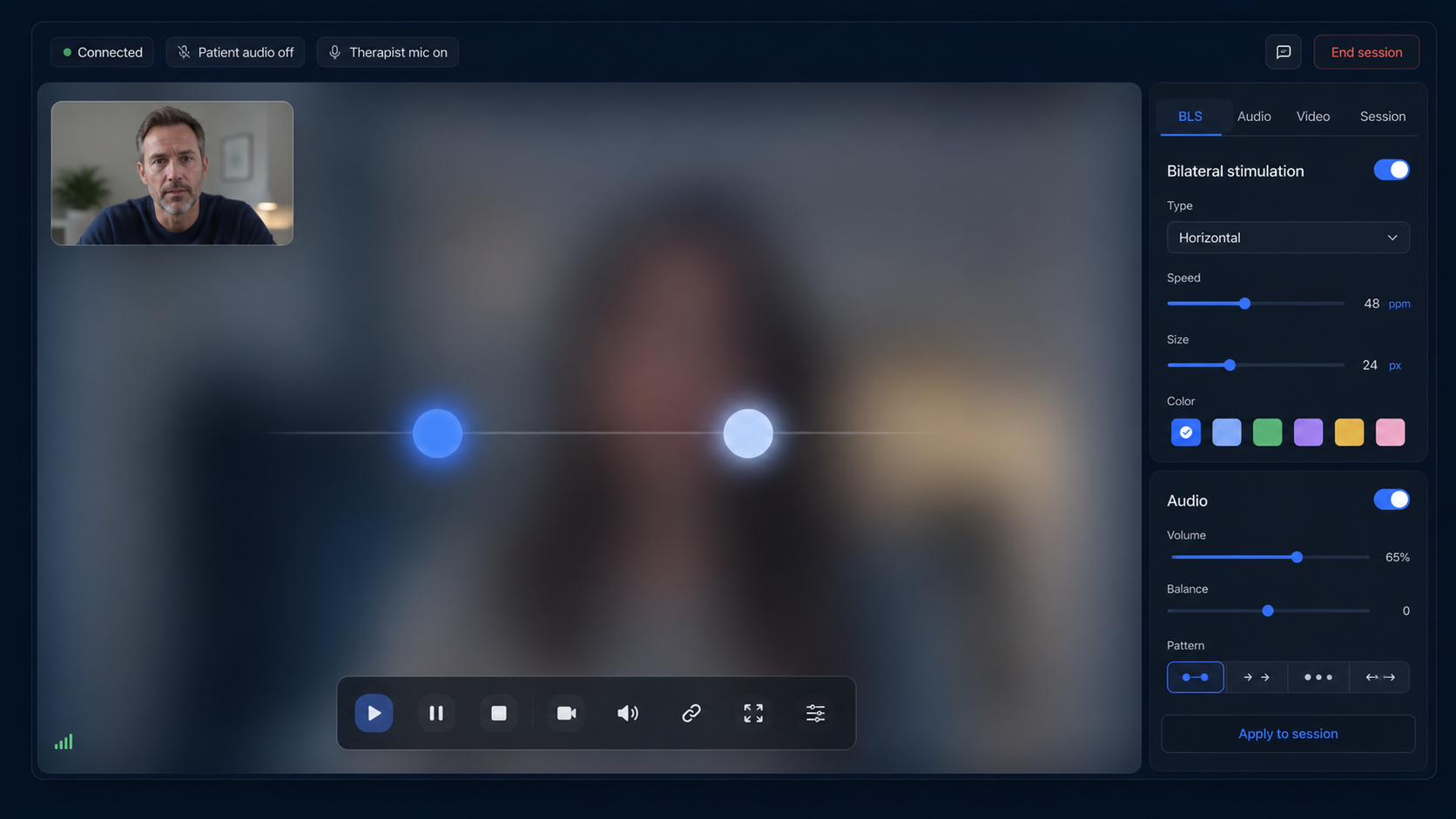
EMDRSuite organizes therapist-entered phases, targets, ratings, notes, and remote controls. It does not score fidelity, detect drift, prescribe adaptations, judge competence, certify adherence, or infer treatment quality or outcome. Those responsibilities remain with the trained therapist and authorized professional review.
FAQ
EMDR treatment fidelity
What is EMDR treatment fidelity?
It is the degree to which the identified EMDR model and procedures are delivered as intended; it is not identical to competence or outcome.
Is every protocol adaptation a fidelity failure?
No. A reasoned, trained, documented adaptation can preserve clinical function; unexplained drift is a different concern.
Can one session show fidelity to all eight phases?
Not necessarily. Fidelity can require review across the treatment course and in relation to the protocol actually being used.
Does EMDRSuite rate protocol adherence?
No. It provides structure but does not score fidelity, competence, appropriateness, or treatment quality.
References
EMDR treatment fidelity and protocol adaptations: document the clinical reasoning
EMDRSuite
Put the guide into practice with EMDRSuite
Run remote EMDR with visual BLS, bilateral sounds, secure patient links, video-ready sessions, saved settings, and notes.
Continue with related EMDR guides