ASSYST is a named, copyrighted intervention with an emerging and developer-associated evidence base
ASSYST and EMDR: protocol evidence, limitations, and training
Review ASSYST-I, ASSYST-G, and remote evidence with study sizes, independence limits, scope, copyright, training, and online safety boundaries.
By the EMDRSuite Editorial Team
Product claims checked against the current EMDRSuite code and interface.
No independent clinical reviewer is named for this guide.
ASSYST names a family of symptom-focused interventions
Acute Stress Syndrome Stabilization includes individual, group, and remote variants described for intense psychological disturbance or physiological reactivity associated with intrusive symptoms. It is not a synonym for standard EMDR, generic stabilization, R-TEP, G-TEP, psychological first aid, or every use of the Butterfly Hug.
Clarify which variant, population, setting, dose, training, and outcome a claim concerns. The label does not diagnose acute stress disorder or PTSD, demonstrate that a memory caused current symptoms, or establish suitability during ongoing danger, medical instability, psychosis, intoxication, dissociation, or suicide risk.
Randomized studies are small and need independent replication
Published randomized studies include remote groups during pandemic lockdown, adult women with adverse childhood experiences, and 40 girls aged eight to 17 with polytrauma. Reported symptom reductions are encouraging, but settings, samples, comparators, measures, and journals differ.
Much of the direct literature is developer-associated, several studies appear in the same journal family, and no high-quality independent systematic review establishes comparative effectiveness. That does not invalidate the findings, but it lowers certainty and prevents claims of superiority, universal safety, or equivalence to guideline-recommended PTSD treatment.
Adaptations and registered studies do not widen the evidence automatically
A 17-person uncontrolled case series adapted ASSYST-I for OCD and reported pre-post change; it cannot establish efficacy or replace exposure and response prevention. A registered ASSYST-SV study for recent sexual violence is single-arm and ongoing, so its protocol is not a result.
Keep evidence for each adaptation separate. Results in lockdown, adverse childhood experiences, OCD, refugees, or sexual violence cannot be transferred automatically across age, diagnosis, culture, acute timing, group delivery, or remote care.
Copyright and training boundaries matter online
ASSYST materials are copyrighted and formal training is offered through professional organizations. A search page should explain evidence and differences, not reproduce scripts, worksheets, sequences, trainer materials, or imply certification. Therapists remain responsible for competence, consent, safeguarding, crisis response, and fidelity.
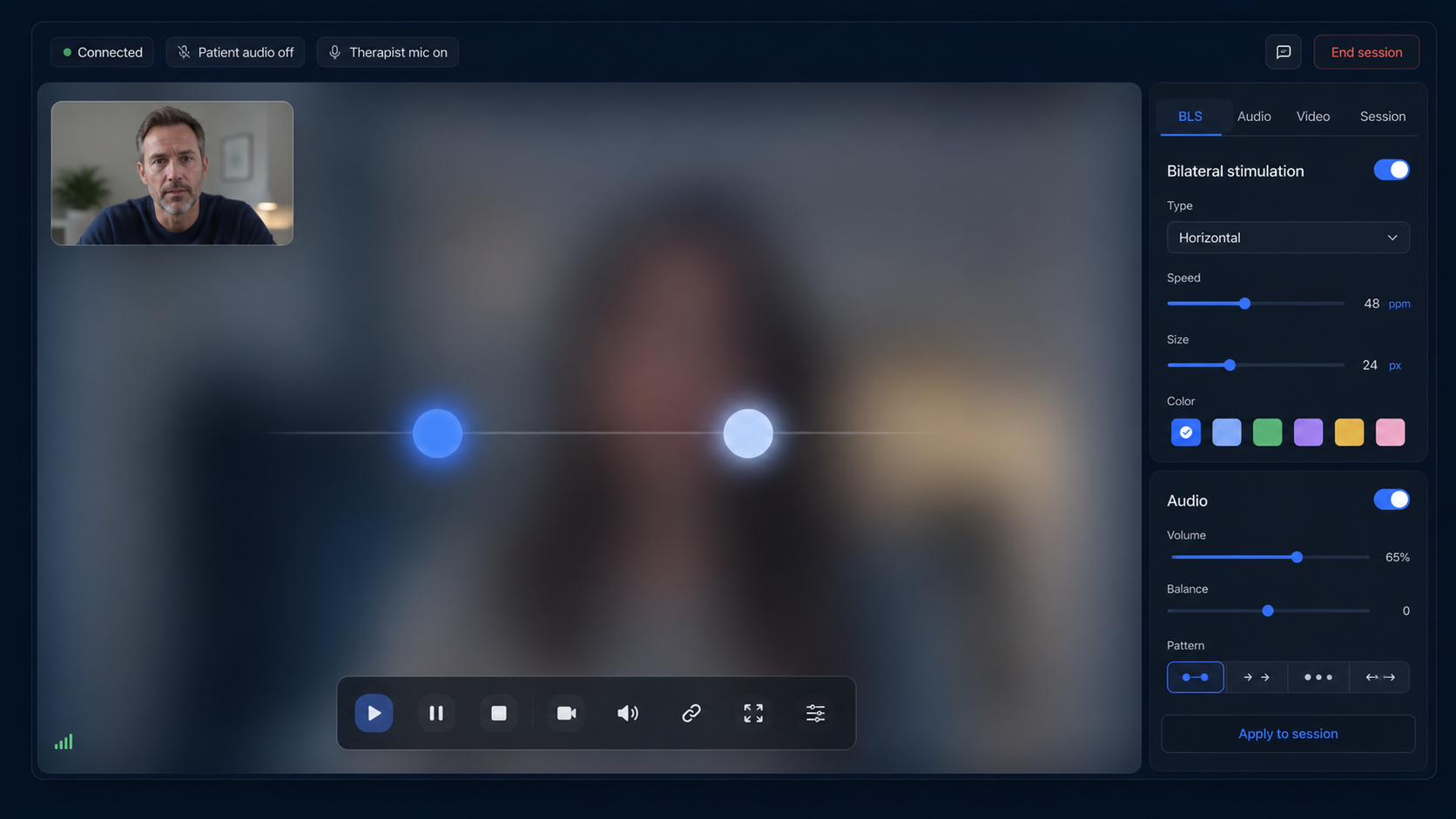
EMDRSuite does not include ASSYST scripts, worksheets, certification, group rooms, automatic symptom targeting, or protocol decisions. It may support an individually authorized remote workflow and BLS controls, but the therapist must determine whether and how any trained intervention is used.
FAQ
ASSYST EMDR protocol
Is ASSYST the standard EMDR protocol?
No. It is a named family of symptom-focused individual, group, and remote interventions with separate training.
Is ASSYST evidence definitive?
No. Small randomized studies are encouraging, but independent replication, systematic synthesis, and comparative evidence remain limited.
Can an ASSYST study in one population prove another use?
No. Variant, population, setting, diagnosis, age, comparator, and delivery format must be kept separate.
Does EMDRSuite include ASSYST training or scripts?
No. It does not include copyrighted protocols, worksheets, group delivery, certification, or clinical decision-making.
References
ASSYST and EMDR: protocol evidence, limitations, and training
EMDRSuite
Put the guide into practice with EMDRSuite
Run remote EMDR with visual BLS, bilateral sounds, secure patient links, video-ready sessions, saved settings, and notes.
Continue with related EMDR guides