EMDR 2.0 is an adaptation informed by working-memory research, not a replacement standard
EMDR 2.0 vs standard EMDR: evidence, efficiency, and limits
Compare EMDR 2.0 with standard EMDR using non-clinical and group trials, the ongoing ENHANCE study, working-memory claims, and training limits.
By the EMDRSuite Editorial Team
Product claims checked against the current EMDRSuite code and interface.
No independent clinical reviewer is named for this guide.
EMDR 2.0 aims to increase activation and working-memory load
EMDR 2.0 retains an EMDR framework while adding strategies intended to activate the target and vary or increase dual-task working-memory taxation. A theoretical mechanism and a memorable name do not by themselves establish better clinical outcomes, faster recovery, lower dropout, or suitability for every patient.
More load is not automatically better. Sensory, cognitive, motor, neurological, developmental, dissociative, fatigue, pain, accessibility, and remote-technology factors can alter tolerability and performance. The therapist must monitor the patient rather than optimize a task score.
The first randomized comparison used 62 non-clinical participants
Sixty-two adults with a disturbing autobiographical memory were randomized to one session of standard EMDR or EMDR 2.0. Both reduced rated emotionality and vividness; there was no difference in those outcomes or session time, although EMDR 2.0 used fewer sets.
This study involved no clinical PTSD sample and measured memory ratings, not diagnosis, functioning, adverse events, relapse, or long-term comparative effectiveness. Fewer sets did not establish that EMDR 2.0 is clinically superior or more efficient across a complete course of therapy.
The clinical comparison trial remains ongoing
A small online group randomized study after traffic accidents included 30 non-clinical volunteers and found advantages over a stress-management module on some anxiety, stress, avoidance, hyperarousal, and total trauma scores, but not depression or intrusion. Group format, sample size, self-selection, and one-month follow-up limit generalization.
The ENHANCE trial is designed to compare standard EMDR, EMDR 2.0, and Flash Technique in diagnosed PTSD. Its registry still lists the study as ongoing and recruiting in 2026. A study protocol is not a result, so claims that EMDR 2.0 outperforms standard EMDR remain unproven.
Software settings do not implement a clinical adaptation
Remote use requires testing screen motion, audio, latency, instructions, multitasking demands, fatigue, accessibility, stop signals, privacy, reconnection, and fallback. Document the rationale and observed response without claiming that software measured working-memory load or treatment effect.
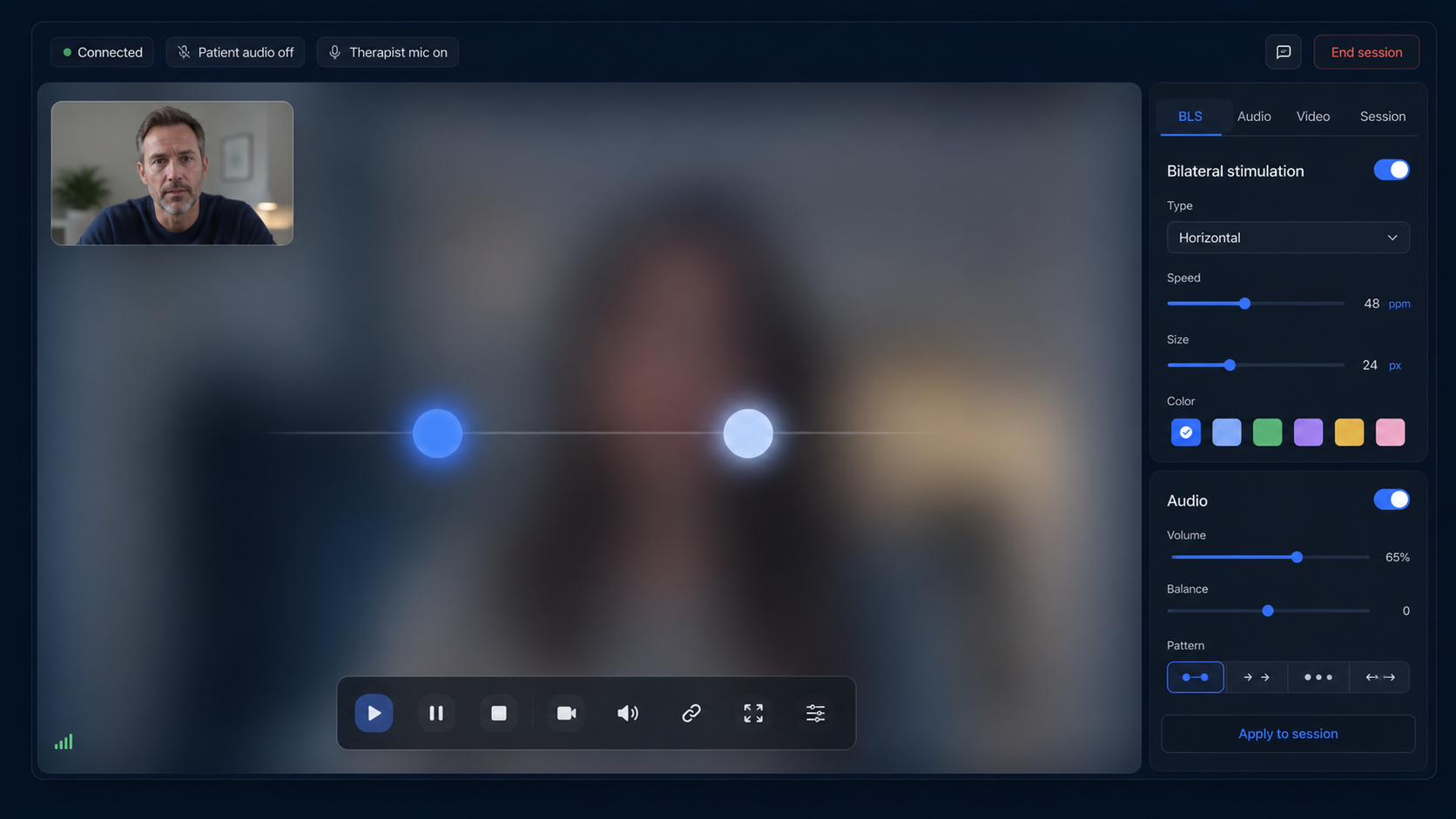
EMDRSuite lets the therapist control visual or auditory BLS and stop it immediately. It does not prescribe EMDR 2.0 tasks, calculate cognitive load, activate targets, decide speed or set length, monitor neurological tolerance, provide training, or certify fidelity to EMDR 2.0 or standard EMDR.
FAQ
EMDR 2.0 evidence
Is EMDR 2.0 proven better than standard EMDR?
No. The direct non-clinical comparison found similar memory outcomes, and the main diagnosed-PTSD trial remains ongoing.
Does EMDR 2.0 only mean faster eye movements?
No. It is a broader trained adaptation involving target activation and varied working-memory taxation, not a speed setting.
Are more demanding dual tasks always better?
No. Clinical benefit, tolerability, accessibility, and safety cannot be inferred from task difficulty alone.
Can EMDRSuite run EMDR 2.0 automatically?
No. It provides therapist-controlled BLS, not task prescription, cognitive-load measurement, training, or clinical decisions.
References
EMDR 2.0 vs standard EMDR: evidence, efficiency, and limits
EMDRSuite
Put the guide into practice with EMDRSuite
Run remote EMDR with visual BLS, bilateral sounds, secure patient links, video-ready sessions, saved settings, and notes.
Continue with related EMDR guides