Minimal disclosure still requires assessment, consent, and trained EMDR care
Blind to Therapist EMDR: protocol evidence, privacy, and limits
Review Blind to Therapist EMDR, its case-based evidence, minimal-disclosure uses, safety information that still matters, and training boundaries.
By the EMDRSuite Editorial Team
Product claims checked against the current EMDRSuite code and interface.
No independent clinical reviewer is named for this guide.
Blind to Therapist reduces content disclosure, not clinical responsibility
The 2013 article describes B2T as a protocol developed when a client is unwilling to describe traumatic-memory content. Its six illustrated presentations include shame, cultural or interpreter concerns, control, vicarious-trauma concerns, and communication difficulty.
Minimal disclosure is not zero information. The therapist still needs enough to establish identity, consent, target boundaries, present orientation, readiness, ongoing threat, dissociation, psychosis, intoxication, medical risk, safeguarding, legal duties, response to sets, closure, and whether the procedure remains appropriate.
Direct evidence is case-based rather than comparative
The foundational paper presents development, clinical issues, and case vignettes; it is not a randomized outcome trial. A later report described one 50-year-old woman with post-stroke depression and expressive aphasia whose mood and language improved after B2T EMDR.
One case cannot establish efficacy for aphasia, depression, trauma, sexual violence, interpreters, or remote care. In the sources reviewed through 28 August 2026, no controlled trial specifically comparing B2T with standard-disclosure EMDR was identified.
Privacy claims must remain precise
B2T may let the client avoid narrating details to the therapist, but the client is still processing private material and may reveal information spontaneously. It does not make a room anonymous, remove records, prevent household overhearing, or override safeguarding and mandatory-reporting law.
For remote sessions, confirm private space, headphones, screen visibility, location, backup contact, emergency response, stop signals, reconnection, and what will be documented. Do not record sessions or invite coded disclosure merely because a protocol is described as blind.
A search for the script is a training need, not product functionality
Use authorized training and the original publication rather than a copied PDF stripped of case selection, dovetailing, and clinical cautions. The name itself does not certify competence or establish that less disclosure is always preferable.
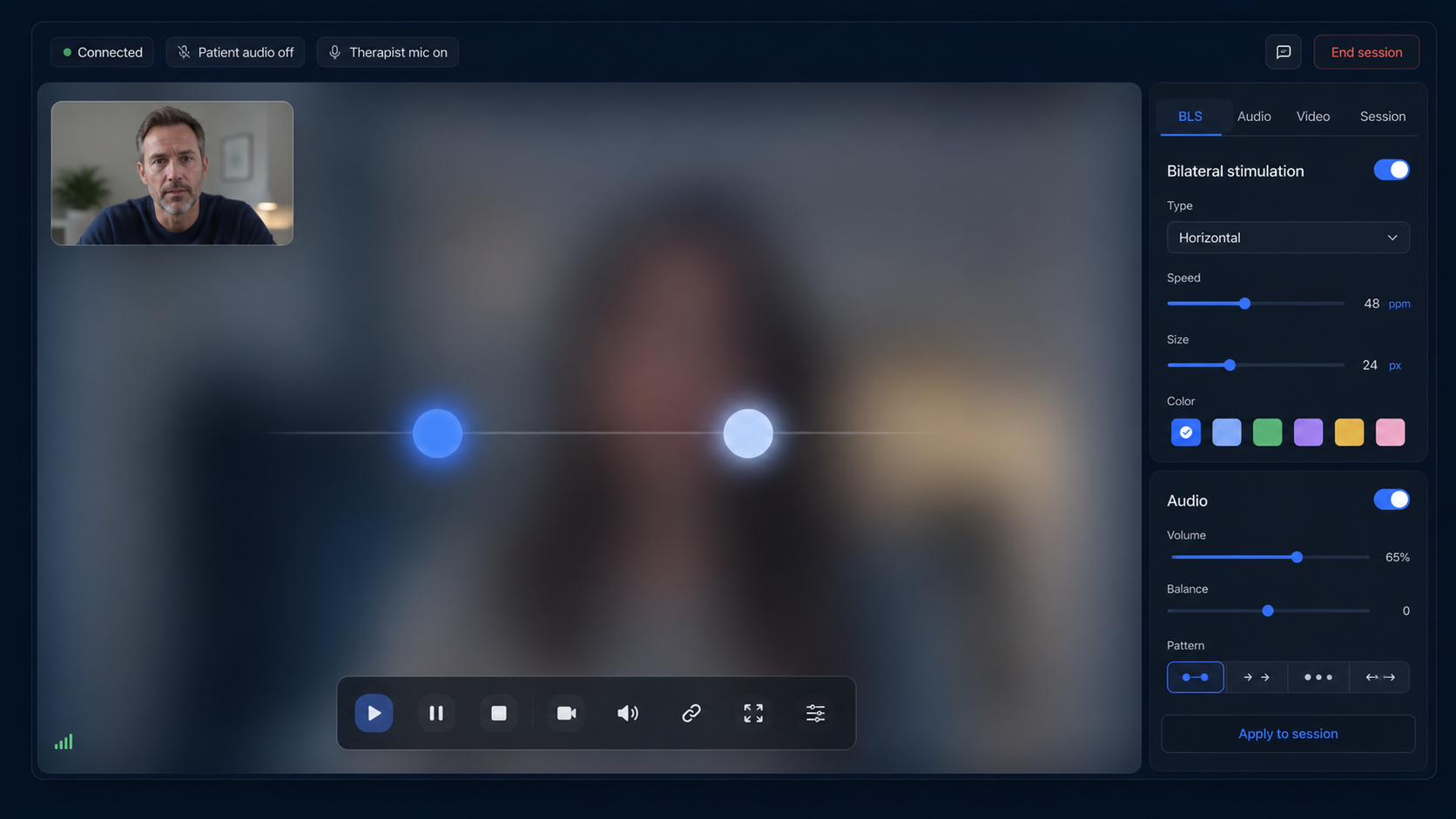
EMDRSuite supplies an individual therapist-patient room, video, and therapist-controlled BLS. It does not provide a B2T script, decide what may remain undisclosed, assess risk, interpret coded material, train clinicians, or certify protocol fidelity.
FAQ
Blind to Therapist EMDR protocol
Does Blind to Therapist mean no disclosure at all?
No. Memory details may remain private, but enough clinical and safety information is still required.
How strong is the direct evidence?
It consists mainly of protocol description, case vignettes, and a single aphasia case report rather than controlled comparative trials.
Does B2T guarantee privacy?
No. It reduces narrated content but does not remove device, room, record, safeguarding, or legal risks.
Does EMDRSuite include the B2T protocol?
No. It provides session technology, not scripts, training, selection, or clinical decisions.
References
Blind to Therapist EMDR: protocol evidence, privacy, and limits
EMDRSuite
Put the guide into practice with EMDRSuite
Run remote EMDR with visual BLS, bilateral sounds, secure patient links, video-ready sessions, saved settings, and notes.
Continue with related EMDR guides