Trauma contexts and survivor-centred care
EMDR after sexual violence: evidence, survivor control, and safety boundaries
A therapist guide to evidence after sexual violence, differential assessment, survivor-led disclosure, medical and forensic boundaries, consent, and remote safety.
By the EMDRSuite Editorial Team
Product claims checked against the current EMDRSuite code and interface.
No independent clinical reviewer is named for this guide.
Sexual violence exposure is not one diagnosis
Rape, assault, coercion and abuse can be recent or historic and may involve known people, institutions, conflict or intimate partners. Responses vary. PTSD, acute stress, depression, dissociation, pain, substance use, sexual-health concerns, self-harm risk and no disorder are all possible; exposure alone does not determine diagnosis or readiness.
Assess immediate safety and medical needs, safeguarding, suicidality, current coercion, pregnancy or infection concerns within the relevant professional role, support, sleep, dissociation and the person's goals. Emergency, medical or specialist needs can take priority without making psychotherapy contingent on police reporting.
Evidence supports options, not automatic early EMDR
A Cochrane review found psychosocial interventions can reduce PTSD and depressive symptoms after adult sexual violence, while intervention types and certainty varied. A broader review supports several trauma-focused therapies, including EMDR, for assessed trauma-related problems.
A randomized trial of two early EMDR sessions after recent rape did not outperform watchful waiting for most outcomes. Do not convert general PTSD evidence into mandatory immediate processing, prevention claims or superiority. Discuss timing, alternatives and uncertainty.
Control over disclosure is part of care
The survivor decides what to disclose for therapy within legal and safety limits. Avoid unnecessary detail, disbelief, blame, pressure to confront, or treating fragmented recall as proof for or against an event. Therapy, forensic interviewing, medical examination and legal evidence have different purposes.
Consent covers target selection, language, BLS, expected disturbance, pauses, records, coordination, mandatory reporting and who may access information. Shame, guilt and bodily responses are not consent or responsibility for violence.
Remote delivery adds privacy and interruption risks
Confirm location, safe contact method, device privacy, headphones, whether another person can enter or monitor, emergency options and what a sudden disconnect means. Recheck rather than assuming privacy remains stable.
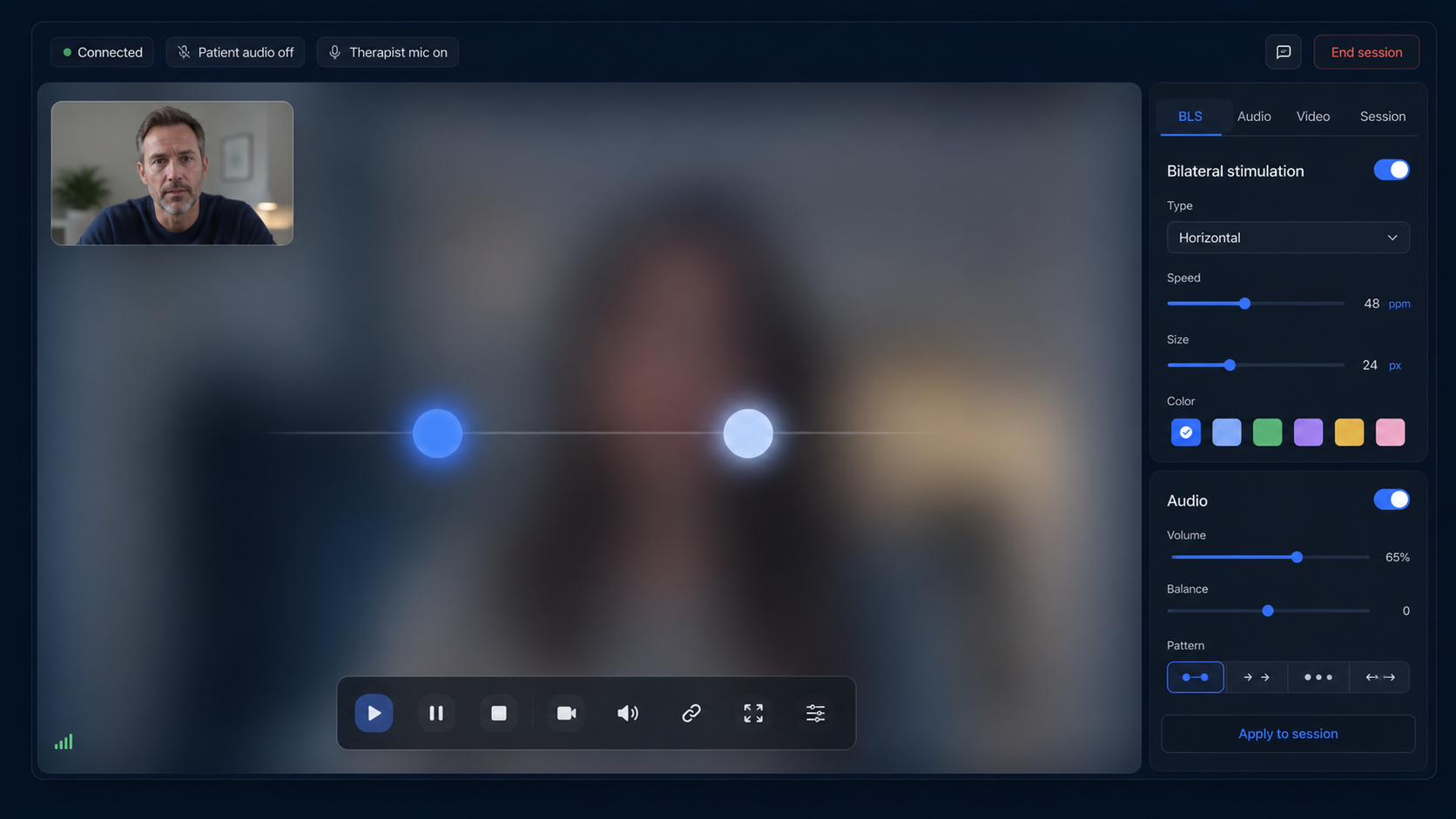
EMDRSuite supports therapist-led video, BLS and notes. It does not investigate violence, provide medical or forensic care, decide reporting duties, certify testimony, detect coercion or replace local survivor services.
FAQ
EMDR after sexual violence
Does sexual violence always cause PTSD?
No. Effects vary and require individual assessment; exposure does not establish one diagnosis.
Should EMDR begin immediately after an assault?
No universal timing is established, and one early trial did not show broad superiority over watchful waiting.
Must a survivor give a detailed account?
No. Therapeutic disclosure should be purposeful, consent-led and distinct from forensic interviewing.
Does EMDRSuite handle reporting or evidence?
No. It provides session technology, not legal, medical, safeguarding or forensic decisions.
References
EMDR after sexual violence: evidence, survivor control, and safety boundaries
EMDRSuite
Put the guide into practice with EMDRSuite
Run remote EMDR with visual BLS, bilateral sounds, secure patient links, video-ready sessions, saved settings, and notes.
Continue with related EMDR guides