Mental Video Check is a trained clinical check, not a video recording
EMDR Mental Video Check: purpose, evidence, and exposure limits
Distinguish Mental Video Check from flashforward, future template, and exposure while reviewing direct evidence and anxiety-treatment limits.
By the EMDRSuite Editorial Team
Product claims checked against the current EMDRSuite code and interface.
No independent clinical reviewer is named for this guide.
The check looks for residual feared elements in an imagined sequence
EMDRIA training describes a client imagining a typical anxiety-provoking situation from start to finish and reporting what is encountered, so the therapist can identify fearful elements that may still obstruct approaching the situation. It is a mental sequence, not a camera recording or a generic video exercise.
It is not identical to a flashforward, which targets a feared catastrophe image; a future template, which rehearses an adaptive response; or in-vivo exposure, which involves approaching feared but safe situations. These procedures may connect in a plan without becoming interchangeable.
A taught procedure is not a separately validated treatment
The Mental Video Check appears in advanced training and a 2025 practical guide. Those sources establish provenance and intended use, but no controlled outcome trial isolating the check was identified in the sources reviewed through 28 August 2026.
Trials of full EMDR protocols, flashforward work, or anxiety treatment do not prove that the check itself adds benefit, improves exposure uptake, or predicts readiness. Document the clinical question and what changed rather than calling completion an outcome.
The broader anxiety evidence prevents simple claims
A 26-child spider-phobia trial found in-vivo exposure improved all outcomes while EMDR improved only self-reported fear. A later 84-adult panic trial found EMDR non-inferior to CBT on some symptom and quality-of-life outcomes, while mobility results were inconclusive.
Exposure remains central in evidence-based phobia care. An ongoing multicenter design tests imagery-focused EMDR before exposure, not Mental Video Check alone. Diagnosis, avoidance, safety behavior, medical factors, consent, preference, and access to established treatment still matter.
Remote use needs pacing and a real-world plan
Imagining a full sequence can raise distress or reveal new feared moments. Agree pause and stop signals, present orientation, session time, aftercare, backup contact, and whether any real-world practice is clinically indicated and safe. Do not use the check to pressure exposure or declare a person ready.
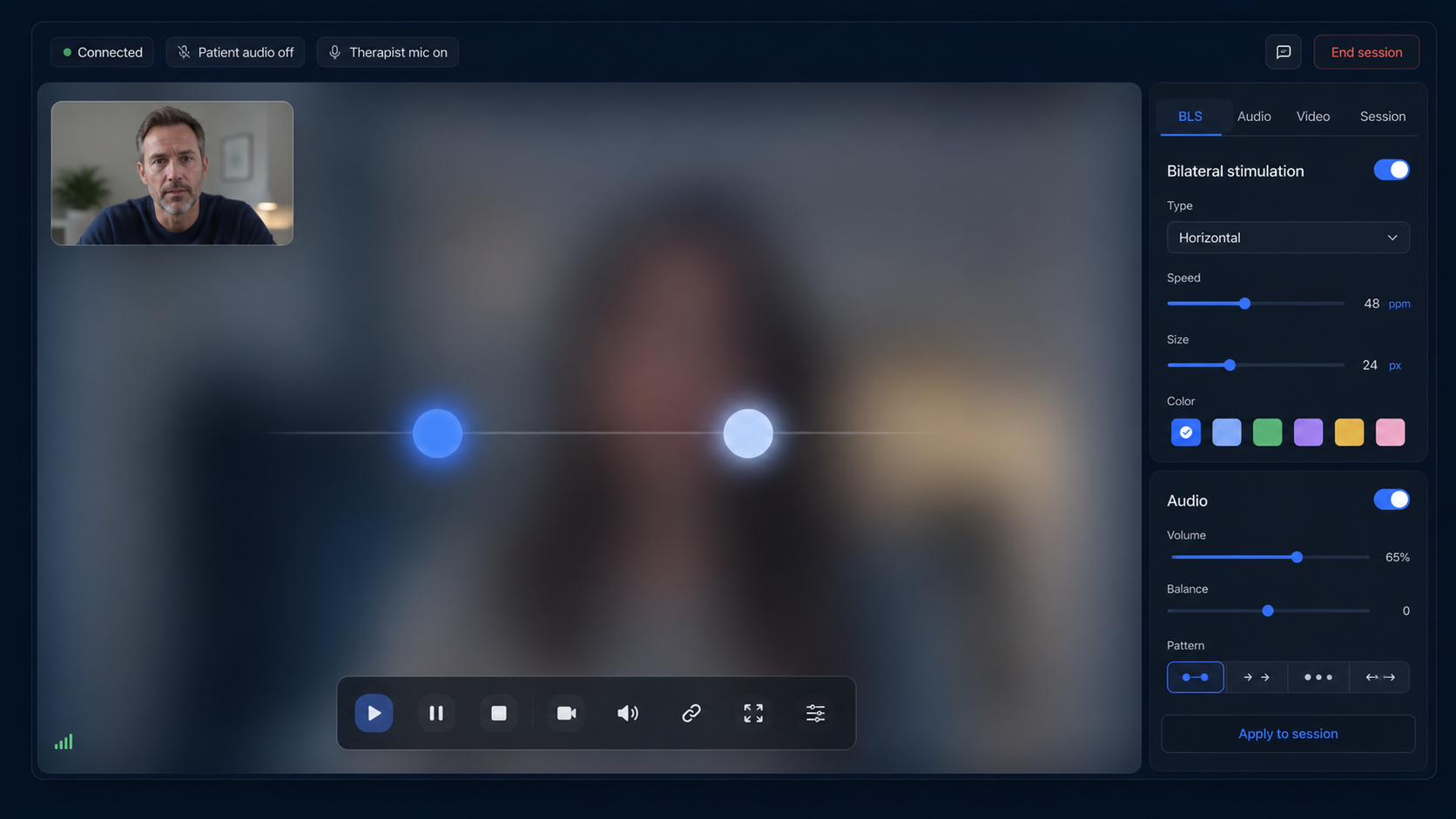
EMDRSuite can support video and therapist-controlled BLS during a qualified session. It does not generate a mental sequence, detect fear, score readiness, prescribe exposure, provide the protected script, or replace training and formulation.
FAQ
EMDR Mental Video Check
Is Mental Video Check a recorded video?
No. It is a clinician-guided imagined sequence used to look for residual feared elements.
Is it the same as flashforward?
No. Flashforward targets a feared catastrophe; Mental Video Check reviews an anticipated sequence.
Has the check itself been tested in a controlled trial?
No controlled outcome trial isolating it was identified in the sources reviewed through 28 August 2026.
Does EMDRSuite run the check automatically?
No. It supports the session technology but does not formulate, score, script, or prescribe the procedure.
References
EMDR Mental Video Check: purpose, evidence, and exposure limits
EMDRSuite
Put the guide into practice with EMDRSuite
Run remote EMDR with visual BLS, bilateral sounds, secure patient links, video-ready sessions, saved settings, and notes.
Continue with related EMDR guides