Adoption is not a diagnosis; loss, adversity, identity, attachment, and family context differ for every person
EMDR and adoption trauma: evidence, identity, attachment, and family
Examine EMDR in adoption contexts without pathologizing adoption, using family-intervention evidence, child PTSD guidance, identity, consent, and safety.
By the EMDRSuite Editorial Team
Product claims checked against the current EMDRSuite code and interface.
No independent clinical reviewer is named for this guide.
Do not turn adoption itself into a trauma diagnosis
Adopted people may have no mental disorder, or may bring experiences of separation, ambiguous loss, neglect, abuse, institutional care, disrupted placements, medical adversity, discrimination, secrecy, or identity conflict. Adoption can also involve safety, belonging, enduring relationships, and strengths; neither gratitude nor pathology should be presumed.
Ask what the person considers distressing and whose goal is being served. Assess PTSD and other conditions, development, health, prenatal exposures when known, language, culture, race, disability, attachment behavior, current family safety, contact arrangements, records, grief, loyalty conflicts, and the adoptee's own words rather than an adult's preferred narrative.
Adoption-specific EMDR evidence is indirect and high risk of bias
A systematic review found 20 papers describing 18 family-based intervention studies involving at least 729 adopted children and 829 parents. It found preliminary support for integrative approaches that sometimes included EMDR alongside sensory, play, attachment, parent, and family work.
Risk of bias was high, and the review does not isolate EMDR's effect. It cannot show that adoption-focused EMDR is effective, that attachment classifications are treatment targets, or that every adopted child needs trauma processing. General pediatric PTSD evidence must not be relabeled as adoption-specific proof.
Stability, consent, caregivers, and identity shape the plan
NICE emphasizes stable relationships, trauma-informed systems, health and education coordination, and specialist support for looked-after children. AAP recommends comprehensive medical, developmental, behavioral, hearing, vision, and dental assessment for newly adopted children rather than explaining every difficulty through trauma.
For minors, clarify legal consent, assent, confidentiality, caregiver participation, birth-family information, safeguarding, and who receives session information. For adult adoptees, center their autonomy and identity language. Do not seek recovered memories, force a reunion narrative, blame birth or adoptive family, or use EMDR to manufacture attachment.
Remote family work requires explicit information boundaries
Define whether the client, caregiver, or family is the treatment unit; what remains private; how the young person can stop; where caregivers wait; and how dysregulation, conflict, disclosure, absconding, self-harm, or connection loss will be handled. Review placement stability and local support before intensive processing.
EMDRSuite does not diagnose attachment or PTSD, determine consent or custody, verify adoption history, assess safeguarding, mediate contact, choose caregiver involvement, recover memories, monitor the home, or contact emergency or child-protection services. It supports the qualified therapist's session workflow only.
FAQ
EMDR for adoption trauma
Is adoption itself a trauma diagnosis?
No. Experiences and meanings vary, and assessment must not presume either disorder or resilience.
What is the direct EMDR evidence?
The adoption-family review included integrative interventions but could not isolate EMDR and rated risk of bias high.
Should adoptive parents attend every session?
No universal rule applies. Consent, assent, confidentiality, safety, developmental needs, and the client's preference determine involvement.
Can EMDRSuite assess custody or safeguarding?
No. It does not verify authority, assess safeguarding, choose family roles, recover history, or contact services.
References
EMDR and adoption trauma: evidence, identity, attachment, and family
EMDRSuite
Put the guide into practice with EMDRSuite
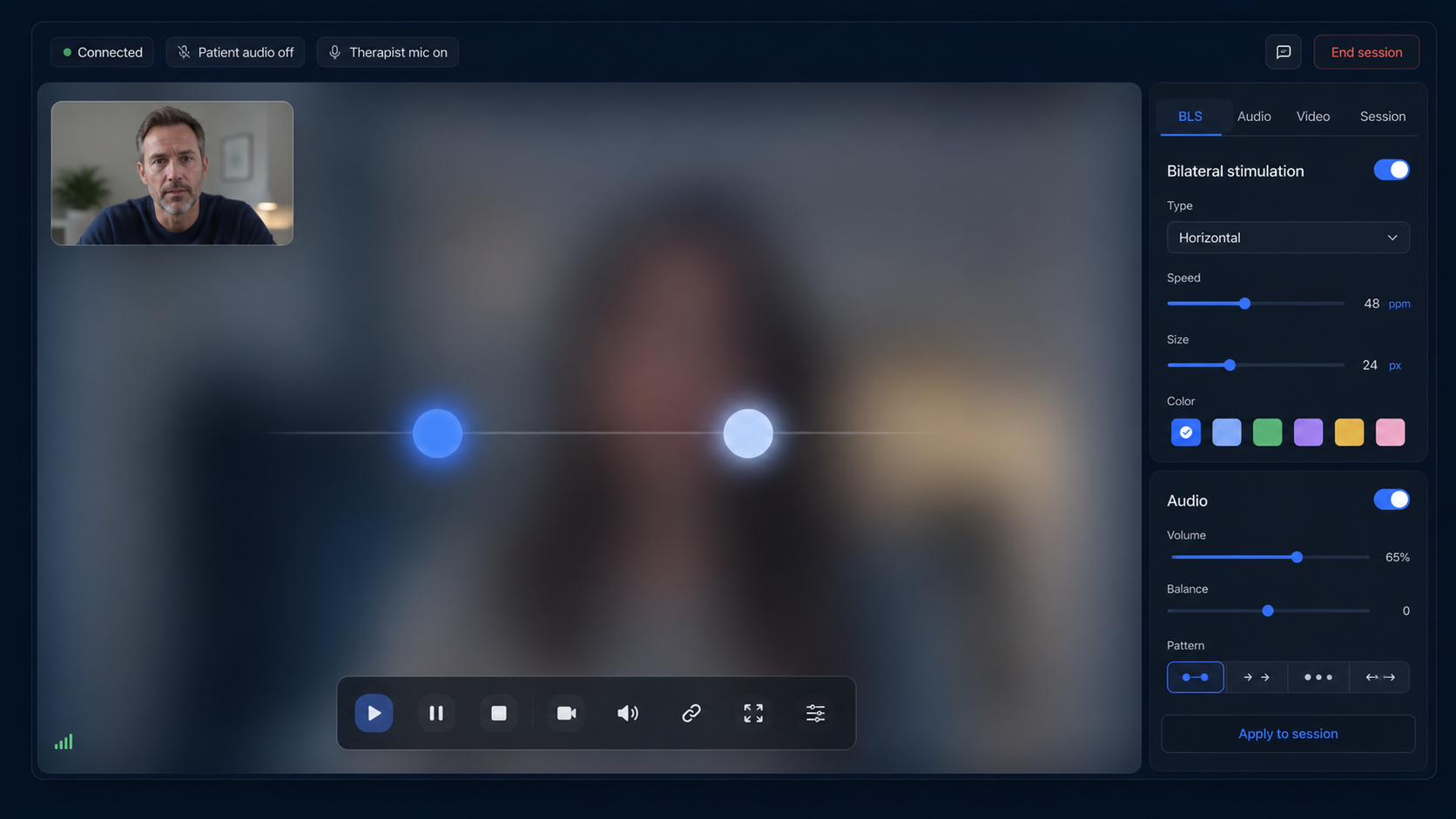
Run remote EMDR with visual BLS, bilateral sounds, secure patient links, video-ready sessions, saved settings, and notes.
Continue with related EMDR guides