Promising symptom research does not replace fibromyalgia care
EMDR for fibromyalgia: pain evidence, targets, and care boundaries
Review EMDR and fibromyalgia evidence, including a randomized trial, chronic-pain reviews, symptom targets, multidisciplinary care, and remote-session limits.
By the EMDRSuite Editorial Team
Product claims checked against the current EMDRSuite code and interface.
No independent clinical reviewer is named for this guide.
Fibromyalgia is more than a trauma story
Fibromyalgia can involve widespread pain, fatigue, sleep disturbance, cognitive symptoms, mood difficulties, functional limits, and other health conditions. Trauma may be relevant for some people, but its presence does not prove a single cause, and its absence does not invalidate symptoms.
Assessment should clarify diagnosis, medical review, current treatment, medications, movement and sleep, mental health, trauma symptoms, disability, pacing, and the outcome the person wants to change. New or changing symptoms still require appropriate medical evaluation.
One randomized trial is encouraging, not definitive
A 2024 trial randomized 79 people with fibromyalgia to usual care or usual care plus 15 EMDR sessions. It reported improvements across pain, widespread symptoms, depression, sleep, and trauma measures through three months. That is a meaningful signal, but one study cannot establish routine use, identify who benefits, or replace replication and longer follow-up.
A 2025 chronic-pain systematic review included nine studies, seven randomized, and described potential benefit while stating that EMDR is not established as routine pain-management practice. Earlier reviews also noted small, heterogeneous studies and methodological limits.
Integrate EMDR with individualized fibromyalgia management
EULAR recommends individualized, shared management focused on quality of life, beginning with education and non-drug approaches and adding options according to need. EMDR is not a cure for fibromyalgia and should not be used to advise stopping exercise, medication, sleep care, rehabilitation, or medical follow-up.
A defensible formulation might target PTSD, medical trauma, pain-related memories, fear, or another agreed memory network. Measure pain, function, sleep, fatigue, mood, PTSD, medication changes, and adverse effects separately so improvement in one domain is not misreported as disease resolution.
Remote care needs pacing and medical boundaries
Plan posture, movement, screen tolerance, breaks, fatigue, sensory needs, stop signals, post-session activity, loss of connection, and access to local help. A symptom flare during or after a session needs clinical interpretation, not an assumption that distress proves processing.
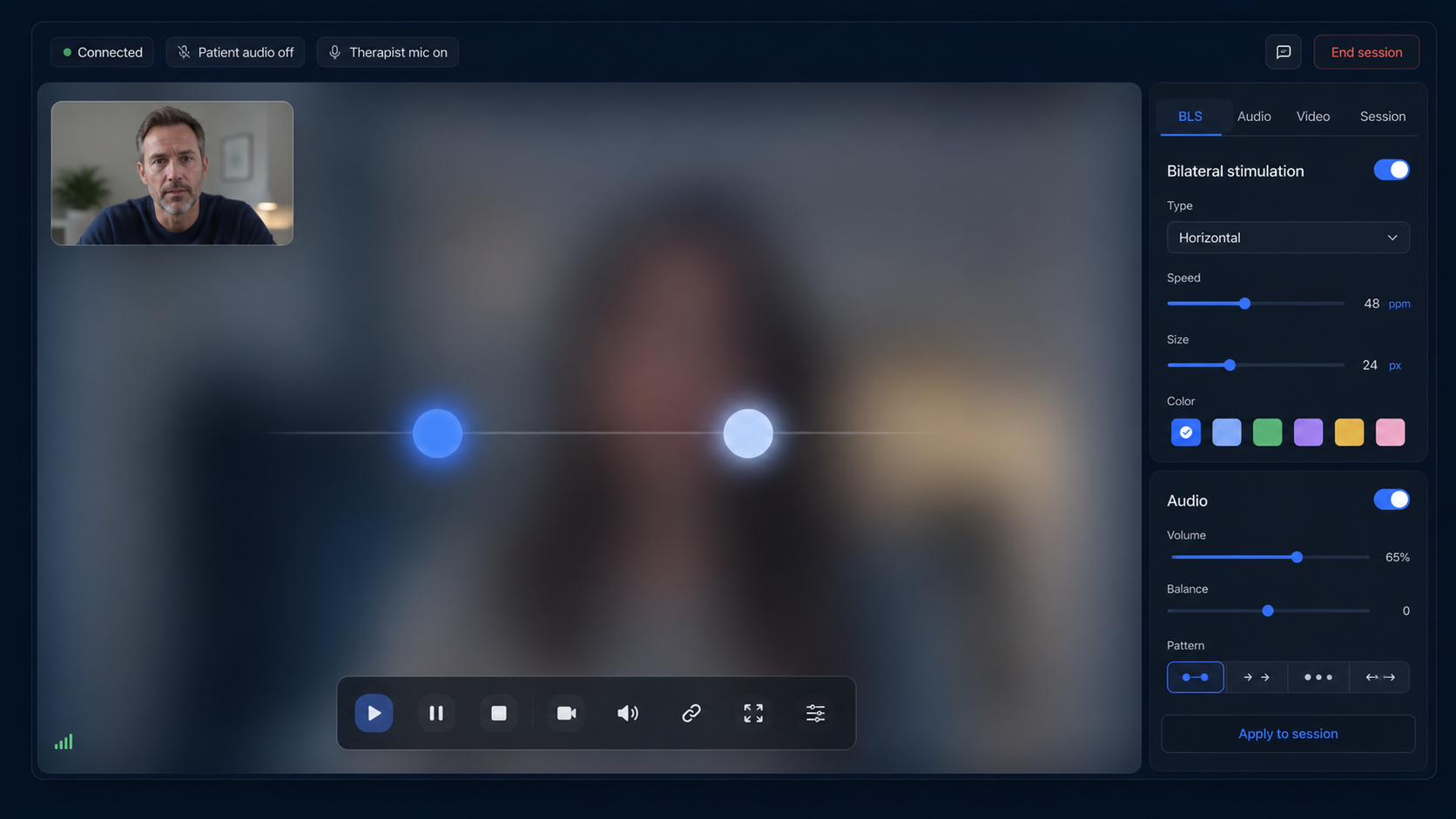
EMDRSuite supports live video and therapist-controlled visual or auditory stimulation. It does not diagnose fibromyalgia, measure pain or physiology, distinguish psychological from medical symptoms, prescribe treatment, monitor medication, or provide urgent medical care.
FAQ
EMDR for fibromyalgia
Can EMDR cure fibromyalgia?
No. A randomized trial suggests possible symptom benefit, but EMDR is not a cure or established routine fibromyalgia treatment.
Does fibromyalgia mean unresolved trauma?
No. Trauma may be clinically relevant for some people, but it is not a required or sufficient explanation.
Should medical treatment continue?
Changes to medication or medical care belong with the responsible clinician.
Does EMDRSuite monitor pain or fatigue?
No. It supplies remote-session technology only.
References
EMDR for fibromyalgia: pain evidence, targets, and care boundaries
EMDRSuite
Put the guide into practice with EMDRSuite
Run remote EMDR with visual BLS, bilateral sounds, secure patient links, video-ready sessions, saved settings, and notes.
Continue with related EMDR guides