Real symptoms and health anxiety require careful differential assessment
EMDR for health anxiety or hypochondria: evidence and safer treatment choices
Review EMDR for health anxiety without dismissing medical symptoms: direct evidence limits, CBT research, reassurance cycles, assessment, and remote-care boundaries.
By the EMDRSuite Editorial Team
Product claims checked against the current EMDRSuite code and interface.
No independent clinical reviewer is named for this guide.
Health anxiety is not proof that symptoms are imaginary
Health anxiety can involve persistent fear of illness, checking, reassurance seeking, body monitoring, avoidance, internet searching, and difficulty tolerating uncertainty. A person can also have a genuine medical condition and health anxiety at the same time. Psychological formulation must not override indicated medical assessment.
Clarify the feared outcome, triggers, checking and avoidance, reassurance cycle, healthcare use, functional impact, prior medical advice, panic, OCD, PTSD, depression, medication, and risk. New, severe, or changing symptoms require the appropriate health service rather than automatic psychological attribution.
Direct EMDR evidence is not established
The current evidence reviewed here does not establish EMDR as a first-line treatment for health anxiety or illness anxiety disorder. Research on EMDR for general anxiety, medical trauma, or PTSD cannot be transferred automatically to persistent illness fears without diagnosis-specific trials.
A traumatic diagnosis, procedure, loss, or episode of acute illness may provide a separate EMDR target when formulation supports it. Improvement in that memory does not prove that checking, reassurance seeking, misinterpretation of sensations, or the broader health-anxiety cycle has resolved.
CBT and exposure-based components have stronger direct support
A meta-analysis of 19 randomized trials found a moderate-to-large pooled benefit for CBT, with effects generally sustained at 12 to 18 months. The CHAMP trial randomized 444 medical outpatients and found benefits of adapted CBT maintained over five years.
A 2026 network meta-analysis of 35 trials and 3,263 participants supported CBT and several related approaches, identifying exposure and response prevention, cognitive restructuring, and mindfulness as useful components. This does not make one protocol universal, but it is stronger direct evidence than currently available for EMDR.
Technology must not become reassurance or diagnosis
If EMDR is considered for a separate trauma target, consent should distinguish that target from health-anxiety treatment, name evidence-based alternatives, define medical coordination, and measure both outcomes. Repeated symptom checking by the therapist can inadvertently reinforce reassurance cycles.
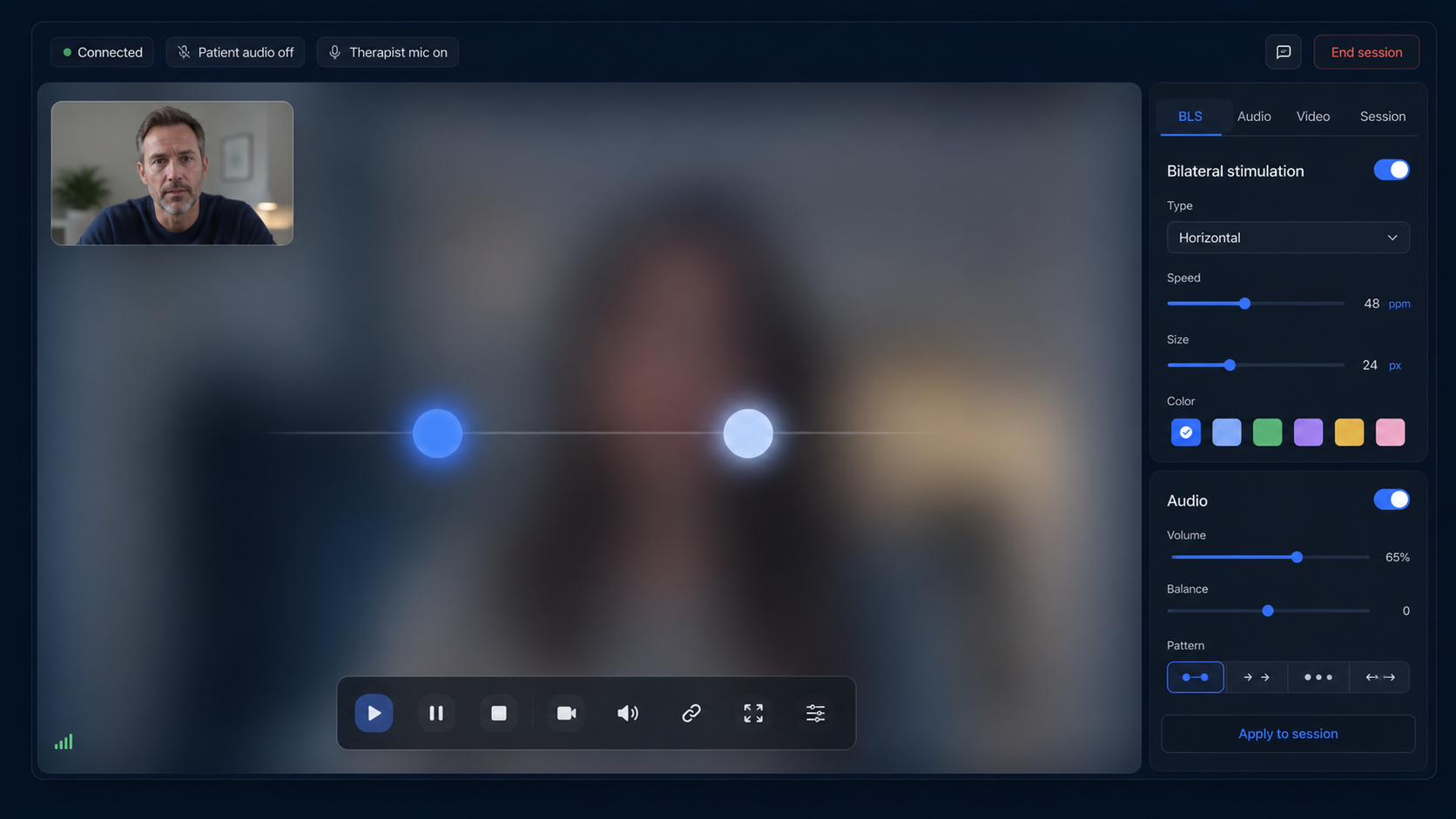
EMDRSuite provides video and therapist-controlled bilateral stimulation. It does not assess symptoms, rule out disease, diagnose illness anxiety disorder, triage emergencies, deliver CBT or exposure and response prevention, monitor physiology, or replace medical care.
FAQ
EMDR for health anxiety
Is EMDR proven for health anxiety?
No diagnosis-specific evidence currently establishes it as a first-line treatment.
Does health anxiety mean there is no medical problem?
No. Medical illness and health anxiety can coexist, and concerning symptoms need appropriate assessment.
What treatment has stronger direct evidence?
CBT, including exposure-based and cognitive components, has multiple randomized trials and meta-analyses.
Can EMDRSuite tell whether a symptom is anxiety?
No. It cannot diagnose, triage, or provide medical reassurance.
References
EMDR for health anxiety or hypochondria: evidence and safer treatment choices
EMDRSuite
Put the guide into practice with EMDRSuite
Run remote EMDR with visual BLS, bilateral sounds, secure patient links, video-ready sessions, saved settings, and notes.
Continue with related EMDR guides