Everyday stress, acute traumatic stress, adjustment disorder, and PTSD differ
EMDR for stress: acute trauma, adjustment, and evidence limits
Separate ordinary stress, acute traumatic stress, adjustment disorder, burnout, anxiety, and PTSD before considering EMDR, timing, alternatives, or online delivery.
By the EMDRSuite Editorial Team
Product claims checked against the current EMDRSuite code and interface.
No independent clinical reviewer is named for this guide.
Stress is not one indication
Stress may describe a normal response, an unsafe workload, acute symptoms after trauma, an adjustment disorder, PTSD, anxiety, depression, sleep disruption or medical illness. The same word therefore does not identify a memory target or evidence-based protocol.
Assess stressor, timing, symptoms, impairment, danger, work and family context, sleep, substances, medical factors and diagnosis. Practical change, social support, workplace action, primary care or another psychotherapy may be more relevant than trauma processing.
Timing changes what guidelines support
WHO found very-low-certainty evidence insufficient for a specific EMDR recommendation during the first month of acute traumatic stress and recommends psychological first aid broadly, with trauma-focused CBT for significantly impaired adults where trained care is available. NICE considers EMDR at one to three months for selected non-combat PTSD when preferred and offers it after three months.
A 2024 review found 11 early-intervention RCTs and short-term symptom signals, but no differences in remaining analyses, with low study quality and small samples. This does not validate universal preventive EMDR immediately after distress.
Natural recovery and active comparators matter
A trial randomized 57 recent rape survivors to two EMDR sessions or watchful waiting. Both groups improved and EMDR was not superior for post-traumatic stress, depression, sexual dysfunction, guilt or shame; brief anxiety and dissociation differences did not persist.
Do not call within-group improvement proof of a treatment effect. Define the comparator, adverse-event plan, follow-up and functional outcome, and revisit the formulation if symptoms persist, worsen or point to another disorder.
A BLS control does not measure or manage stress
Online work needs a private location, emergency and reconnection plan, stop signal, accessible pacing and closure. A stress score, wearable reading or calmer appearance cannot certify readiness or resolution.
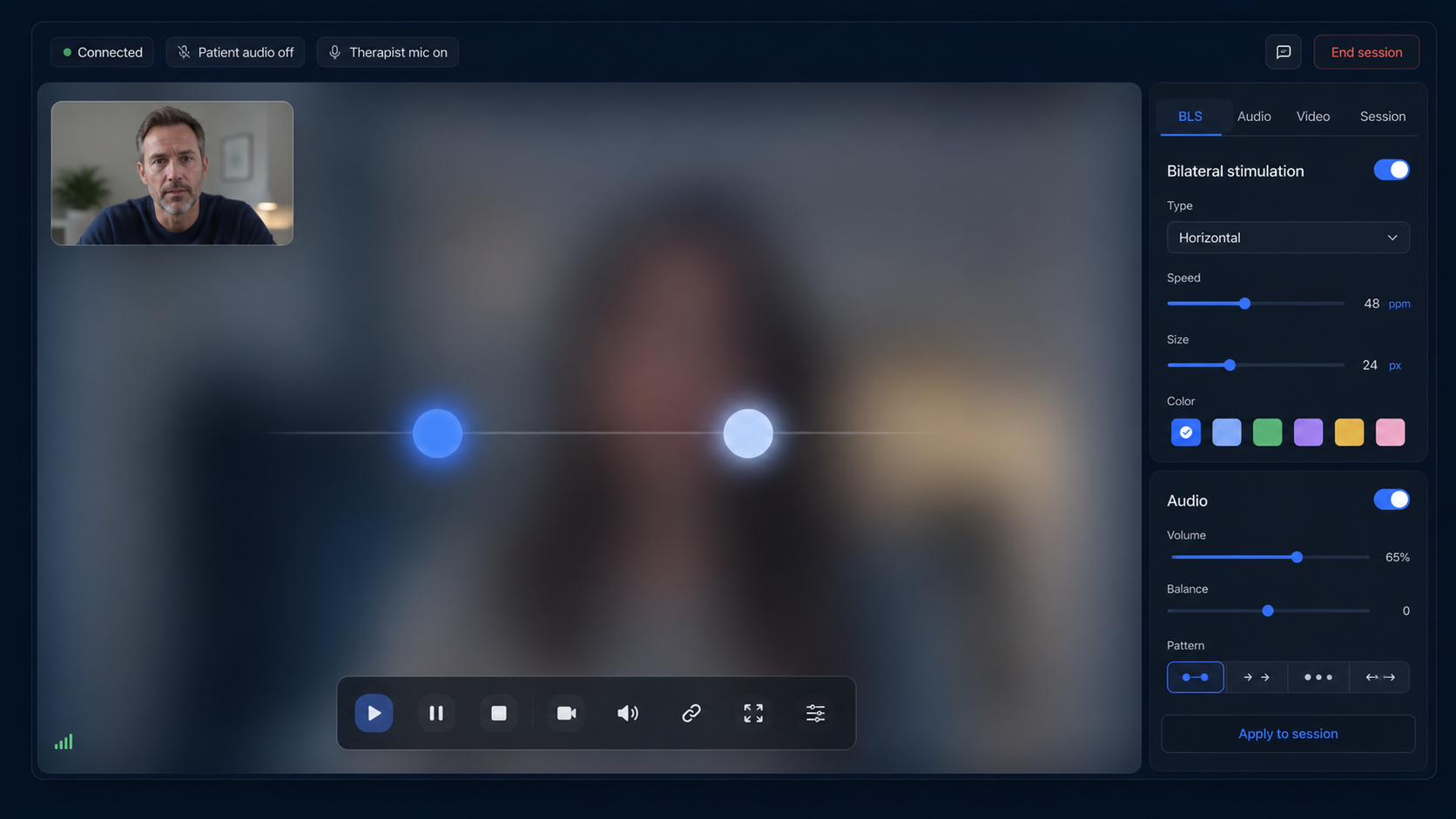
EMDRSuite provides video, BLS controls and notes. It does not measure stress, diagnose acute stress or adjustment disorder, provide crisis care, prescribe timing, choose a protocol or replace workplace, medical and psychological assessment.
FAQ
EMDR for stress
Can EMDR treat ordinary stress?
PTSD evidence should not be generalized to every stress response; first define the stressor, syndrome and treatment goal.
Should EMDR be used immediately after trauma?
Not universally. Early timing, impairment, preference and guideline differences require careful assessment.
Does feeling calmer prove treatment worked?
No. Track symptoms, functioning, safety and durability against an appropriate comparator.
Does EMDRSuite monitor stress?
No. It provides session communication and BLS without physiological or diagnostic monitoring.
References
EMDR for stress: acute trauma, adjustment, and evidence limits
EMDRSuite
Put the guide into practice with EMDRSuite
Run remote EMDR with visual BLS, bilateral sounds, secure patient links, video-ready sessions, saved settings, and notes.
Continue with related EMDR guides