Shame is an emotion and appraisal, not a diagnosis or a universal target
EMDR for shame and self-criticism: evidence and formulation
A therapist guide to post-trauma shame, guilt, self-blame, self-criticism, PTSD evidence, target formulation, risk, measurement, and EMDRSuite boundaries.
By the EMDRSuite Editorial Team
Product claims checked against the current EMDRSuite code and interface.
No independent clinical reviewer is named for this guide.
Shame, guilt, self-blame, and self-criticism need differentiation
Shame may involve a global appraisal of the self, while guilt can concern an action; both can coexist with PTSD, depression, moral injury, abuse, OCD, eating disorders, psychosis or no diagnosis. NIMH lists persistent guilt or shame among possible PTSD mood and cognition symptoms, not as proof of PTSD.
Assess meaning, context, responsibility, culture, coercion, ongoing abuse, rumination, function and safety. Severe shame can accompany concealment, self-harm or suicidal thinking, so risk assessment and support cannot be replaced by a cognition list.
The outcome evidence is broader than EMDR alone
A systematic review included 15 studies with samples of at least 50 and found moderate evidence that cognitive- and exposure-based treatments can reduce post-trauma guilt, shame or anger, but could not establish comparative or long-term conclusions. It did not validate one shame protocol.
A 2026 trial randomized 209 people with PTSD and substance use disorder across EMDR, prolonged exposure and imagery rescripting; several psychosocial outcomes improved, with no significant differences between treatments. Secondary shame outcomes do not prove EMDR superiority or generalize beyond that population.
Early change and strong emotion do not settle the mechanism
In 57 recent rape survivors, two EMDR sessions were not superior to watchful waiting for guilt and shame over follow-up. Natural recovery, attention, expectancy, therapeutic relationship and concurrent care must remain visible when interpreting change.
Formulate a specific memory, trigger, appraisal and desired outcome without imposing forgiveness, responsibility or a positive cognition. Do not use an emerging association as historical proof or assume intense abreaction is necessary.
Software cannot classify or correct shame
Remote work requires privacy, language choice, pacing, stop control, safeguarding and a route for deterioration. Store only clinically necessary detail and never place sensitive narrative in URLs, analytics or patient links.
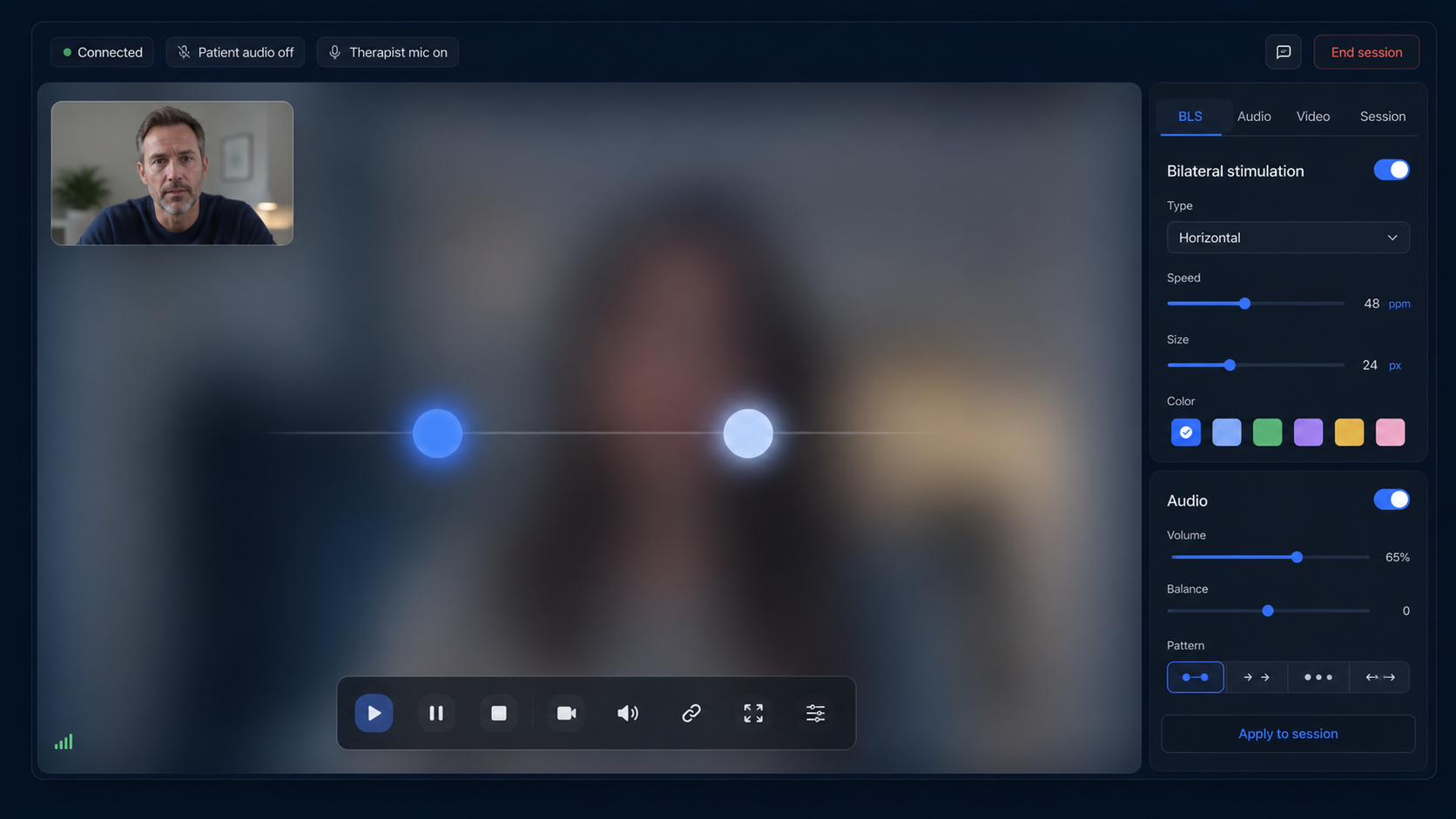
EMDRSuite organizes live video, BLS and therapist notes. It does not detect shame, score blame, determine responsibility, generate interweaves, assess self-harm, choose targets or conduct treatment.
FAQ
EMDR for shame
Is shame a diagnosis?
No. It is an emotion and appraisal that can occur across many diagnoses and contexts.
Does EMDR have a proven shame protocol?
No single protocol is established as universally superior; evidence often comes from broader trauma treatments and secondary outcomes.
Should a positive cognition contradict responsibility?
No. Formulation must preserve facts, context and the patient's meaning rather than impose absolution.
Can EMDRSuite detect shame or risk?
No. The clinician must assess emotion, responsibility, self-harm and safety directly.
References
EMDR for shame and self-criticism: evidence and formulation
EMDRSuite
Put the guide into practice with EMDRSuite
Run remote EMDR with visual BLS, bilateral sounds, secure patient links, video-ready sessions, saved settings, and notes.
Continue with related EMDR guides