Self-worth is a treatment target, not a diagnosis
EMDR for low self-esteem: evidence, formulation, and alternatives
Assess EMDR for low self-esteem through two small trials, CBT evidence, target formulation, comorbidity, outcome measurement, and realistic limits.
By the EMDRSuite Editorial Team
Product claims checked against the current EMDRSuite code and interface.
No independent clinical reviewer is named for this guide.
Low self-esteem is not one disorder or one memory
Low self-esteem can accompany depression, anxiety, trauma, psychosis, eating disorders, shame, discrimination, relationship harm, or no formal disorder. A score or the statement 'I am not good enough' does not establish cause, diagnosis, or an EMDR target sequence.
Assessment should clarify onset, situations, safety behaviours, self-criticism, functioning, current adversity, comorbidity, risk, strengths, and the outcome the person wants. Do not infer a hidden trauma because a negative belief is present.
The direct EMDR trial is encouraging but very small
A randomized study assigned 30 psychiatric outpatients to ten sessions of EMDR or CBT. Both groups improved and no between-group difference was detected; only 19 participants supplied complete-case data, and follow-up lasted three months.
A separate crossover trial in 47 people with anxiety disorders found improvement with both EMDR and Competitive Memory Training. COMET produced the larger self-esteem effect, 1.25 versus 0.46, and treatment order affected the later response. These trials do not establish a universal protocol or superiority.
Established alternatives and the underlying condition still matter
A review of CBT based on the Fennell model found eight studies, seven in meta-analysis, with promising self-report effects but limited evidence about specificity versus depression treatment. A preliminary CBT trial included only 22 people, so certainty remains bounded there too.
Choose treatment according to formulation and diagnosis, not the popularity of a technique. If PTSD is present, measure PTSD separately; if current avoidance, rumination, perfectionism, abuse, depression, or social anxiety maintains the problem, address those mechanisms and protections directly.
Measure functioning, not only belief credibility
Agree outcomes such as valued activity, relationships, assertiveness, work, self-care, symptoms, and relapse signals alongside a validated self-esteem measure. A lower SUD or a stronger positive cognition within one session is not proof of durable global self-worth.
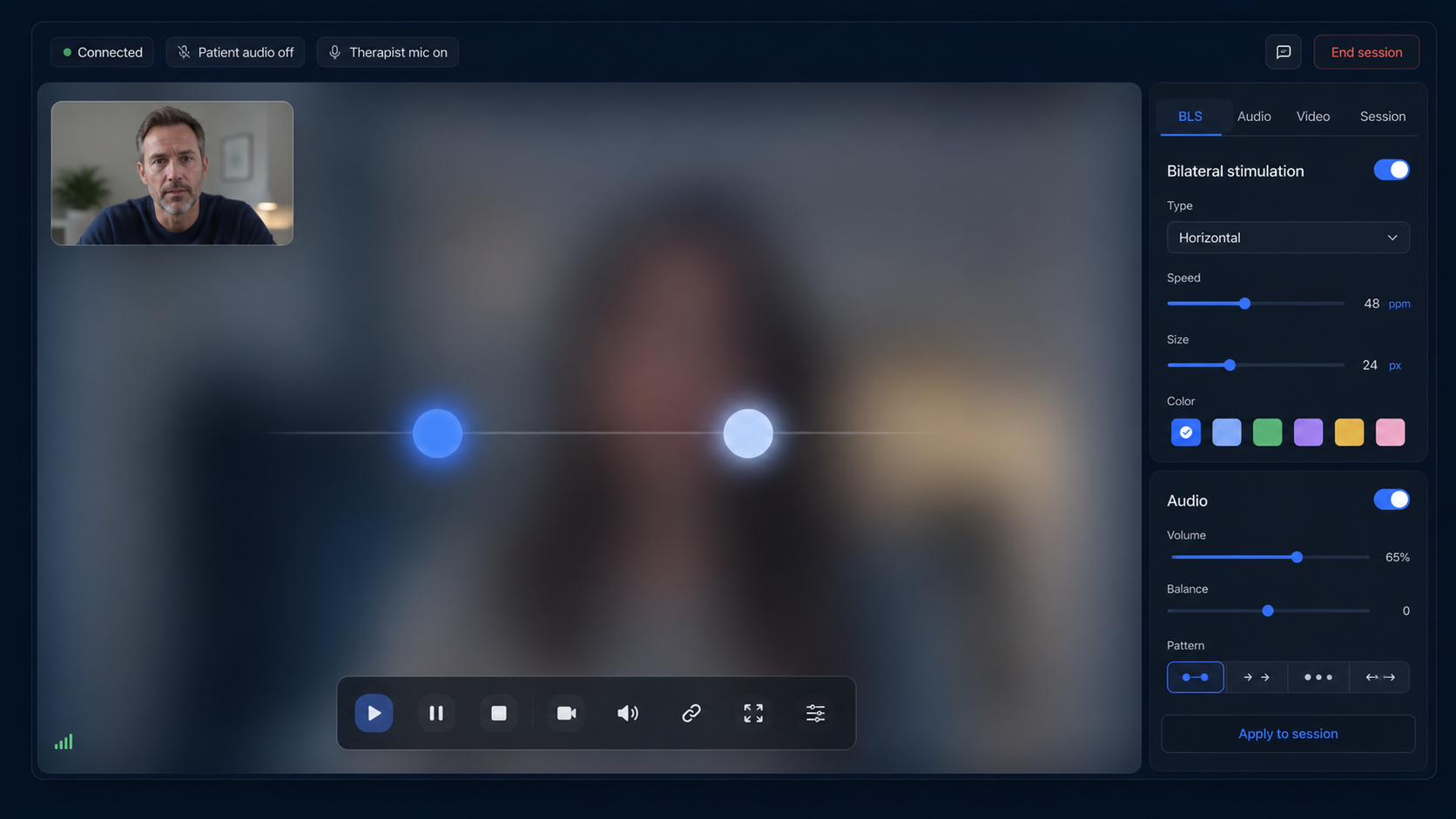
EMDRSuite supplies clinician-controlled bilateral stimulation, video, and session records. It does not diagnose a cause of low self-esteem, select memories, administer or interpret scales, deliver CBT or COMET, assess risk, or guarantee confidence.
FAQ
EMDR for low self-esteem
Is EMDR proven to improve self-esteem?
Two small randomized trials suggest possible benefit, but they do not establish superiority or a standard protocol.
Does a negative core belief prove trauma?
No. Similar beliefs can arise and persist through many different processes.
Is CBT better supported?
CBT has a broader direct literature for low self-esteem, although that evidence also has limitations.
Can EMDRSuite measure self-esteem?
No. It provides session technology and does not administer or interpret clinical measures.
References
EMDR for low self-esteem: evidence, formulation, and alternatives
EMDRSuite
Put the guide into practice with EMDRSuite
Run remote EMDR with visual BLS, bilateral sounds, secure patient links, video-ready sessions, saved settings, and notes.
Continue with related EMDR guides