IBS is a disorder of gut-brain interaction, not proof that symptoms are imagined
EMDR for IBS: trial status, evidence, and medical boundaries
Check what is actually known about EMDR for IBS, the unpublished efficacy question, gut-brain therapies, medical red flags, and responsible target selection.
By the EMDRSuite Editorial Team
Product claims checked against the current EMDRSuite code and interface.
No independent clinical reviewer is named for this guide.
IBS requires a medical and gut-brain formulation
Irritable bowel syndrome is a disorder of gut-brain interaction involving abdominal pain and altered bowel habit. Calling it gut-brain does not mean symptoms are fabricated or purely psychological, and a trauma history is not required.
Rectal bleeding, unexplained weight loss, anemia, fever, nocturnal symptoms, a new or rapidly changing pattern, family history, severe dehydration, pregnancy concerns, or other alarm features need medical assessment. Consider inflammatory, infectious, celiac, medication, pelvic, dietary, and other causes according to local guidance.
EMDR4IBS is a protocol, not a result
The direct EMDR4IBS publication describes a planned randomized trial of 34 adults, seven EMDR sessions, a waitlist comparator, and pain as the primary outcome. It reports how efficacy would be tested; it does not report participant outcomes.
A registered or published protocol is evidence that a question is being studied, not evidence that the treatment works. Until outcome data are published and appraised, claims that EMDR reduces IBS pain or bowel symptoms would outrun the direct evidence.
Gut-directed CBT and hypnotherapy have much larger direct evidence
NICE advises considering CBT, hypnotherapy, or psychotherapy for refractory IBS. The American College of Gastroenterology suggests gut-directed psychotherapy, and a network meta-analysis reviewed 67 randomized trials with 7,441 participants across psychological approaches.
A broader 2023 review included 118 studies. These bodies of evidence support several brain-gut behavioral therapies but do not establish that all therapies are interchangeable, that every patient responds, or that EMDR inherits their effects.
Treat a defined memory without promising gastrointestinal cure
A medical event, pain episode, humiliation, or comorbid PTSD may be a separately formulated EMDR target. Track that target apart from abdominal pain, stool pattern, nutrition, healthcare use, functioning, adverse changes, and medical treatment, and coordinate with gastroenterology or primary care.
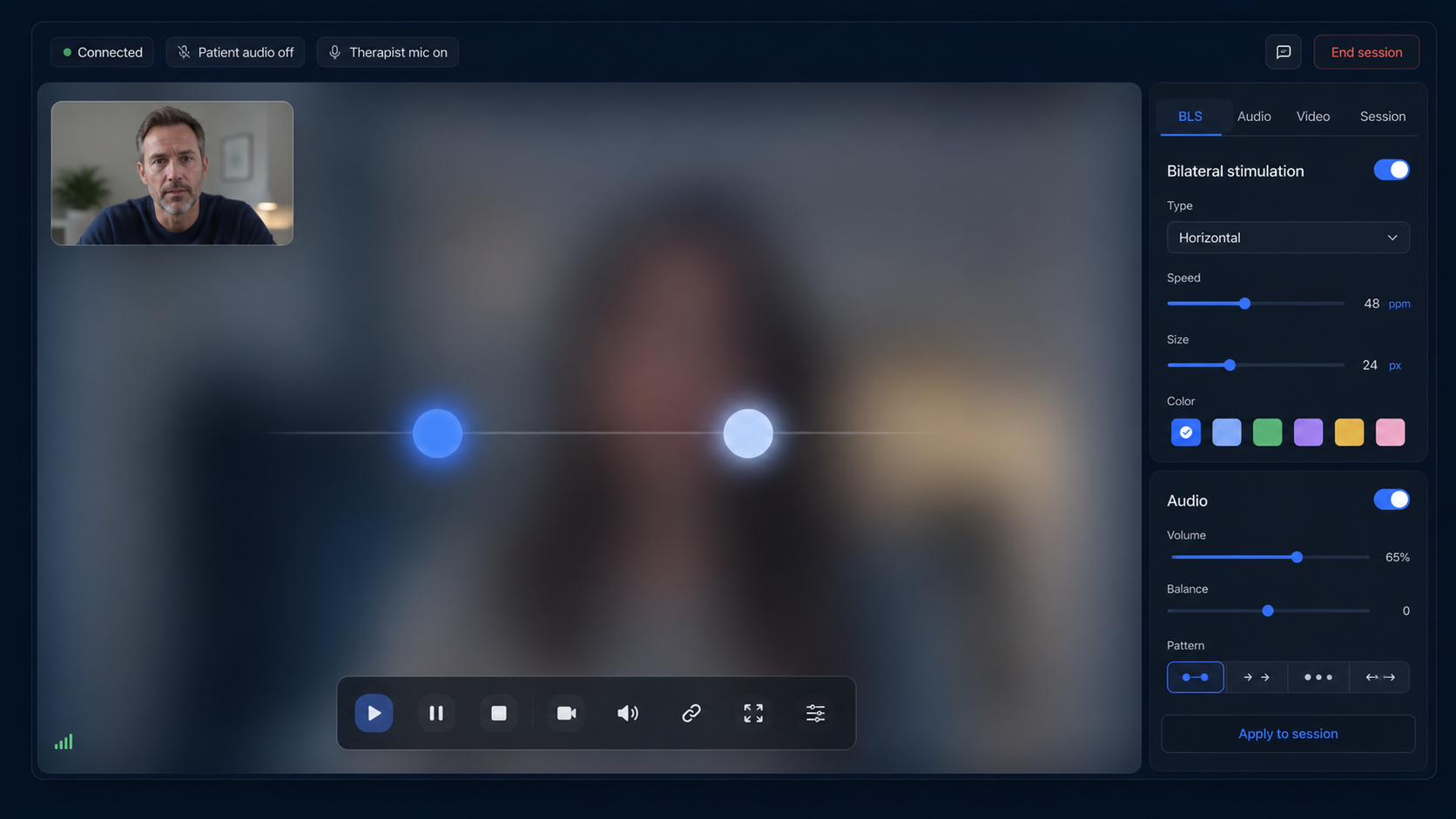
EMDRSuite does not diagnose IBS, evaluate bleeding or weight loss, order tests, prescribe diets or medication, monitor hydration or nutrition, distinguish an emergency, select memories, or guarantee relief of abdominal pain. It supports therapist-controlled remote sessions only.
FAQ
EMDR for IBS
Has EMDR been proven effective for IBS?
The direct publication identified is a trial protocol, not a report of efficacy results.
Is IBS all in the mind?
No. It is a disorder of gut-brain interaction with real symptoms and medical considerations.
Which psychological treatments have stronger direct evidence?
Gut-directed CBT, hypnotherapy, and other brain-gut behavioral therapies have much larger trial literatures.
Can EMDRSuite diagnose IBS or assess bleeding?
No. Medical diagnosis, alarm-feature assessment, tests, diet, and medication remain outside the software.
References
EMDR for IBS: trial status, evidence, and medical boundaries
EMDRSuite
Put the guide into practice with EMDRSuite
Run remote EMDR with visual BLS, bilateral sounds, secure patient links, video-ready sessions, saved settings, and notes.
Continue with related EMDR guides