Treat tinnitus distress without assuming a psychological cause
EMDR for tinnitus: evidence, hearing care, and treatment limits
Evaluate EMDR for tinnitus using the comparative trial, pilot studies, NICE guidance, hearing assessment, CBT evidence, and realistic clinical limits.
By the EMDRSuite Editorial Team
Product claims checked against the current EMDRSuite code and interface.
No independent clinical reviewer is named for this guide.
Tinnitus needs hearing and medical assessment first
Tinnitus is the perception of sound without a corresponding external source. Distress, insomnia, anxiety, hearing loss, sound sensitivity, medication, neurological or ear conditions, and a traumatic onset may overlap, but none should be presumed from the symptom alone.
NICE recommends audiological assessment and identifies referral pathways for pulsatile, unilateral, sudden, rapidly changing, neurological, vestibular, or severe presentations. A psychotherapist and EMDR software cannot determine the medical cause or replace ear, hearing, medication, and risk assessment.
The comparative trial did not find EMDR superior to CBT
A randomized trial included 89 completers: 43 received tinnitus retraining therapy plus CBT and 46 received tinnitus retraining therapy plus EMDR. Tinnitus Functional Index scores improved clinically in both groups, by 15.1 and 16.2 points respectively.
The investigators found no significant difference in efficacy between the two combined treatments. Because every participant also received tinnitus retraining therapy, the trial cannot isolate an EMDR-only effect or show that EMDR changes the perceived sound itself.
Promising pilots still leave uncertainty
A multicentre within-person study treated 35 adults after a waiting period and reported lower tinnitus distress after six EMDR sessions, with 30 completing follow-up. Other prospective studies enrolled 38 and 36 people and also reported improvement.
These studies are useful signals, not confirmation of a universal tinnitus protocol. Small samples, non-comparative designs, selected participants, self-report outcomes, short follow-up, and therapist attention limit causal conclusions. Evidence about adverse effects and who benefits remains incomplete.
Target distress and function, not a promised cure
When EMDR is considered, formulation should distinguish tinnitus-related onset memories, catastrophic meaning, hypervigilance, avoidance, sleep, trauma, depression, anxiety, hearing needs, and suicide risk. Track validated tinnitus distress and functioning alongside any memory-target measures.
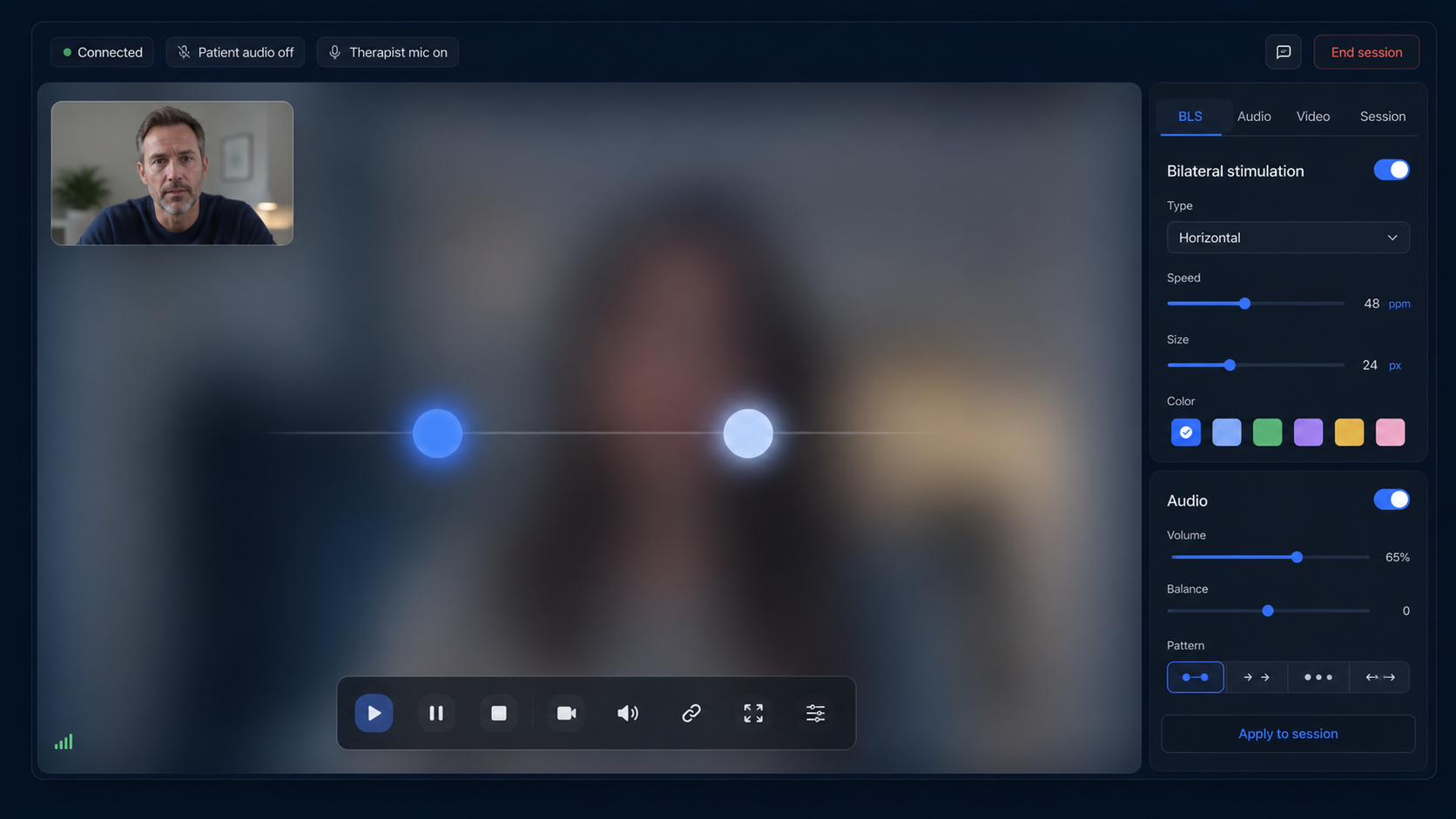
EMDRSuite provides therapist-controlled bilateral stimulation, video, and records. It does not diagnose tinnitus, test hearing, rule out medical urgency, alter sound generation, deliver tinnitus retraining therapy or CBT, select targets, or promise silence or cure.
FAQ
EMDR for tinnitus
Can EMDR cure tinnitus?
No evidence establishes that EMDR cures tinnitus or removes its medical source.
What did the randomized trial find?
TRT plus EMDR and TRT plus CBT both improved distress, with no significant efficacy difference.
Is hearing assessment still needed?
Yes. Clinical and audiological assessment should not be skipped because psychological distress is present.
Can EMDRSuite assess tinnitus?
No. It is session software and provides no hearing or medical assessment.
References
EMDR for tinnitus: evidence, hearing care, and treatment limits
EMDRSuite
Put the guide into practice with EMDRSuite
Run remote EMDR with visual BLS, bilateral sounds, secure patient links, video-ready sessions, saved settings, and notes.
Continue with related EMDR guides